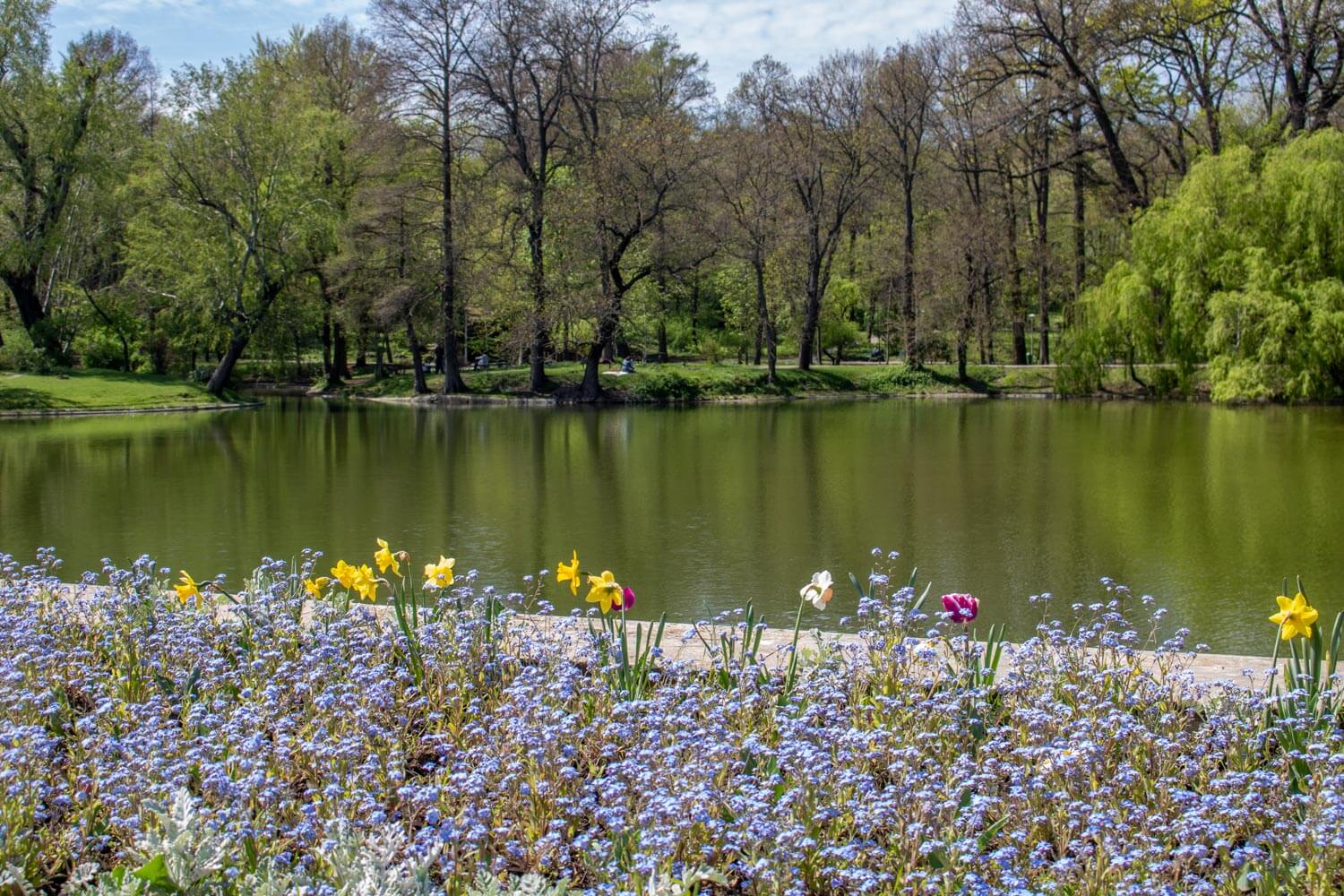
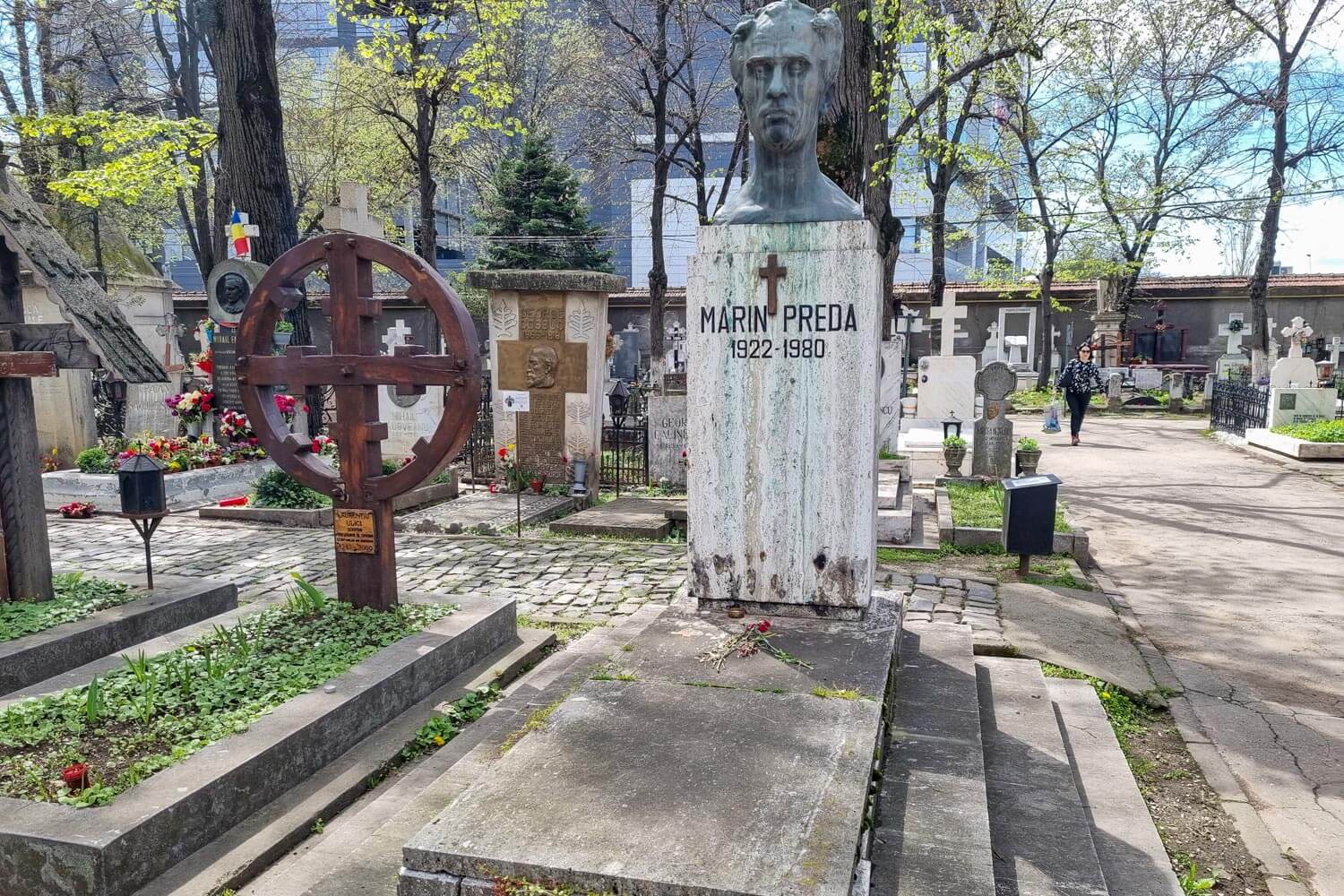


Șerban Vodă Cemetery (Cimitirul Șerban Vodă), commonly known as Bellu Cemetery (Cimitirul Bellu), is the largest cemetery in Bucharest. The cemetery is located next to the Youth Park and is the final resting place of many famous Romanians.
History Of Bellu Cemetery
Until the middle of the 19th century, it was quite common to bury people in the courtyards of churches in Bucharest but over time these were getting full. Poor people and those who died from the plague were often buried outside the city but this was deemed unworthy for important people. The legislators of Bucharest wanted to restrict illegal burials so in 1852 a commission discussed the set up of new dedicated cemeteries.
The Minister of Justice, Baron Barbu Bellu, donated a land of 15 hectares on Calea Șerban Vodă to set up a new cemetery. The landscaping started in 1855 and the first burials were in 1856, while the cemetery officially started its operations in 1858. In 1860 many graves were transferred from church cemeteries to the new Bellu Cemetery. Over time the cemetery has been enlarged and now covers 28 hectares. In 2010 Șerban Vodă Cemetery was listed as a historical monument.
Visiting Bellu Cemetery
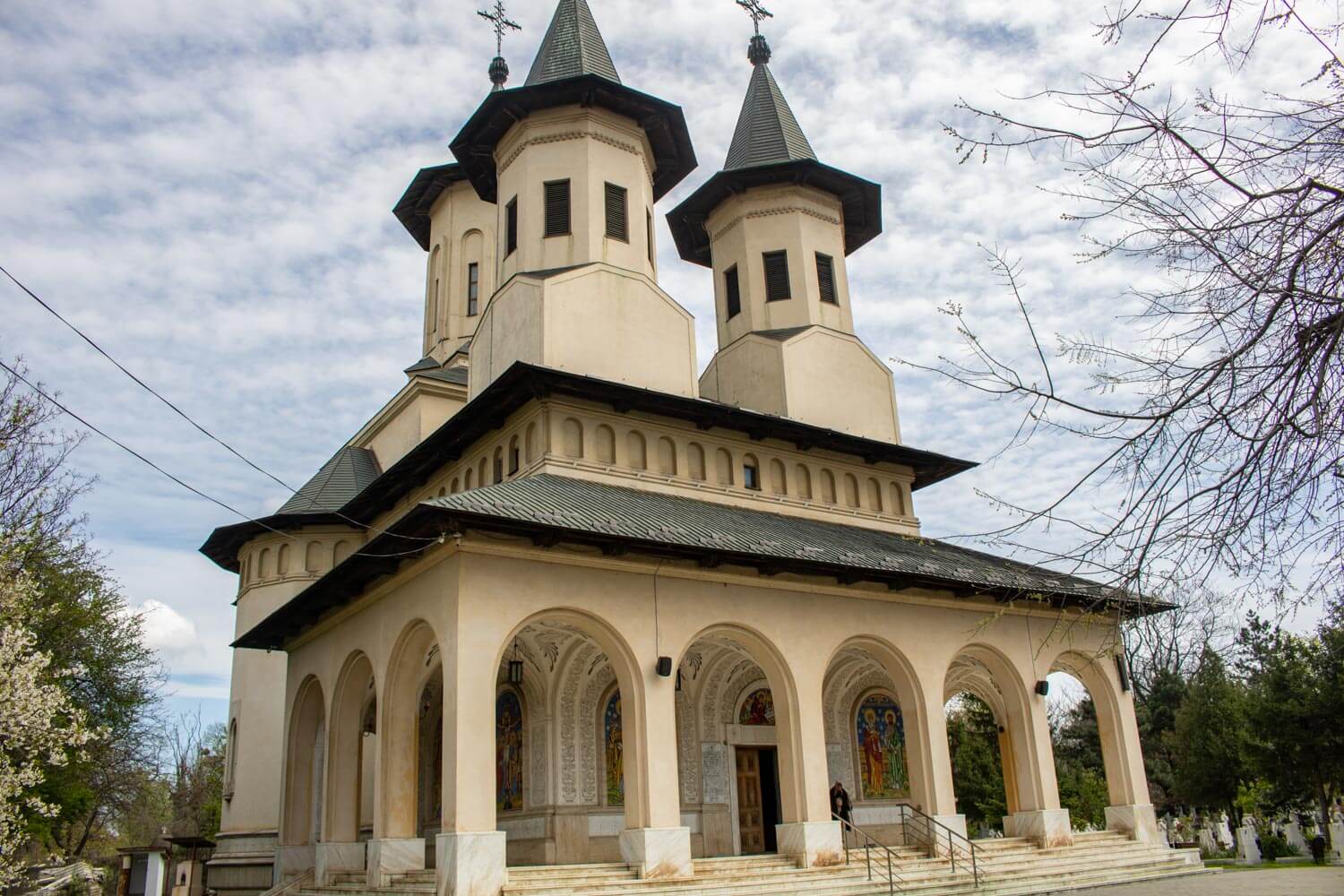
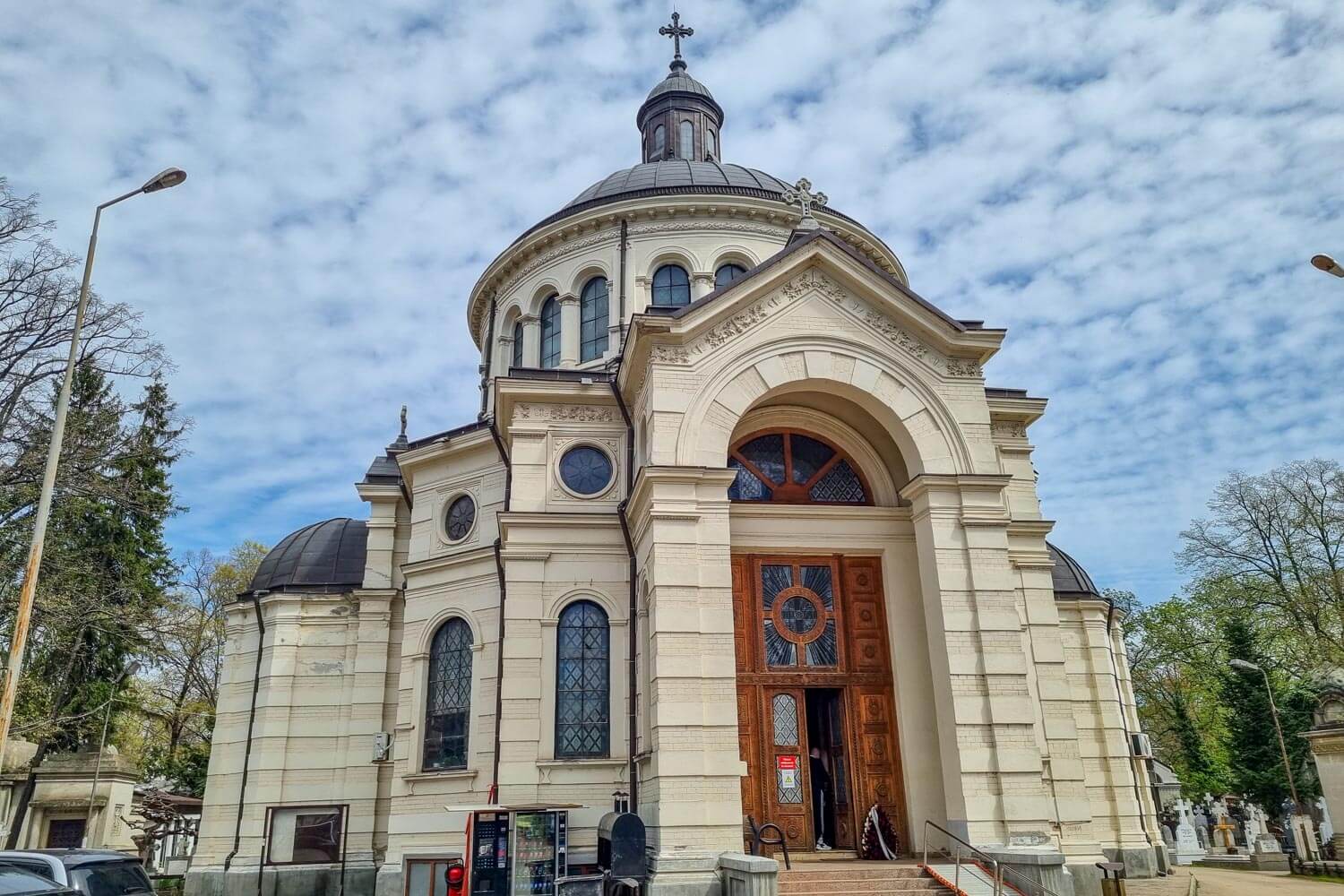
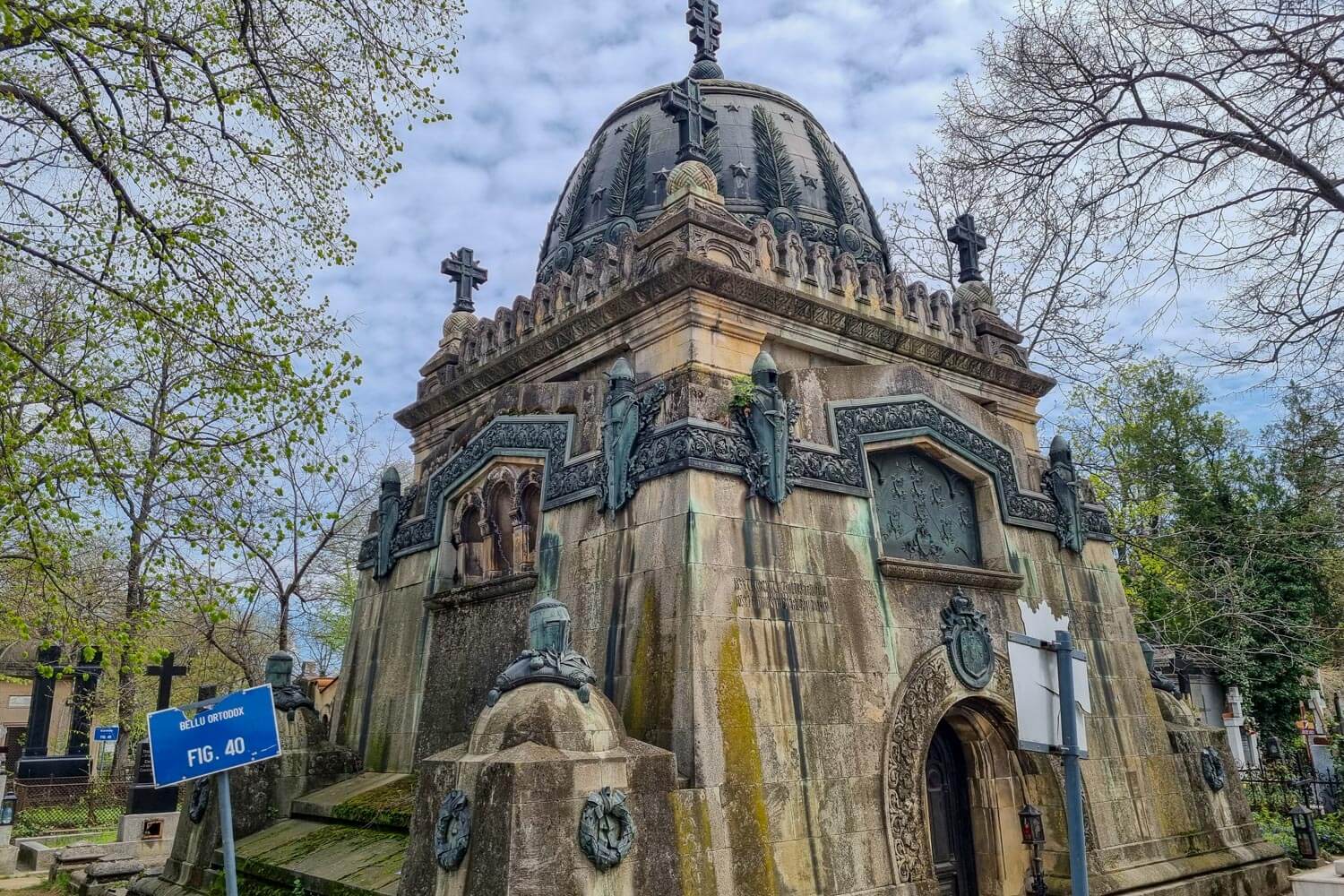
Șerban Vodă “Bellu” Cemetery is one of the most authentic places in Bucharest and definitely worth visiting. Some graves are more beautiful then others, from simple tombstones to artistic masterpieces and entire chapels. Especially noteworthy are the entrance gate on Calea Șerban Vodă and the cemetery chapel, which was designed by the architect Alexandru Orăscu in the style of the Cathedral of Karlovy Vary in the Czech Republic.
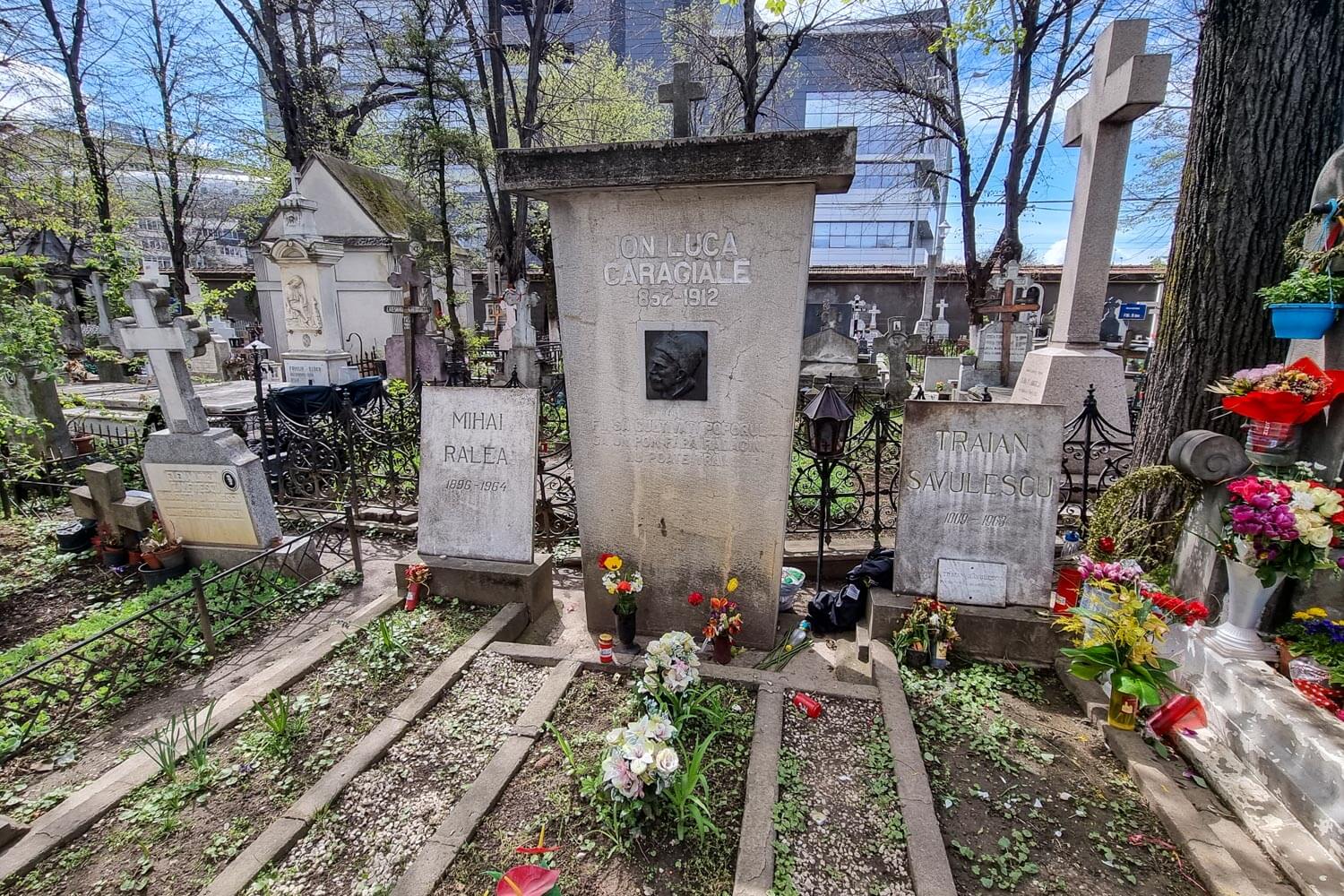
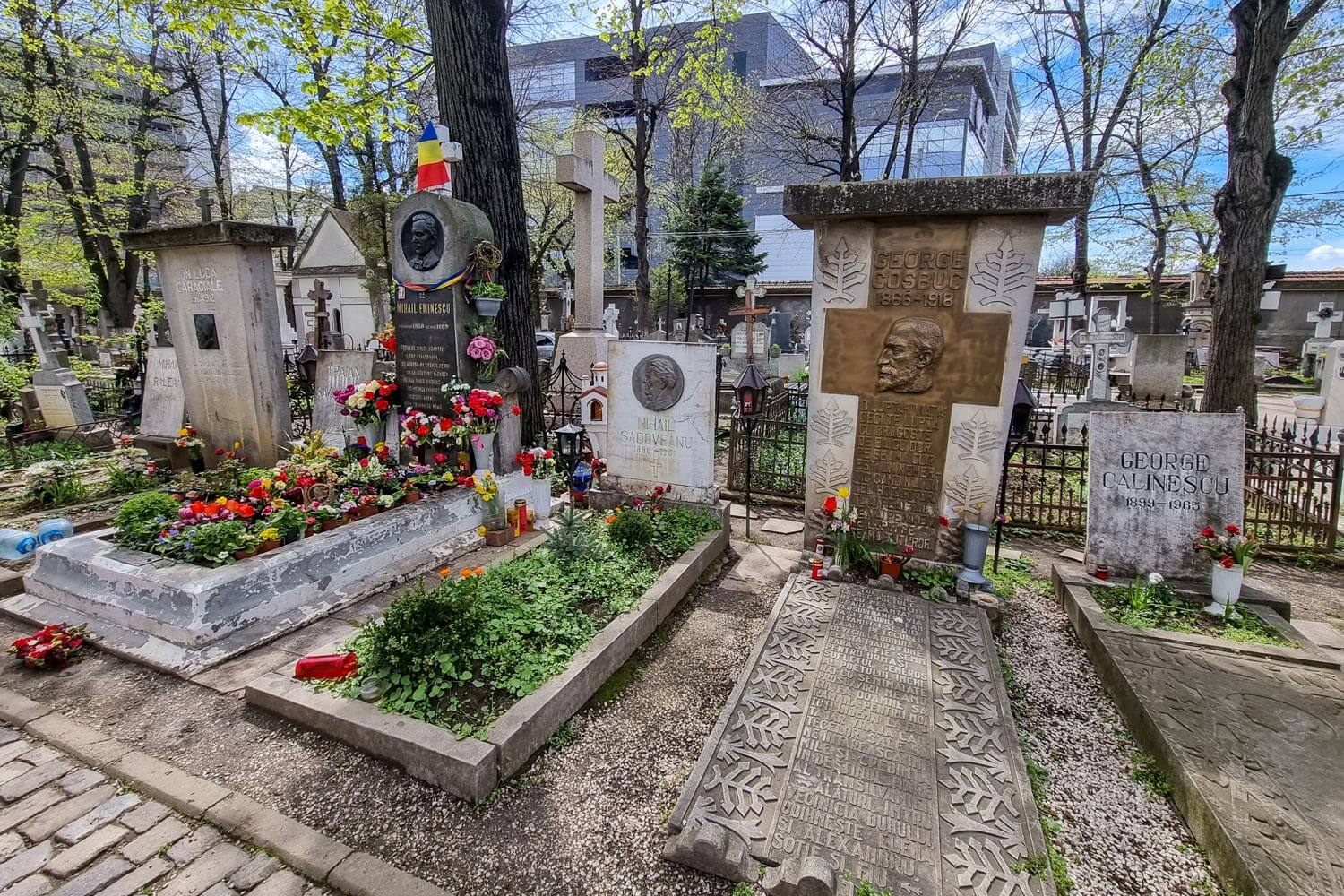
If you walk around Bellu Cemetery you can find the graves of many intellectuals, actors, singers, writers, poets, important soldiers, politicians, and other famous Romanian people. Some examples are Traian Vuia (inventor), Mihai Eminescu (writer, poet), Ion Luca Caragiale (writer, poet), Gheorghe Cantacuzino (politician, mayor of Bucharest), George Coșbuc (poet), and Aurel Vlaicu (inventor). There is also a section dedicated to the French soldiers who died in Romania during the First World War.
Next to Bellu Cemetery, to the north on Calea Șerban Vodă, you can find the Heroes Church which has another cemetery with the heroes and martyrs of the 1989 Revolution.