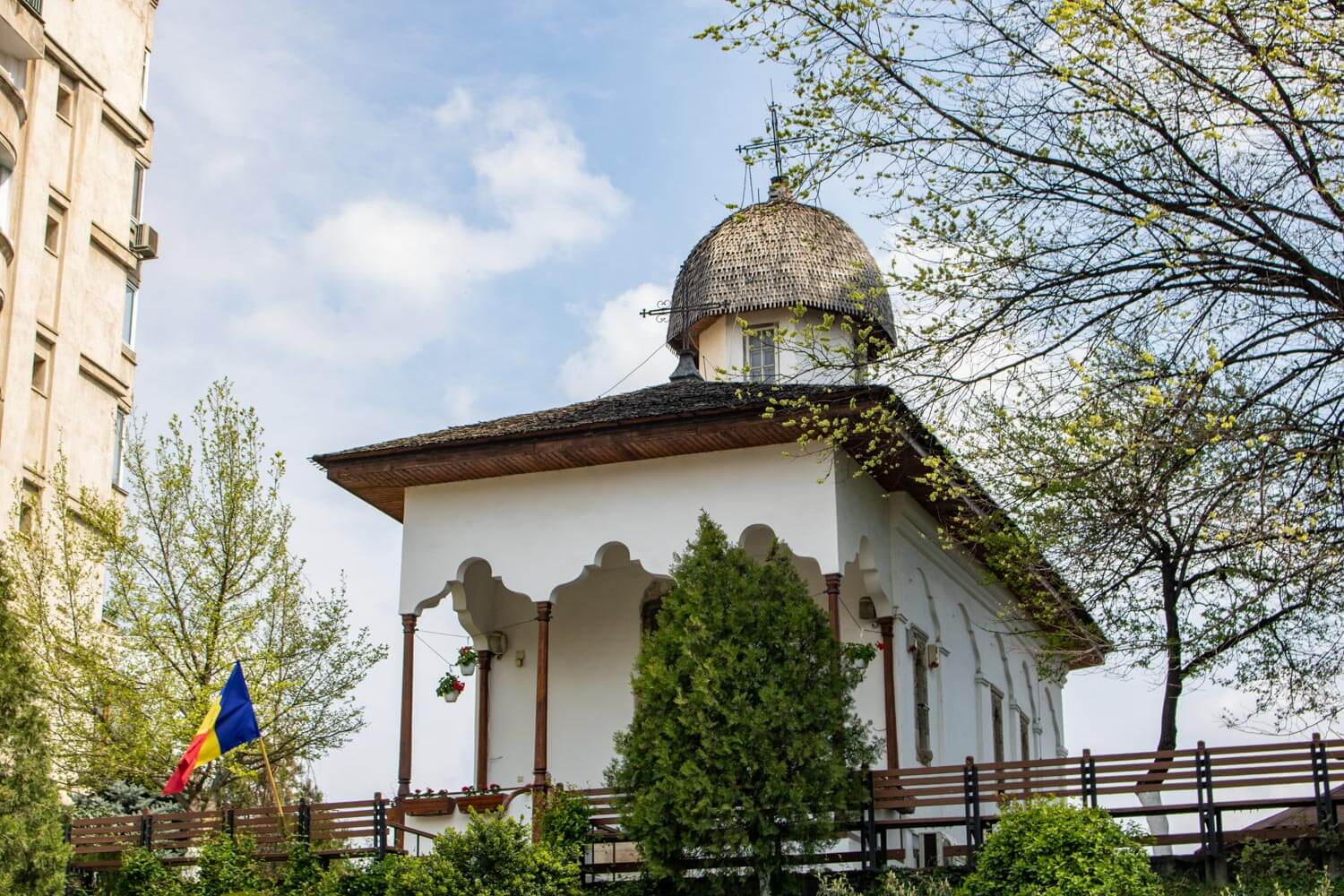
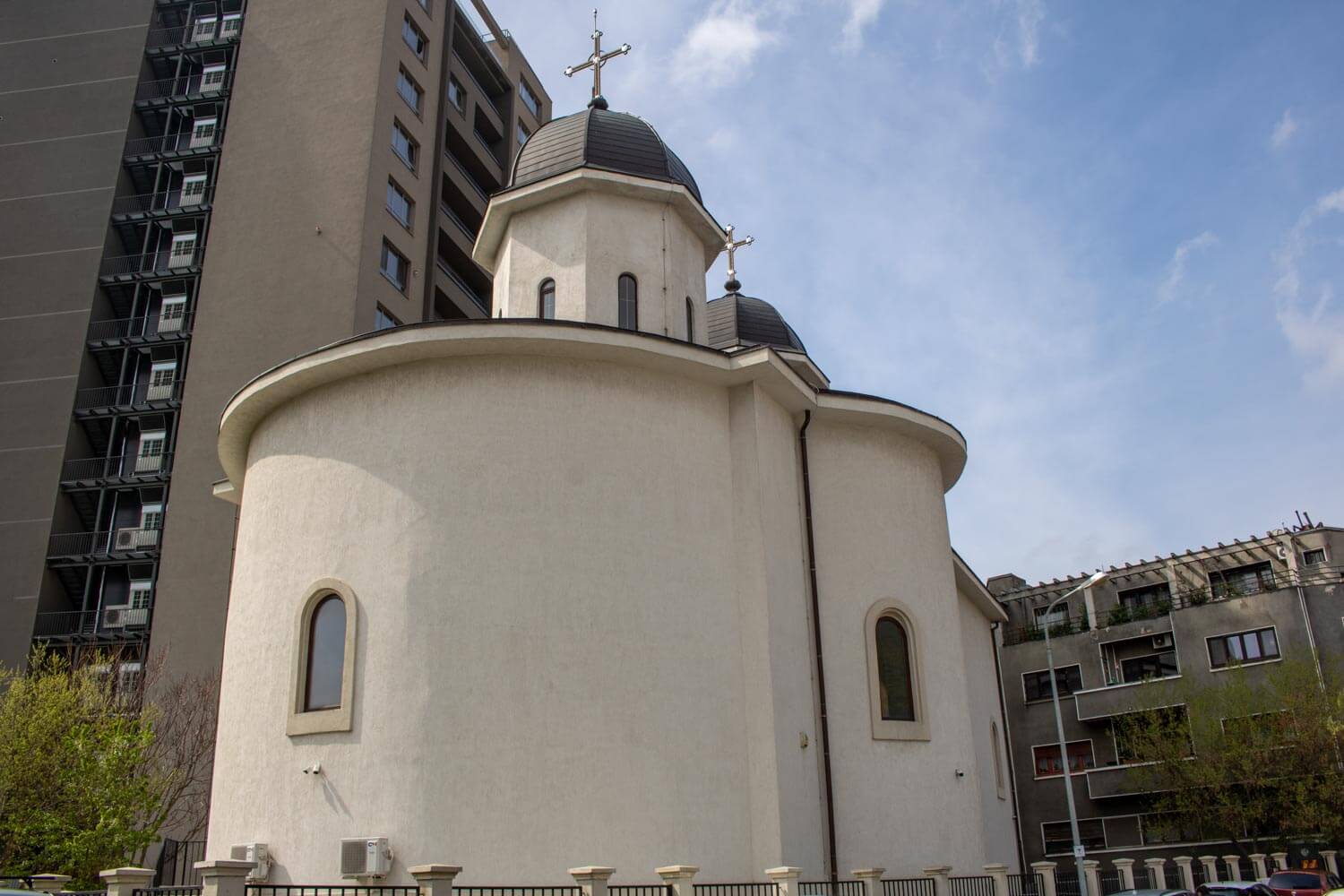
The Radu Vodă Monastery (Mănăstirea Radu Vodă) is a Romanian Orthodox church and monastery on a hill near the Dâmbovița Rivier in the center of Bucharest.
The area where the monastery stands is known to be inhabited since the Paleolithic times and the remains that have been found indicate that it was one of the oldest settlements in the modern territory of Romania. Archaeological objects from the Neolithic period, the Bronze Age, and the Iron Age were found here as well as the remains of a settlement from the Dacian Era (100 BC – 100 AD) so the area has most probably always been inhabited.
The first church on the hill was built by Mihnea cel Rău around 1508-1509 and was replaced by the current church between 1568 and 1577. The new church was founded by Alexandru II Mircea, great-grandson of Vlad Tepeș, and his wife Ecaterina. His son Mihnea Turcitul expanded the monastery further with additional buildings and houses. Under his rule, the first library of Bucharest was established in the monastery.
In 1595 the church of the Radu Vodă Monastery was temporarily used as a mosque by the troops of Sinan Pasha, when Bucharest was occupied by the Ottomans. When Michael the Brave (Mihai Viteazul) forced the Ottomans to retreat from the city, they burned down the church.
In 1625, the monastery was rebuilt by Radu Vodă Mihnea, the son of Mihnea Turcitul. In 1829 and 1838 the monastery was greatly damaged by earthquakes and in 1875 a significant part of the monastery, as well as other buildings in the city that were deemed unsanitary, were demolished by the order of Titu Maiorescu, the Minister of Cults. However, some important buildings including the church and bell tower were spared from demolition.
In 1893 the building of the Theological Seminary, located south of the church, was built as a boarding school by Ion Scorțeanu and his sister Maria Șchiopescu. Between 1969 and 1974 the entire complex of the Radu Vodă Monastery underwent a complete renovation and the church was reconsecrated in 1979.