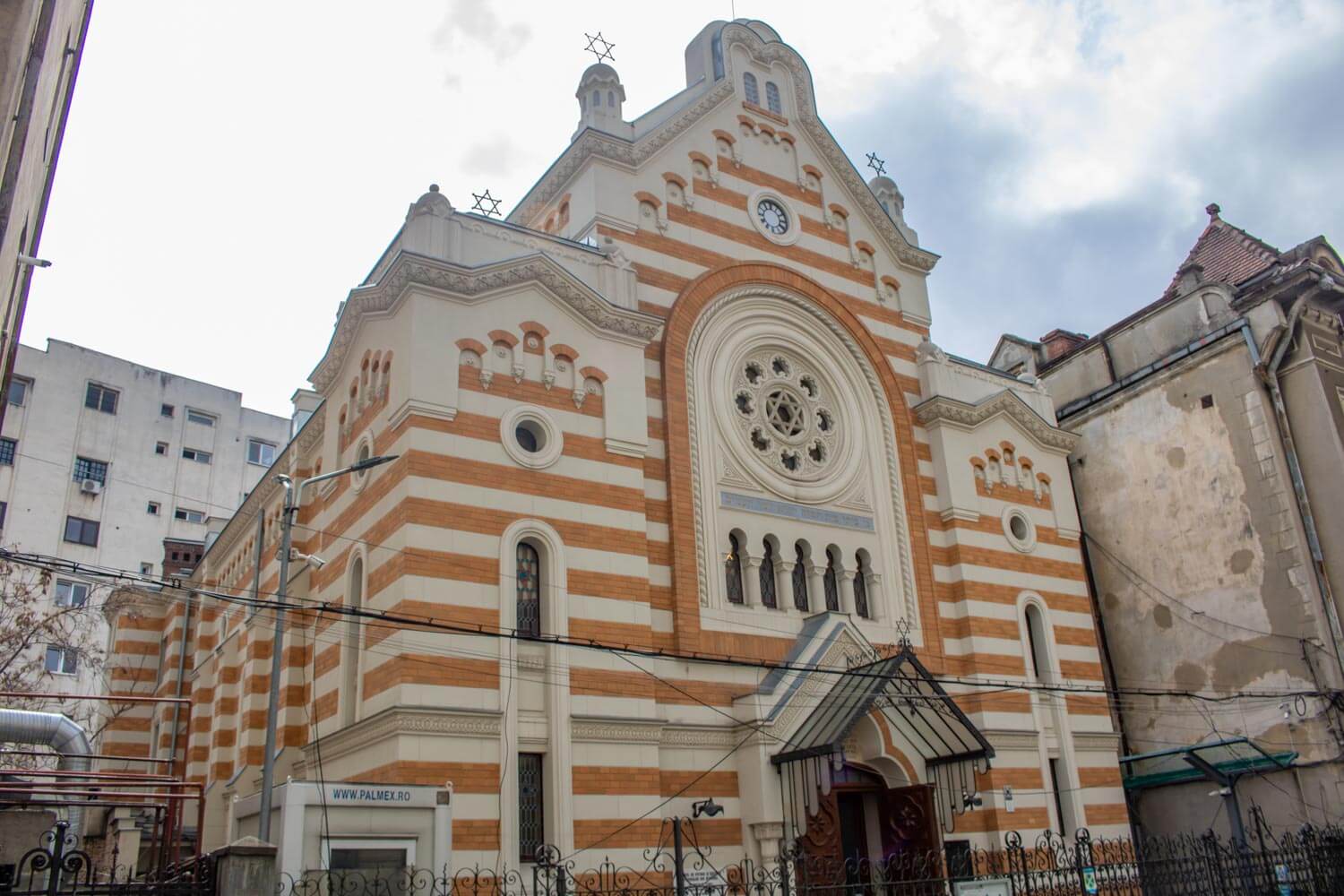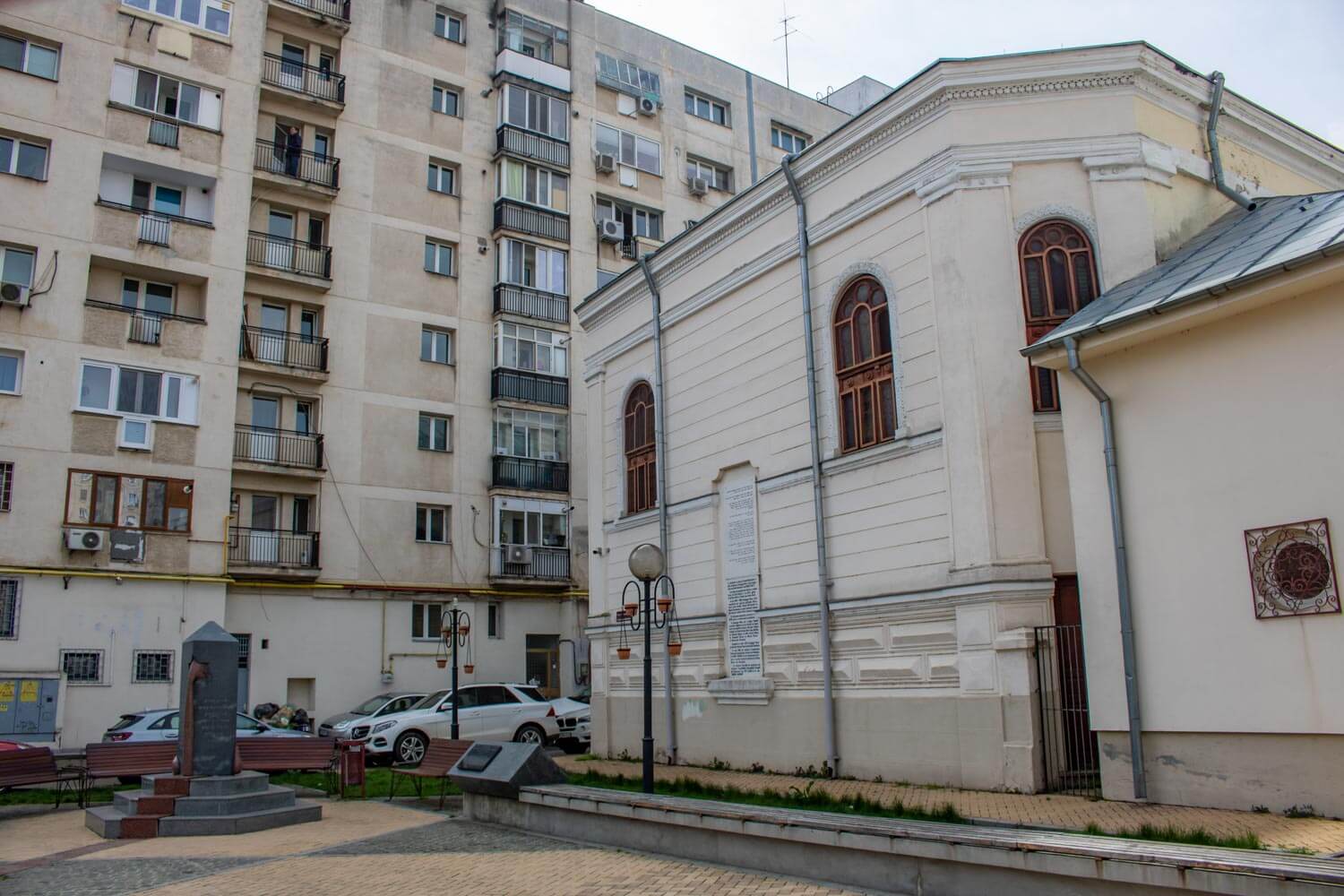
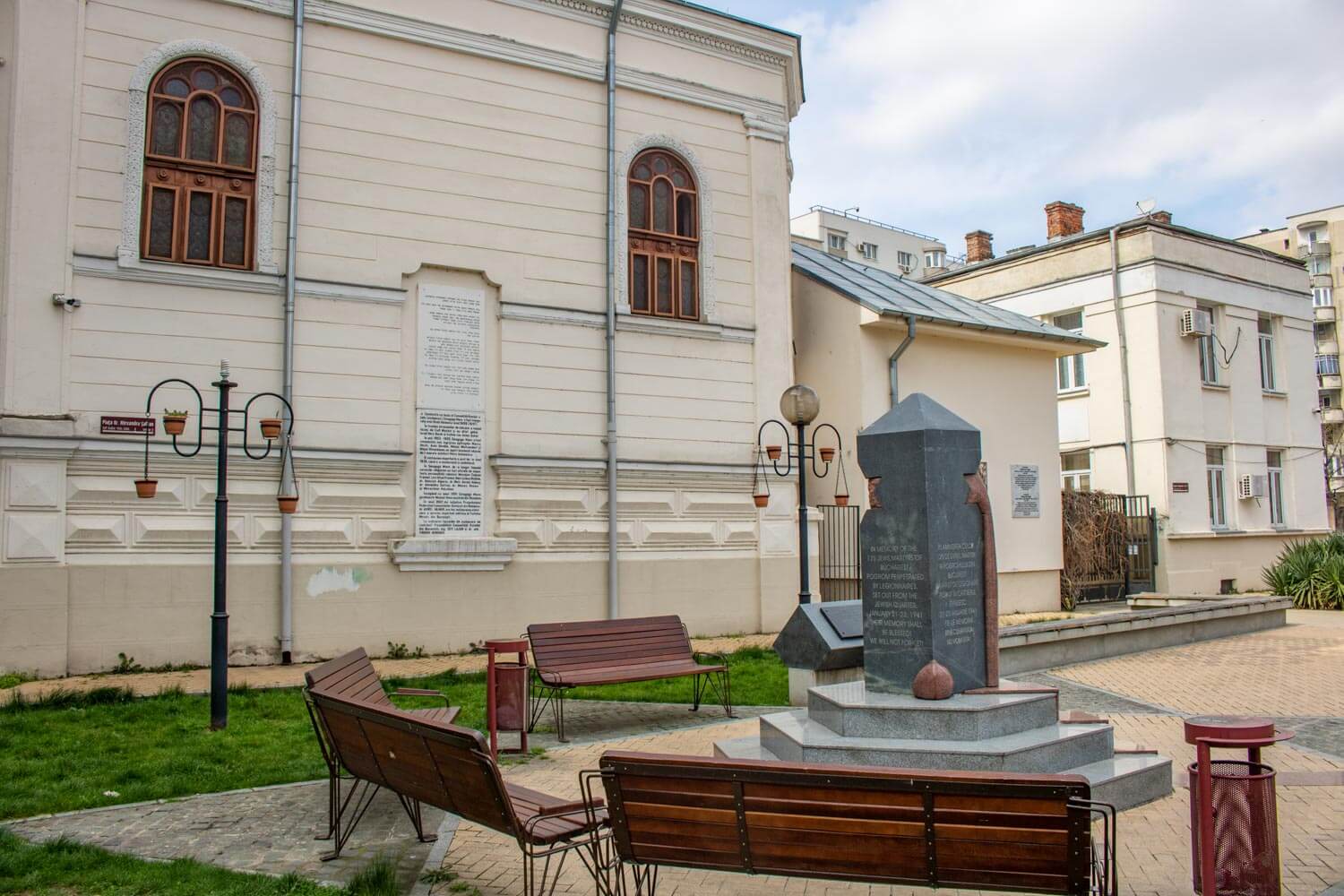
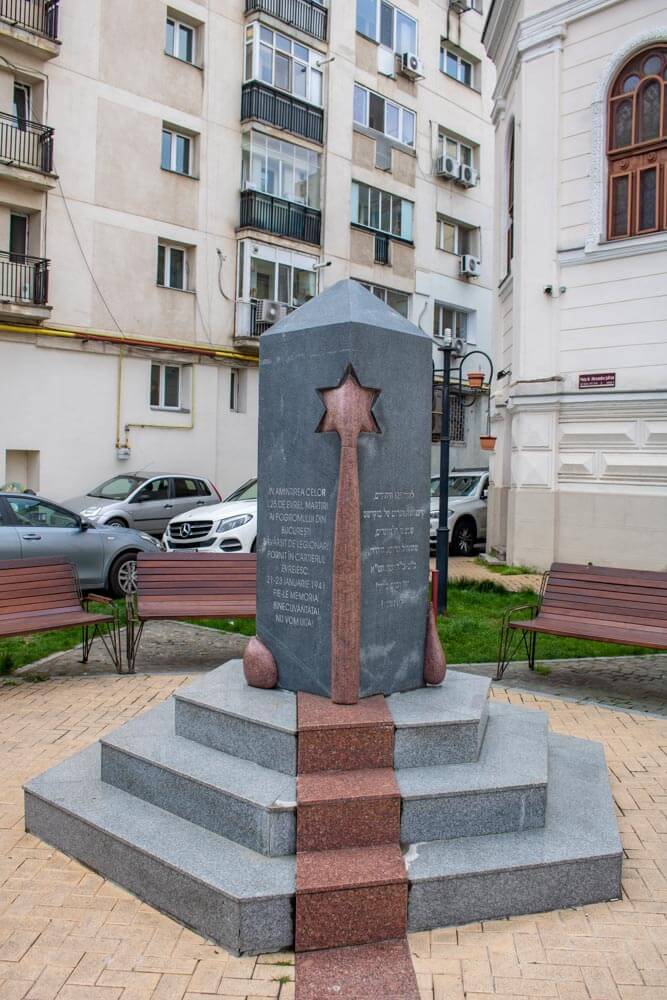
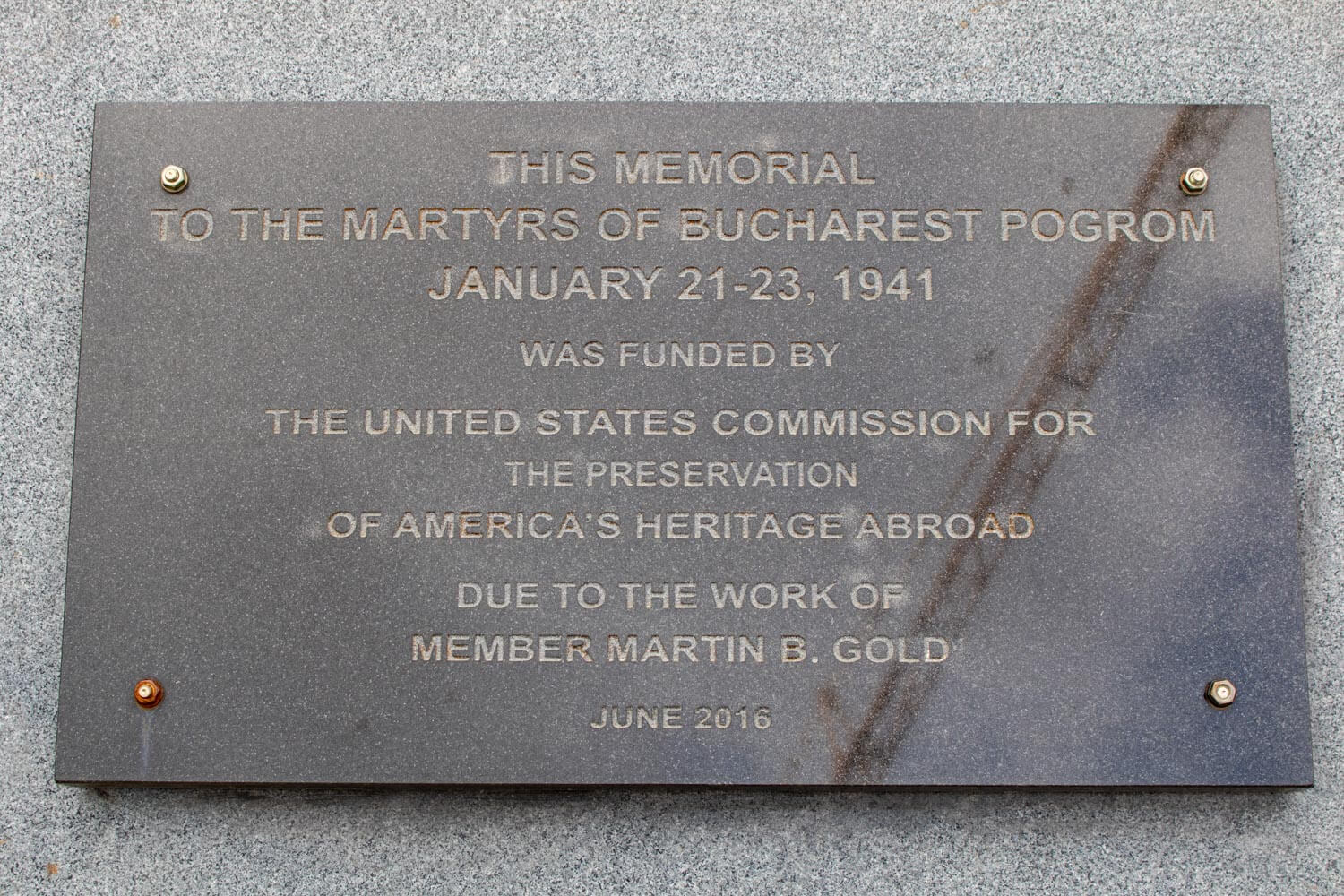
The Great Synagogue of Bucharest (Sinagoga Mare din București) is a former synagoge in the Jewish neighborhood of Bucharest, which now houses the Romanian Holocaust Museum (Muzeul Holocaustului din România).
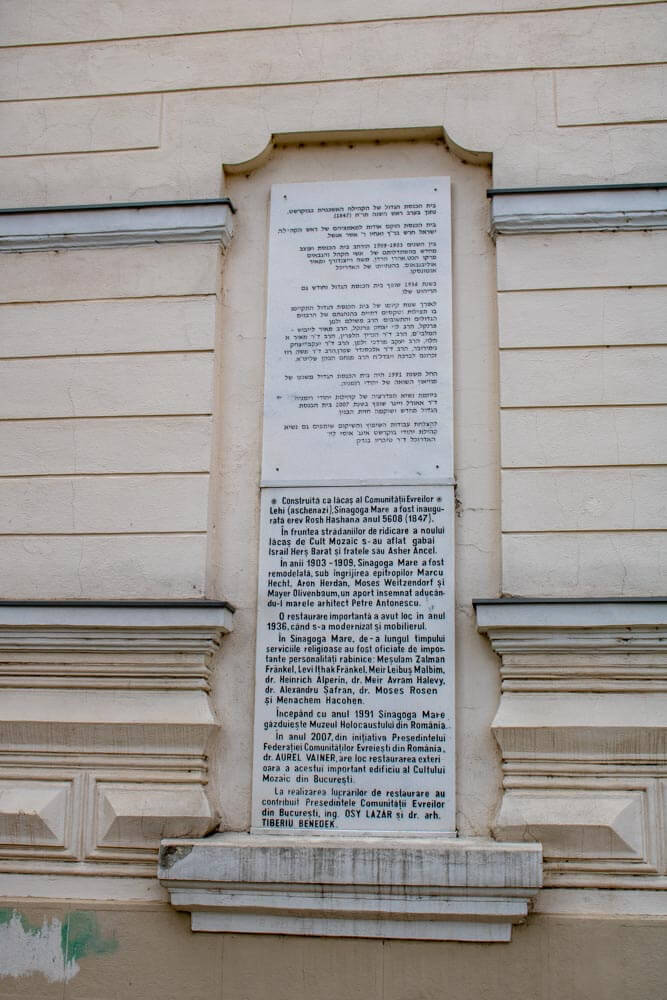
The Great Synagoge was built by the Polish-Jewish community of Bucharest in 1846 and was therefore initially also known as the Polish Synagogue. The name Great Synagoge was derived from the fact that, at the time of its construction, it was the largest place of worship of the Jewish community in the capital.
After restoration in 1865 and 1903, the synagogue got its current appearance and style, which can be descripbed as neoclassical mixed with Baroque and Rococo styles. The temple was damaged by an earthquake in 1940 and raided by the legionaires in the next year, but restorations were carried out after the end of World War II.
In the 1980s, the area surrounding the Great Synagogue was redeveloped to build housing blocks but unlike some other religious buildings, it was spared from demolishion.
Due to the exodus of jewish people to Israel the Great Synagogue is no longer in use and since 1991 it has housed the Romanian Holocaust Museum.
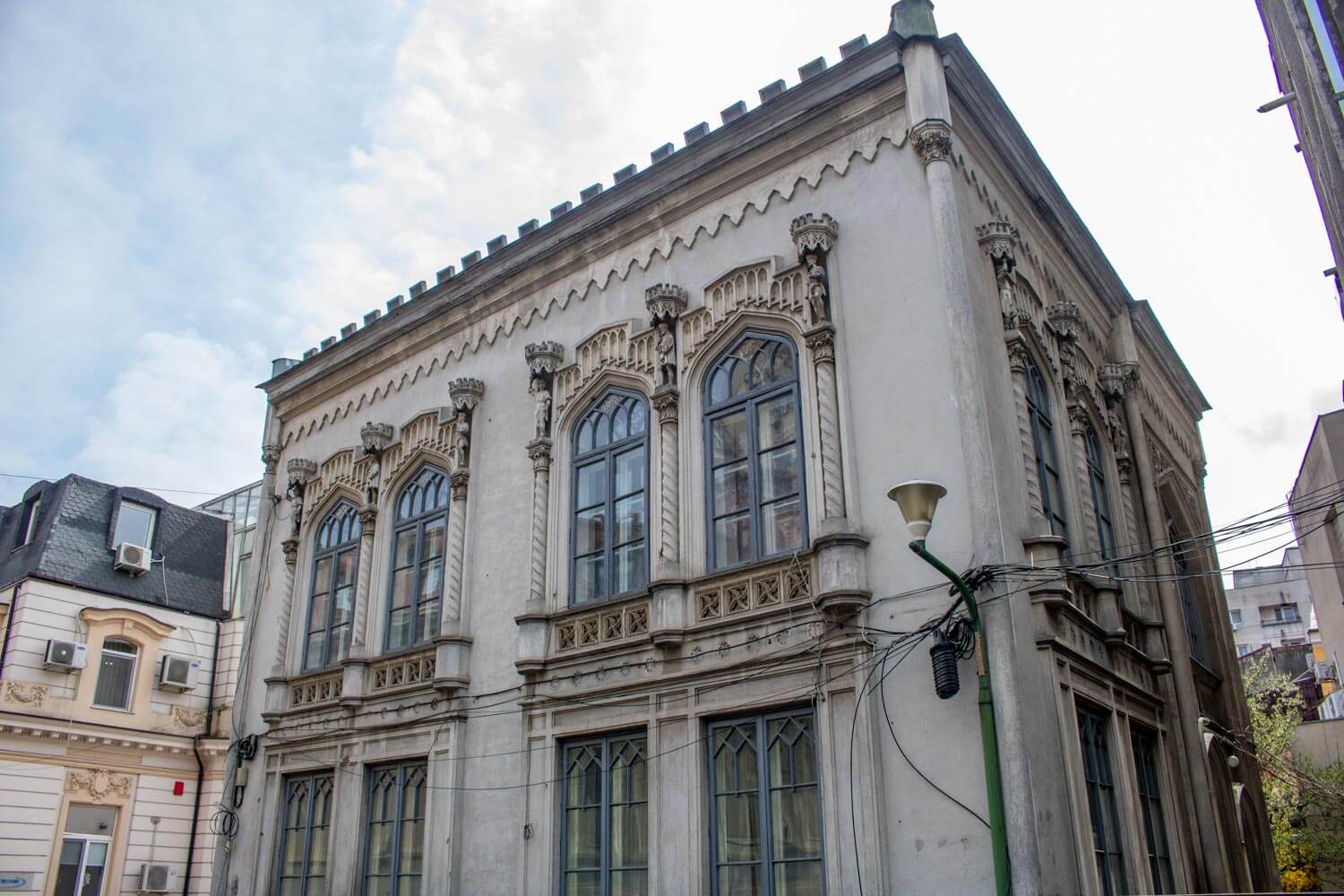
If you’re interested to learn more about the Jewish history, you can also visit the Jewish History Museum of Romania in the nearby Holy Union Temple.