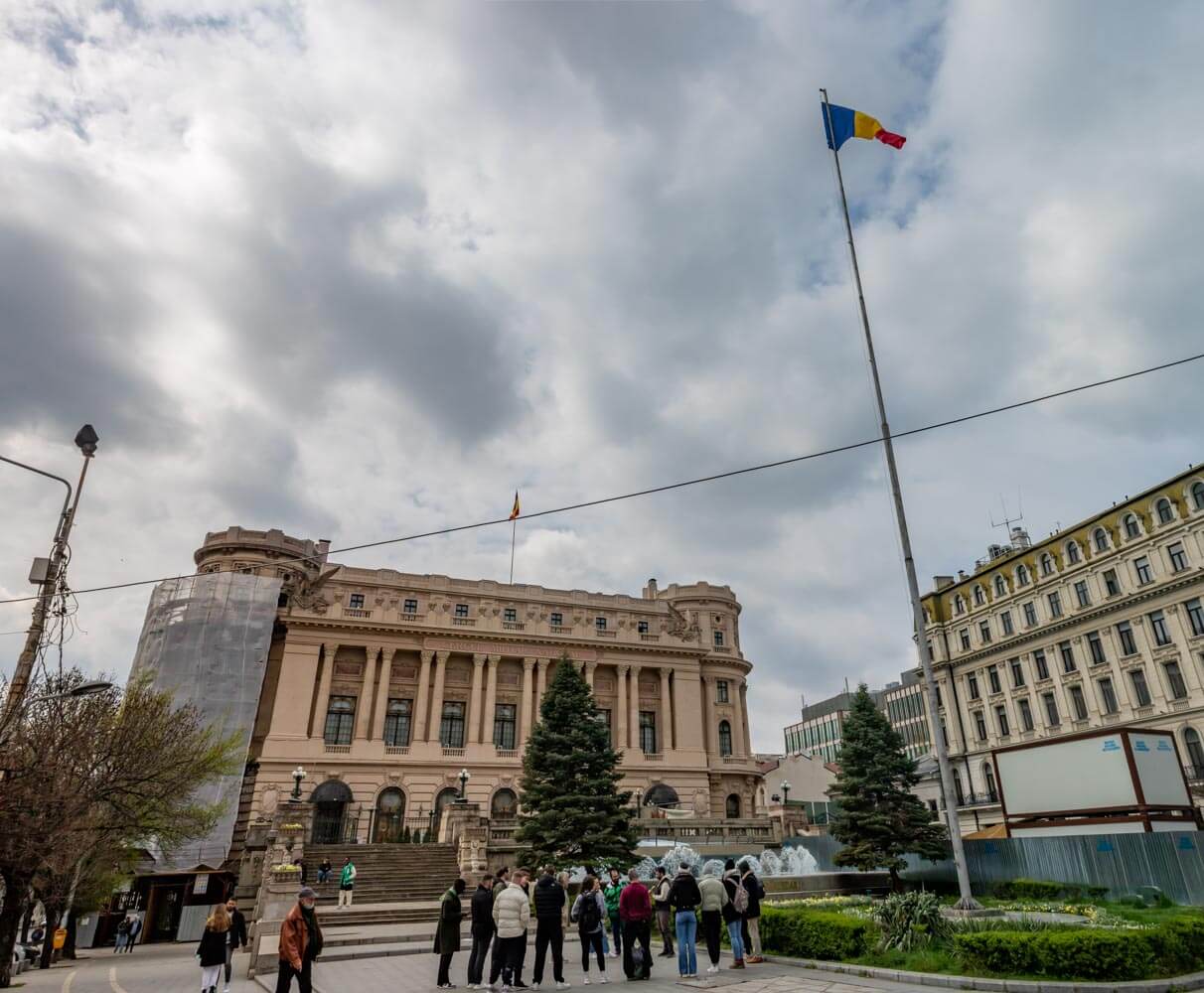
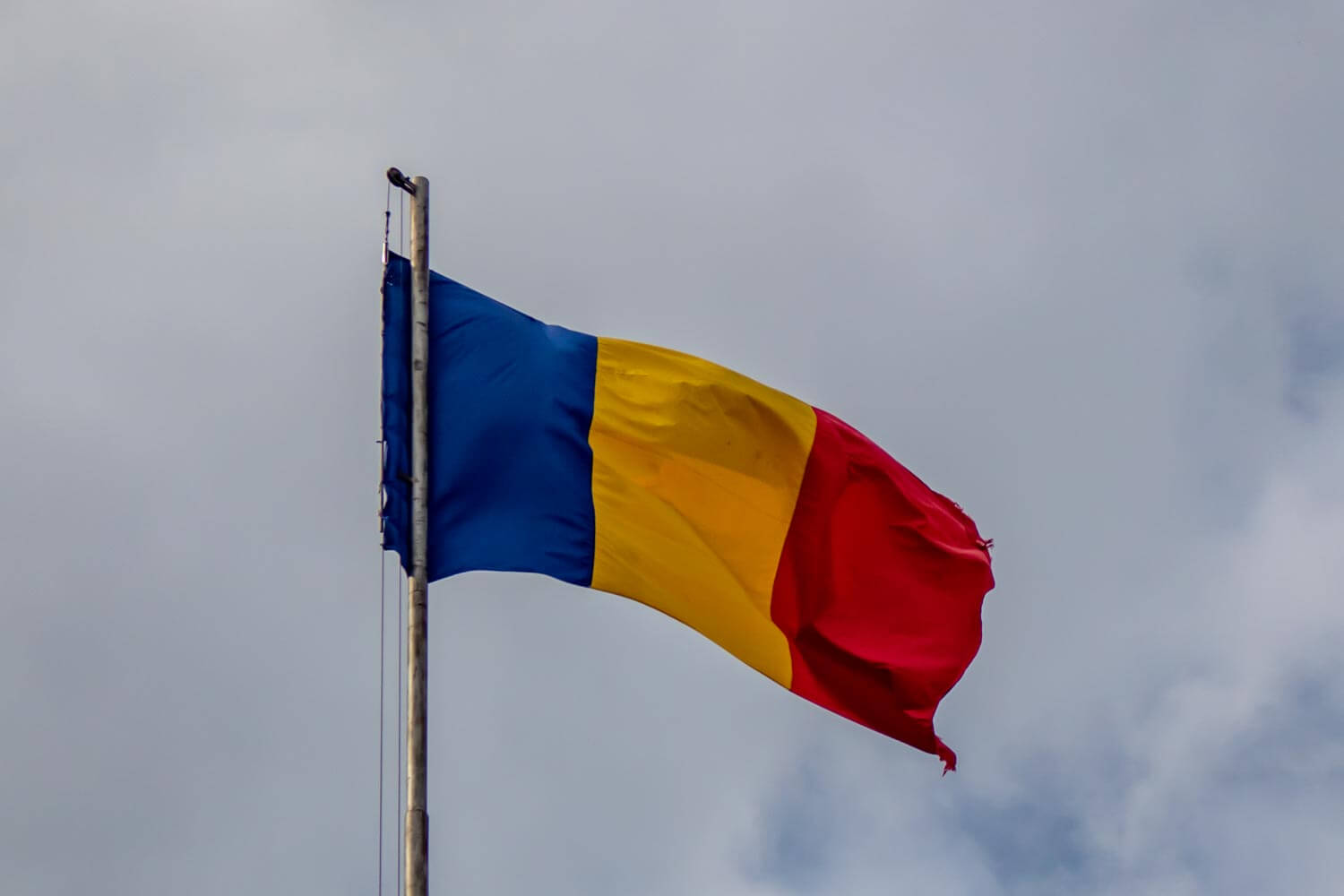
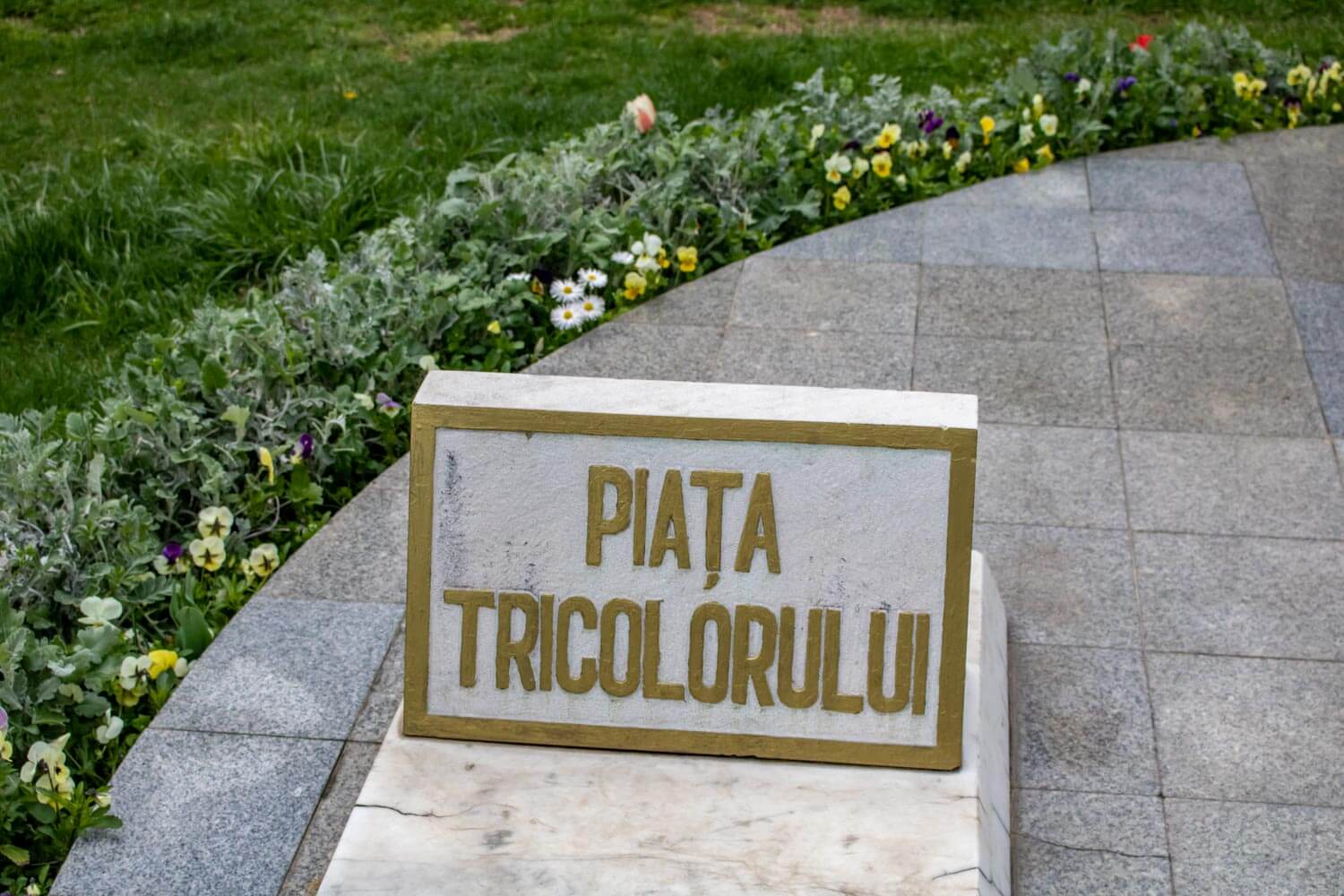
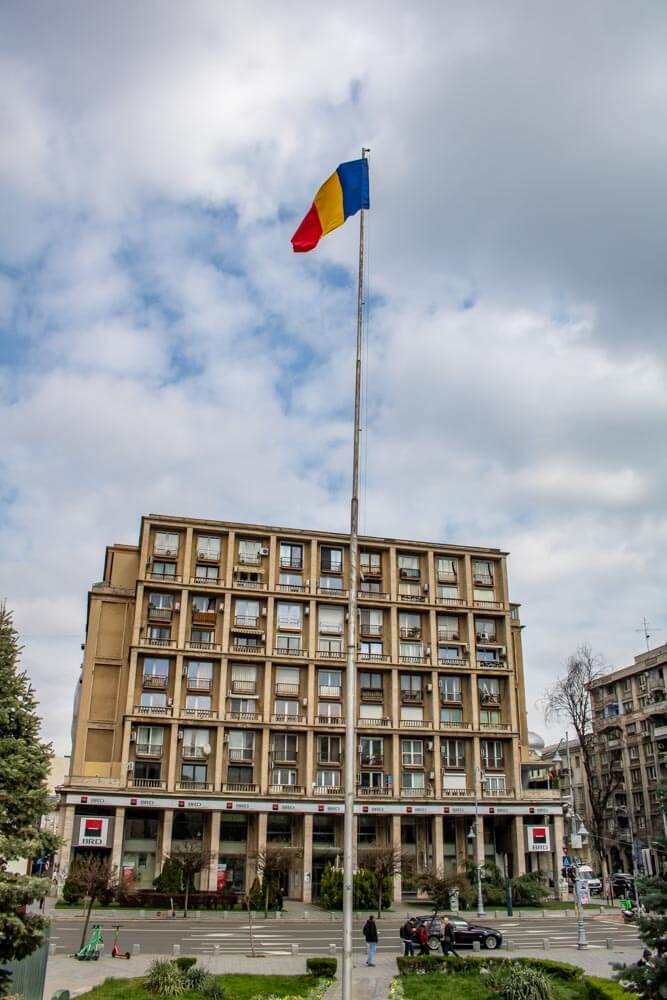
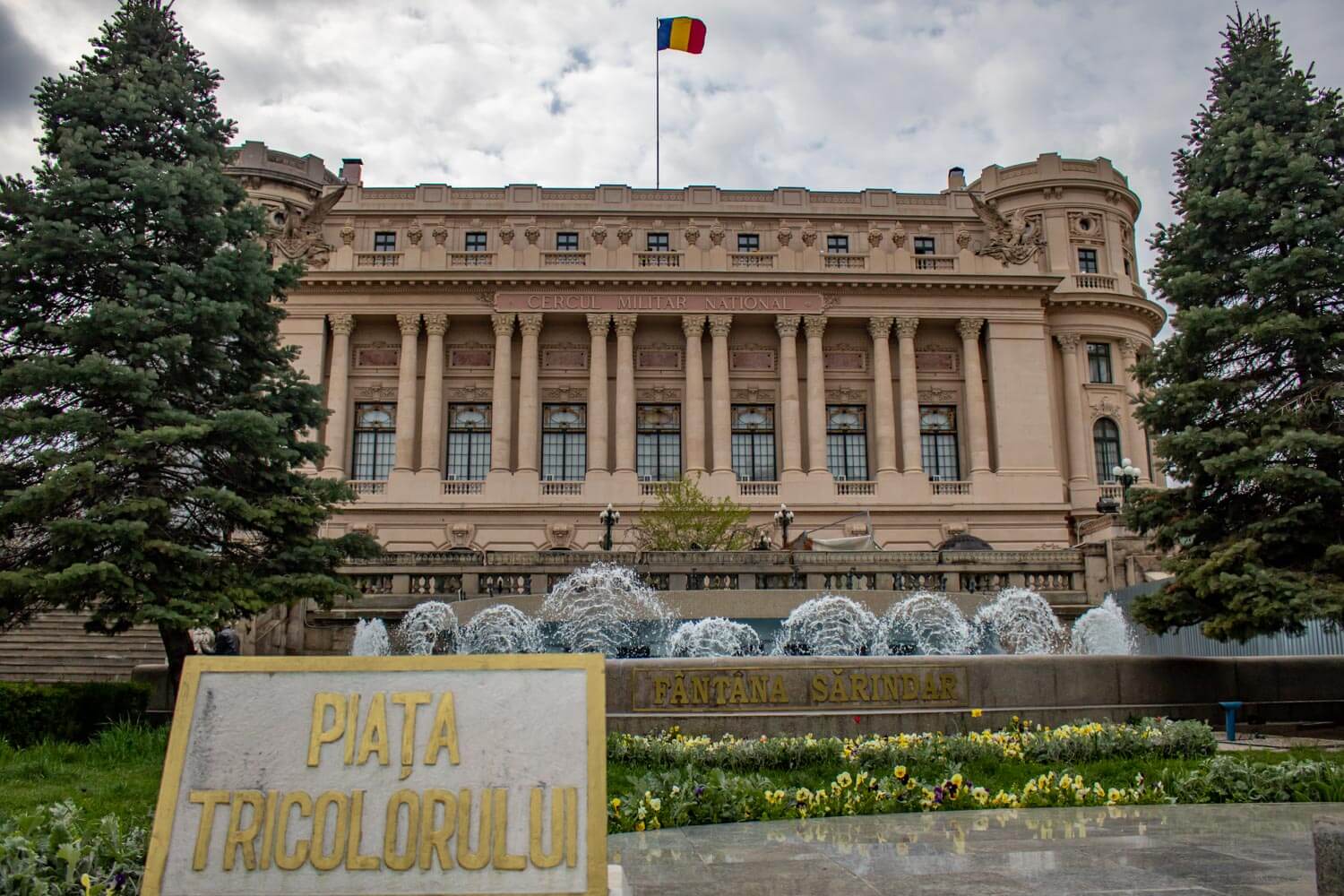
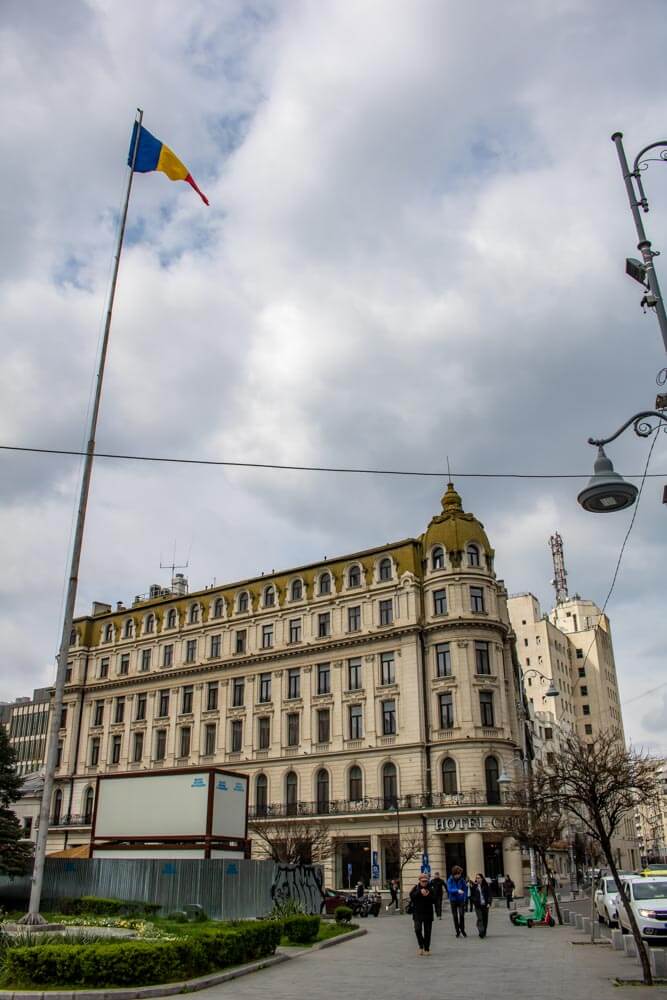
Flag Square (Piața Drapelului), also called Three Colors Square (Piața Tricolorului), is a small public square at the intersection of Victory Avenue and Queen Elisabeth Boulevard in the historic old town of Bucharest. In the center of the square stands a large Romanian flag, hence the name Flag Square, or Three Colors Square after the three colors of the Romanian flag.
History Of Flag Square
On the site that is now Flag Square, there once was a monastery, when the area was still on the outskirts of the city. The history starts in 1362, when Vlaicu Vodă buit a small wooden church here. Later the church got in the hands of the Cocorăști boyars who made some repairs to it, but ultimately Matei Basarab decided to replace the church completely with a stone one.
In 1652, Basarab founded the Sărindar Monastery, which was built with brick walls and cells. It was his 40th church, with which he completed the promise he made to god to erect 40 church. Sărindar comes from the Greek word Saranda, which means forty. The monastery was completed with an inn, a restaurant, a mill, and several other buildings.
Around 1800, the monastic cells were turned into a hospital for mentally ill persons. Maintenance on the estate was, however, neglected, and several earthquakes created fractures in the structure of the complex over the course of the 19th century. In 1893, it was decided that demolition was inevitable.
In its place, a fountain was built with a model of the Statue of Liberty. In the following years, the empty space of the former monastery would be occupied by new buildings that are still there today.
Sights And Landmarks On Flag Square
Although Flag Square is relatively small, it is surrounded by historic buildings that have played a significant cultural and architectural role in the history of the city.
Next to the flag in the center of the square is the Sărindar Fountain, which is a memorial of the former Sărindar Monastery that was located here.
Behind the fountain, on the eastern side of the square stands the building of the National Military Circle, which was constructed in 1911 on a part of the site of the former monastery.
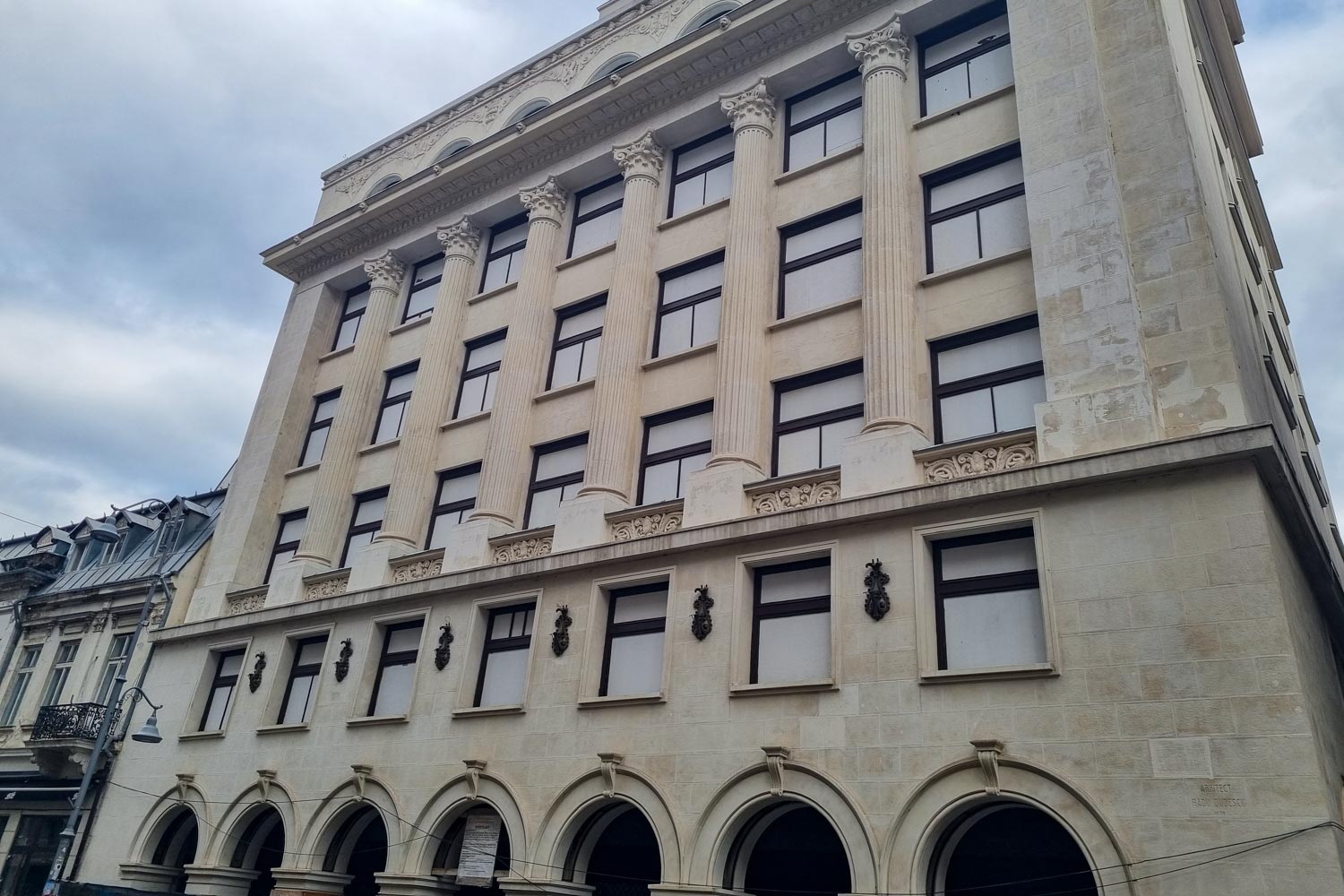
On the corner of Constantine Mile Street and Victory Avenue stands the historic building of Hotel Capital that was built on another part of the former monastery site. The building has served several purposes over time and once housed the Magasin de Luvru, which sold merchandise from Paris, and the famous Café Royal, which was a popular meeting place of the elite of the city.
On the other side of Victory Avenue, on the corner with Edgar Quinet Street, is Casa Capșa. Founded in 1868, this confectionary shop and restaurant has a long history in which it even catered to the royal family.
On the southern side of Flag Square, across from the Queen Elisabeth Boulevard is the historic Grand Hôtel du Boulevard, which opened its doors for the first time in 1873.
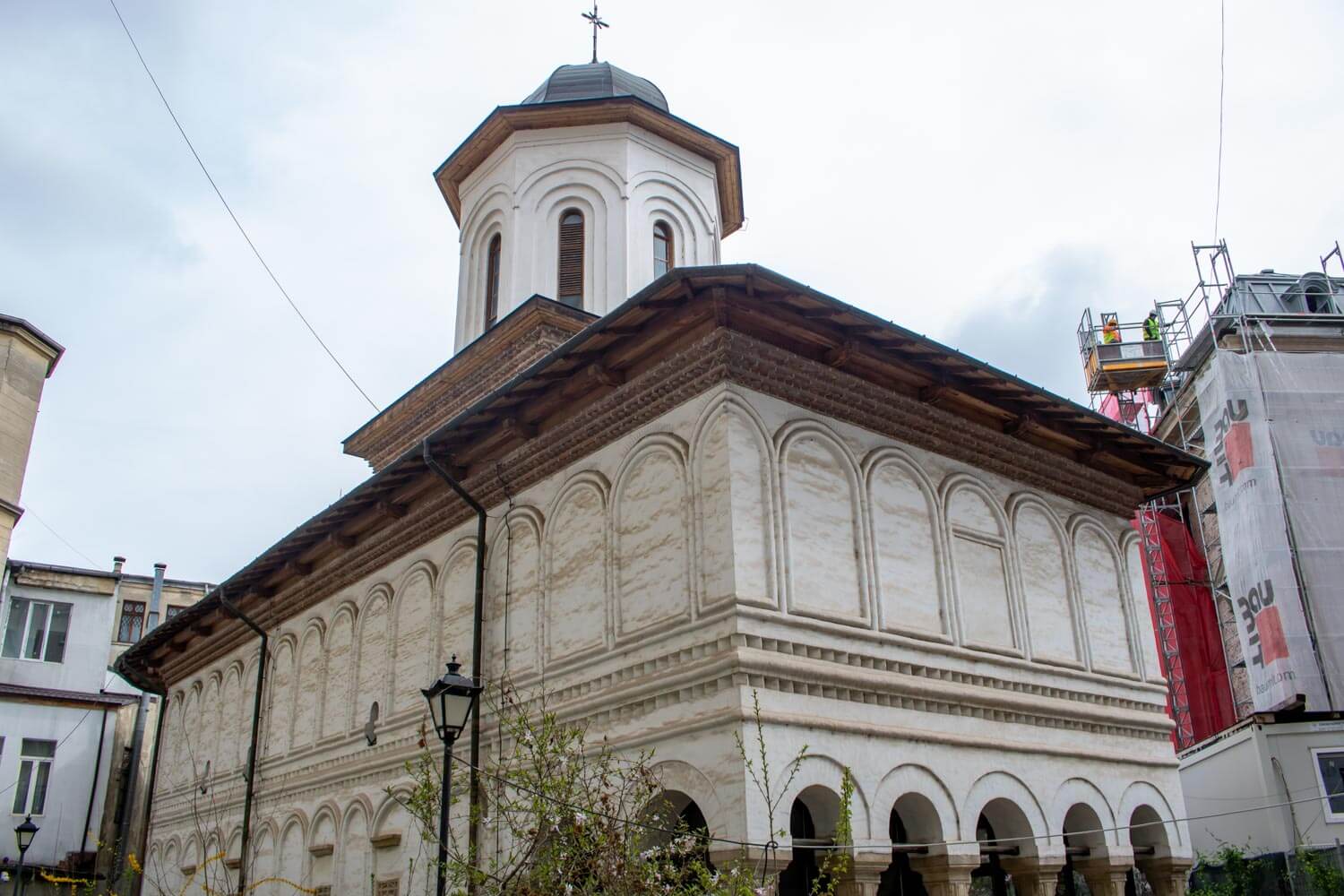
Hidden away behind building block that was constructed during the communist times on the corner of Victory Avenue and Queen Elisabeth Boulevard you can find the Lady’s Church from the 15th century.