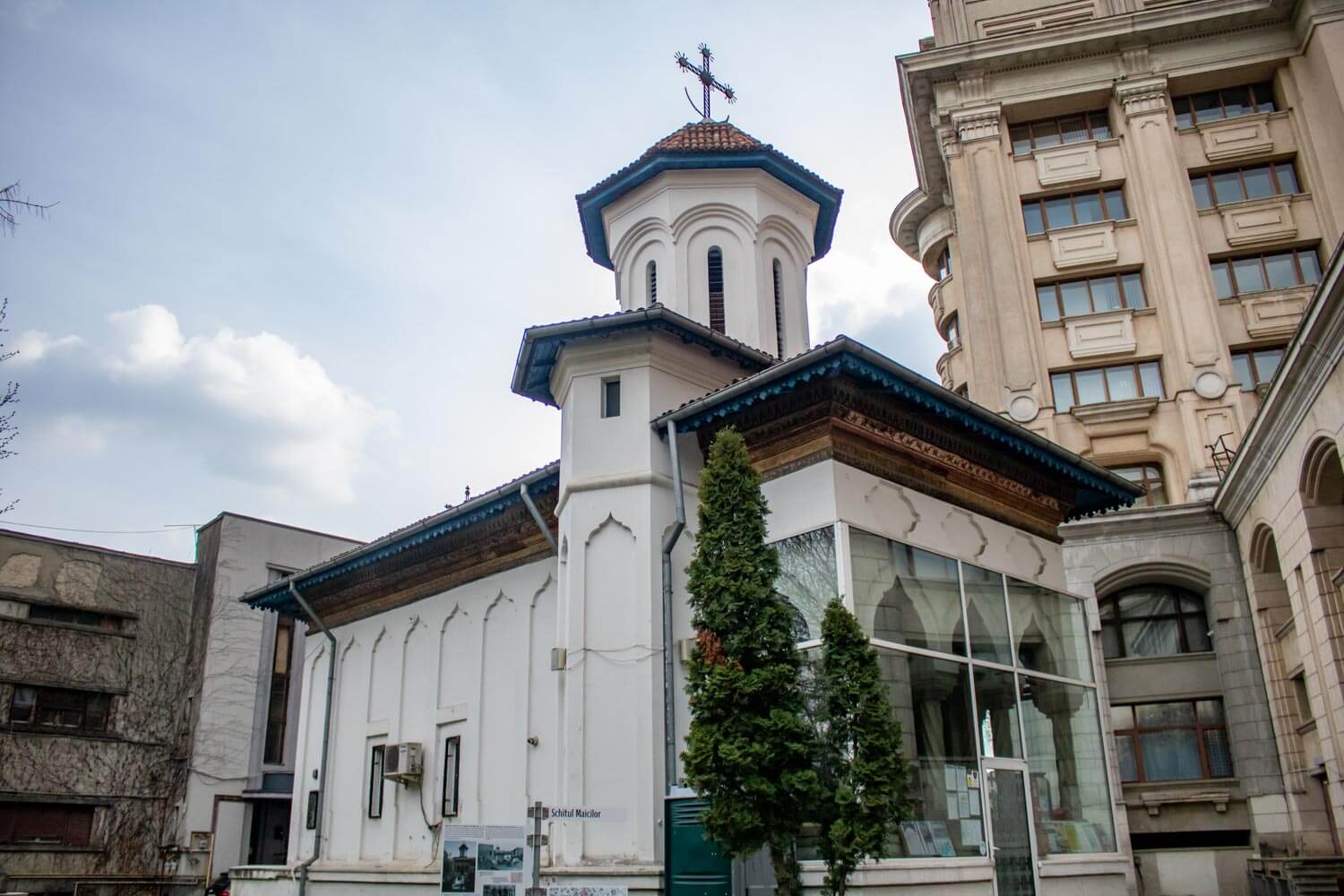
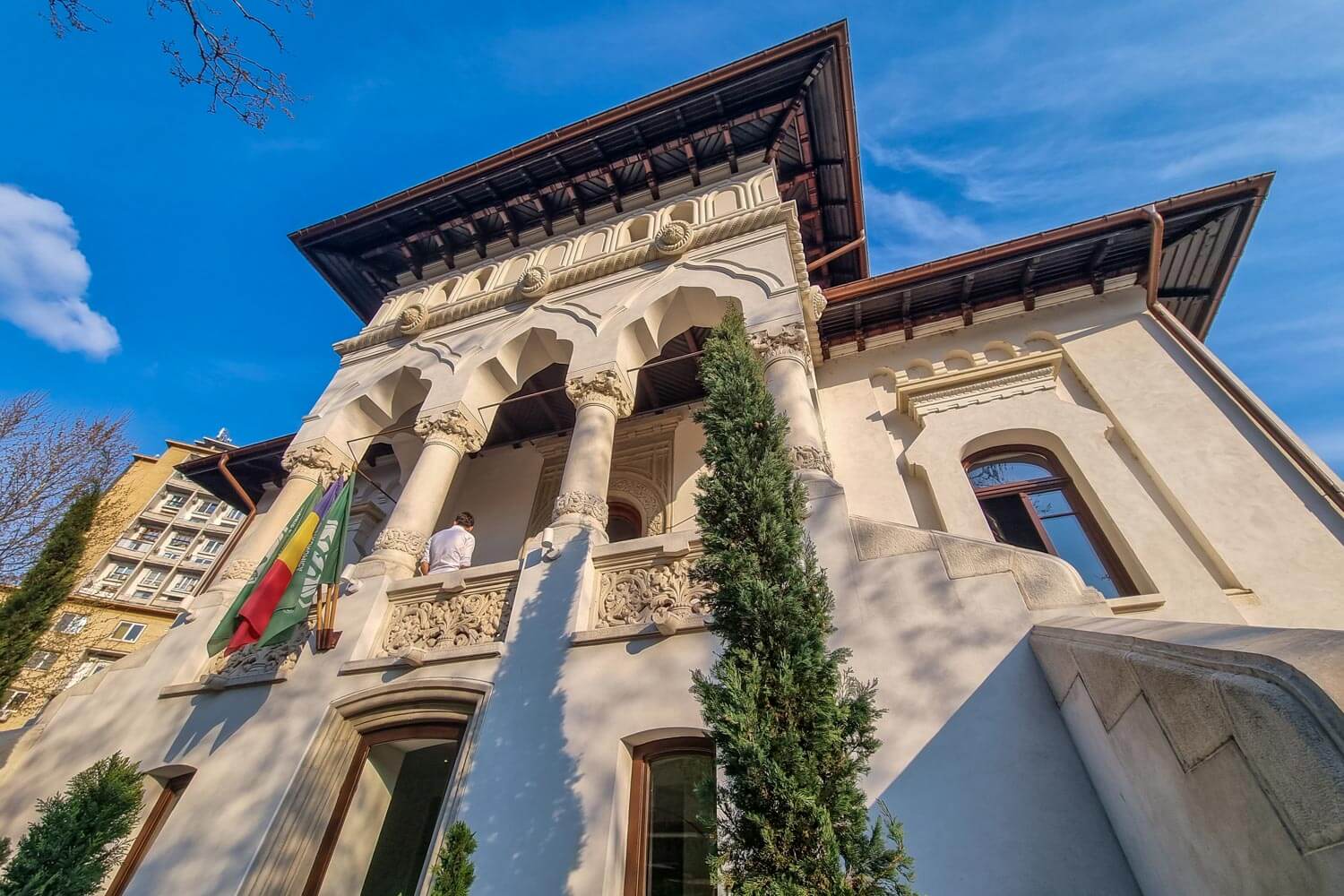
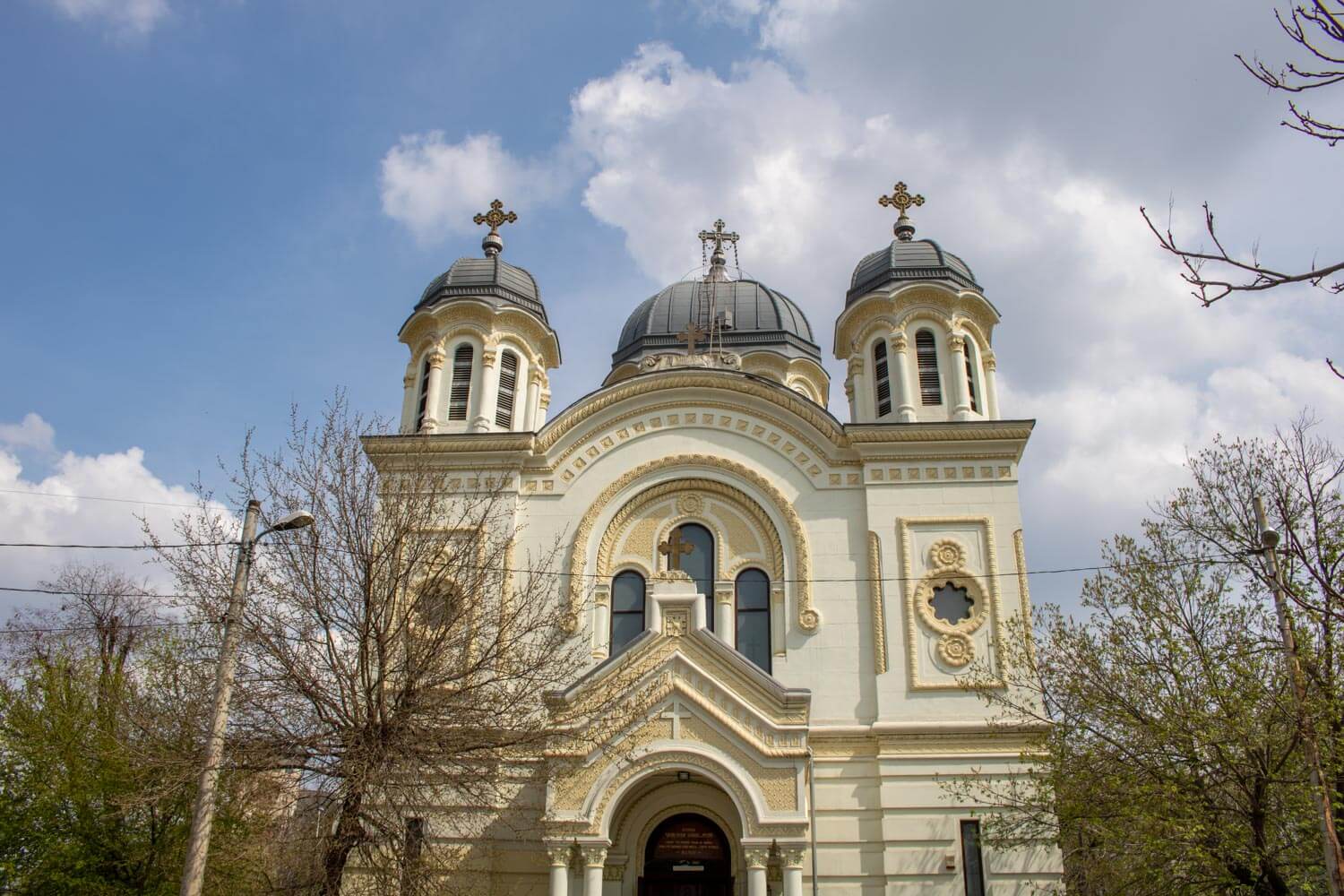
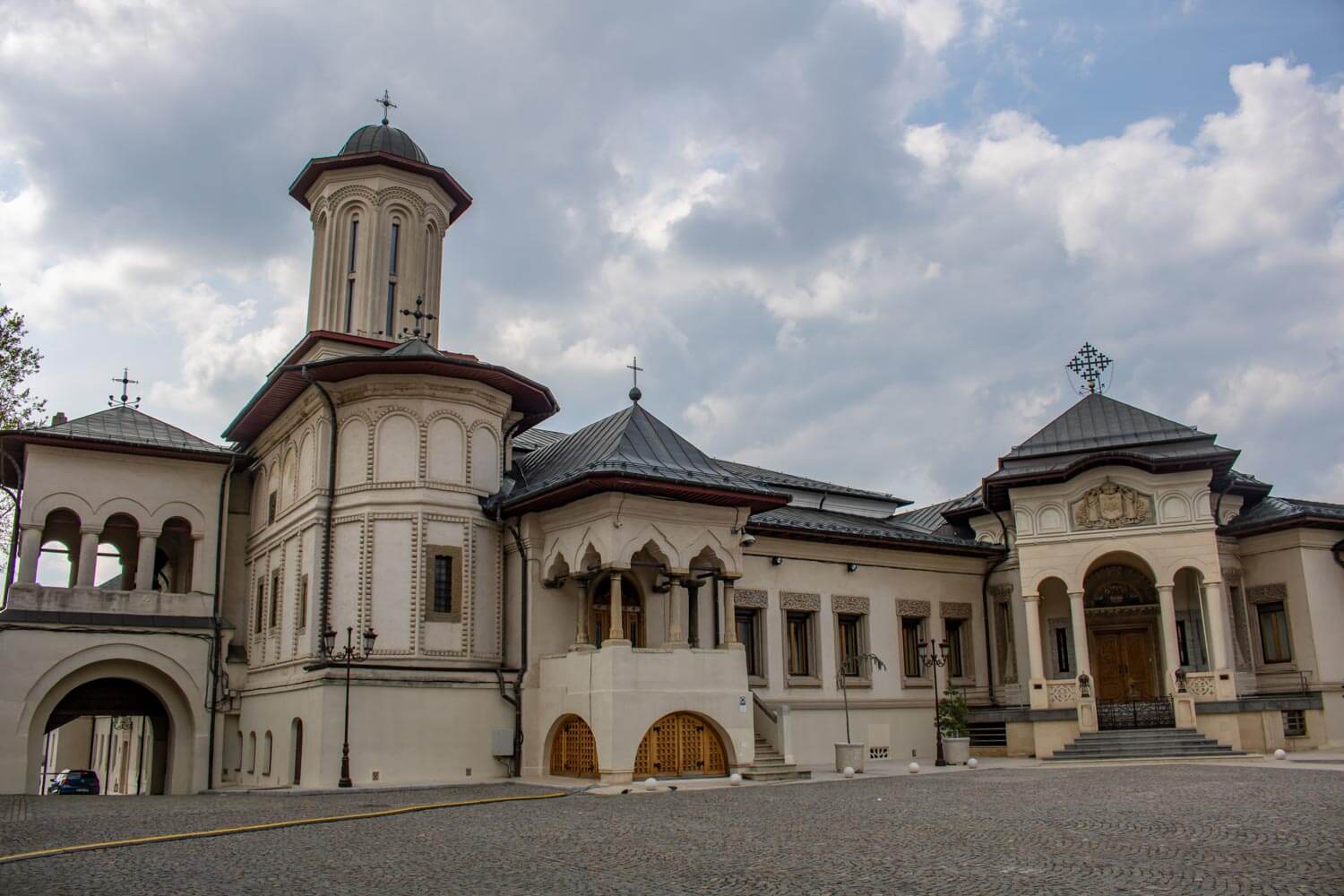
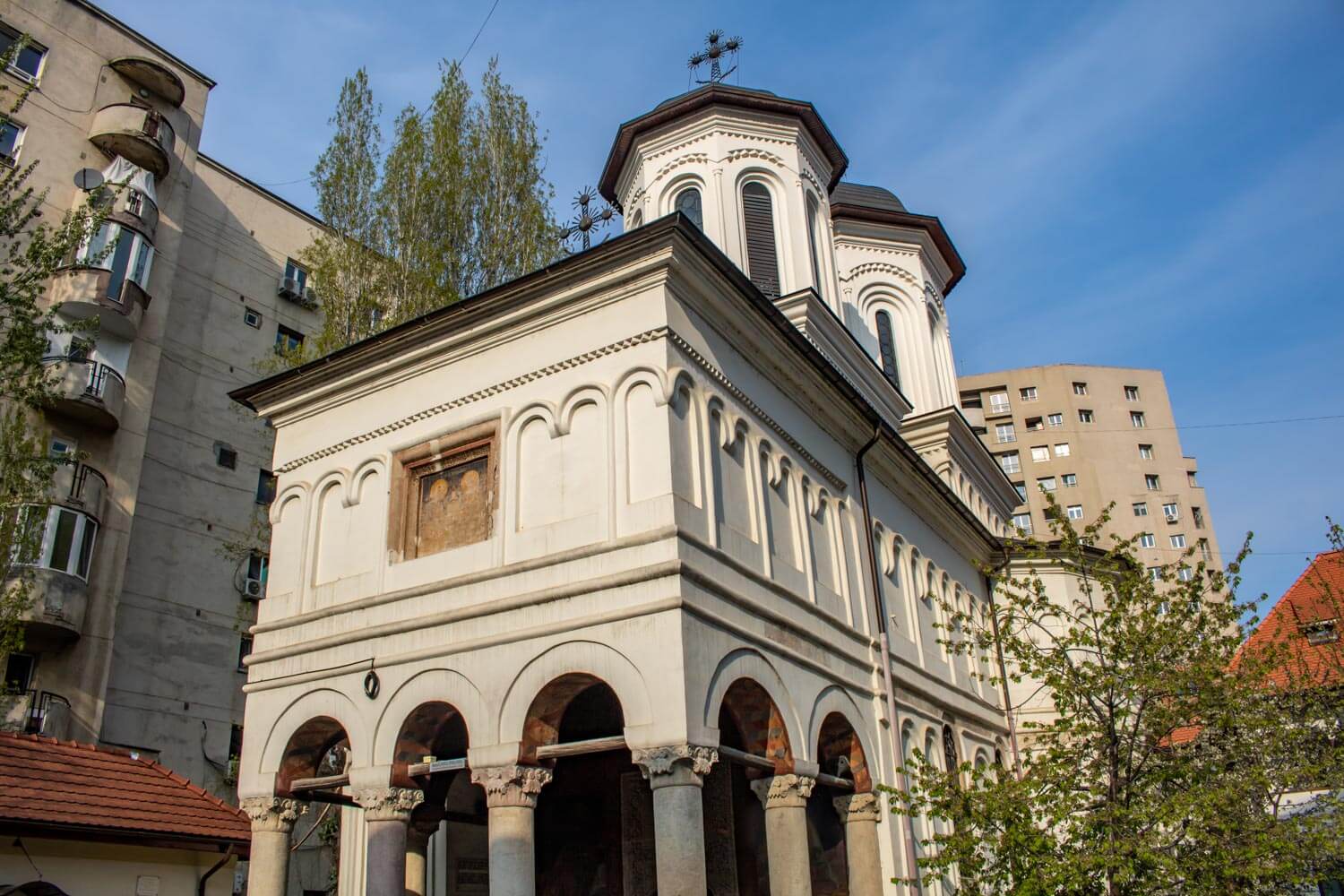
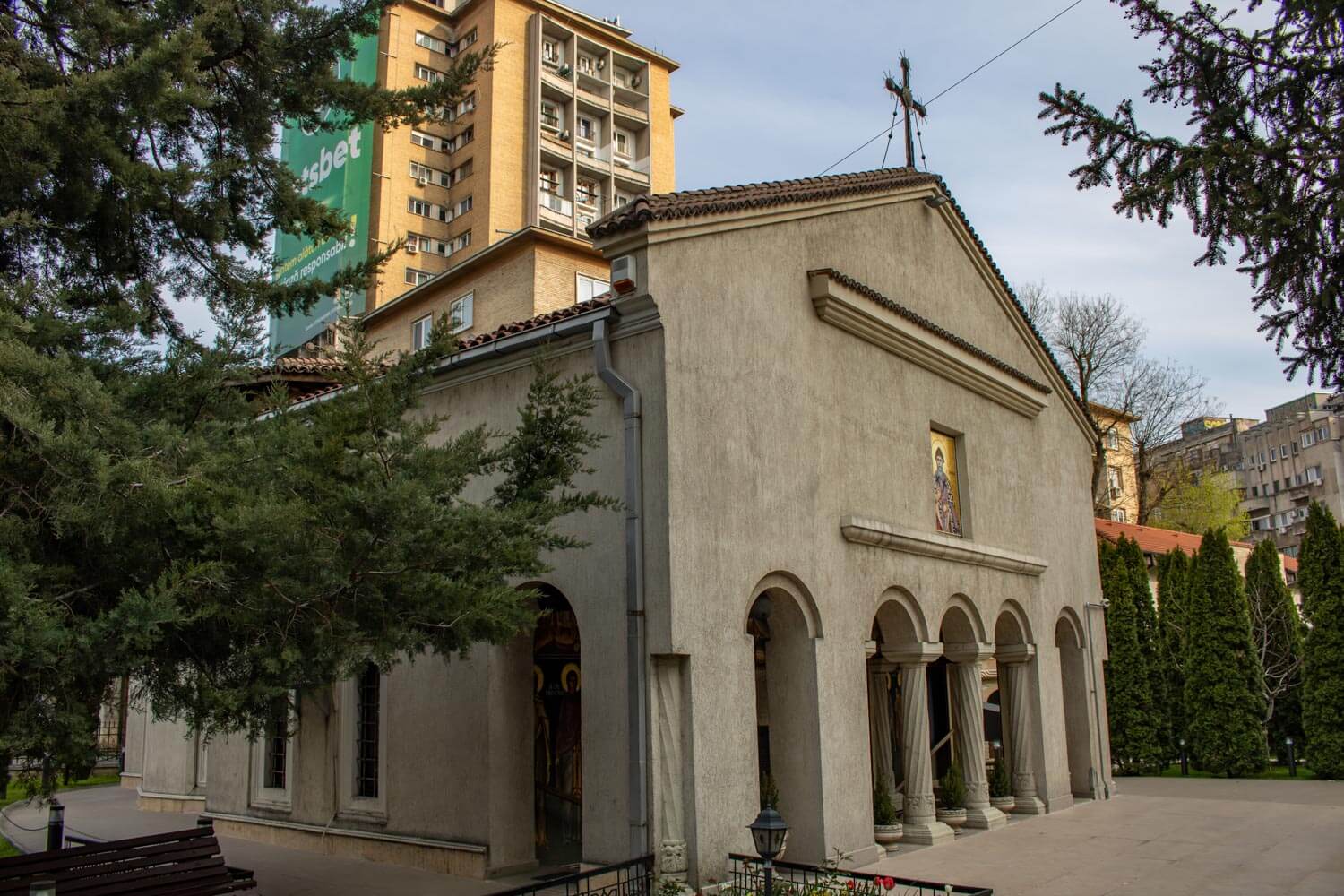
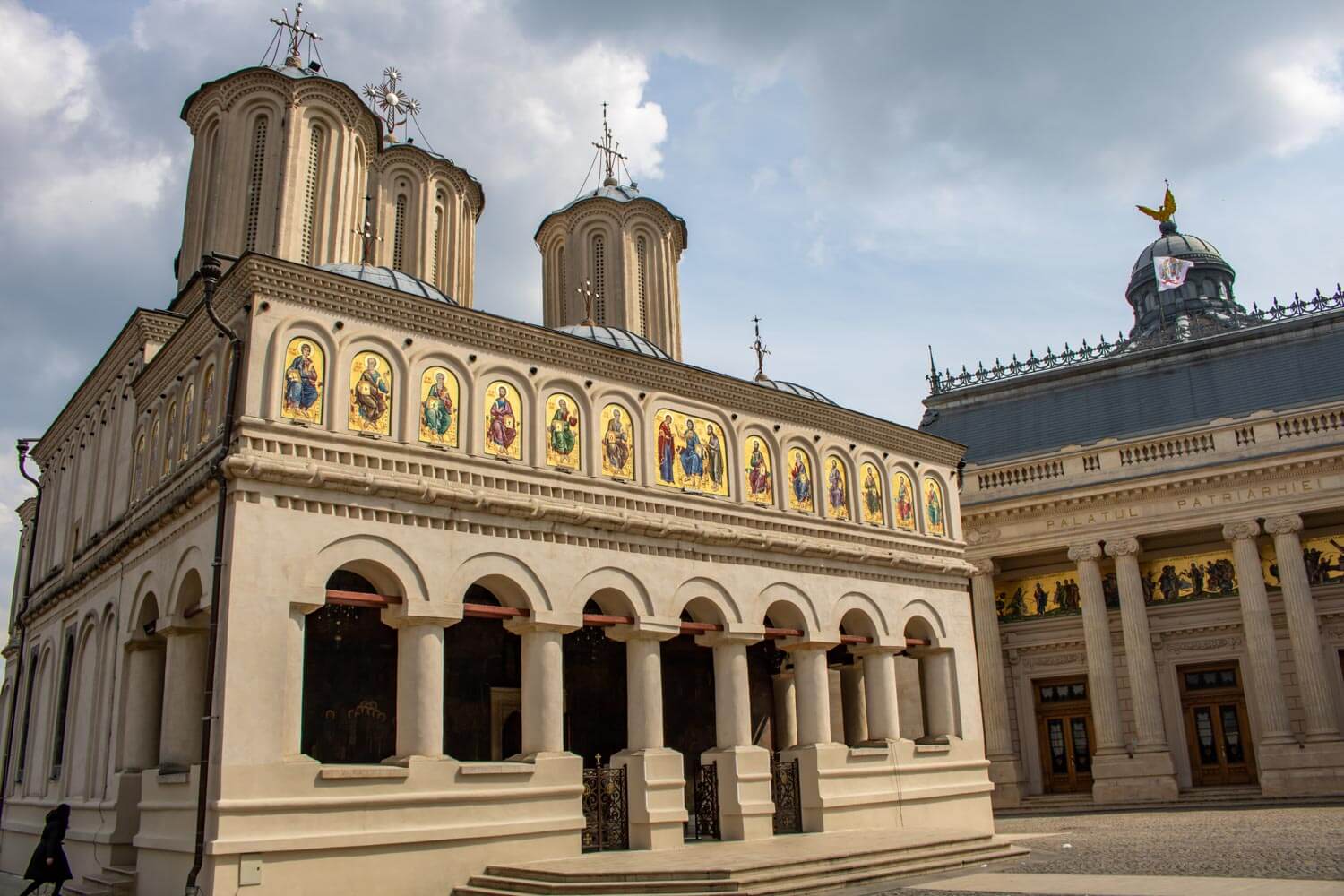
Antim Monastery (Mănăstirea Antim) is a Romanian Orthodox church and monastery in the center of Bucharest.
The monastery was built between 1713 and 1715 on the site of an earlier wooden church that was dedicated to Saint Nicholas. Antim Monastery is named after its founder Antim Ivireanul, a Georgian monk, scholar, and metropolitan. He created the plan for the entire complex including the church, and cells. chapel, and bell tower.
The architectural style of Antim Monastery can be described as Brâncovenesc combined with Orthodox and Ottoman influences and Renaissance elements. The church is built with a trefoil-shaped plan with large windows, rich rosettes, and a portal with decorated columns. The massive oak entrance door is an artistic creation sculptured by Antim himself. Above the entrance, you can see the carved emblem of Saint Antim.
Sinod’s Palace, which now houses the monastery library, was probably built around 1800 by bishop Iosif d’Argeş. Between 1857 and 1860, a major restoration took place and the oak wood pupit was added by Carol Storck. The bell tower, which is now the entrance gate to the monastery, was modified in Romantic style and extended with the four corner towers by the architect Johann Schlatter.
During World War II the monastery was linked to the Holocaust as its monks were involved in blowing up a nearby synagogue and terrorizing Jewish residents in the neighborhood.