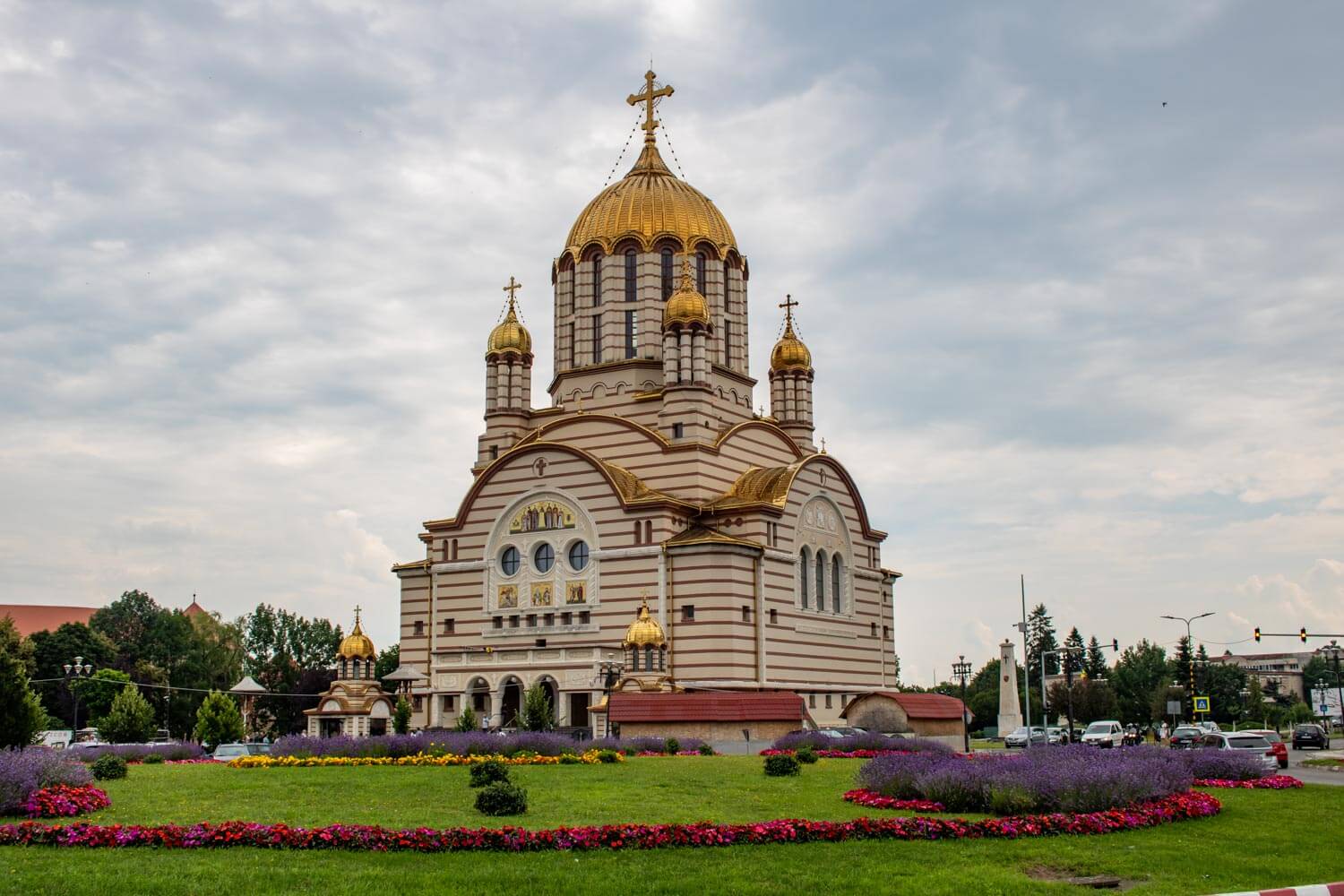
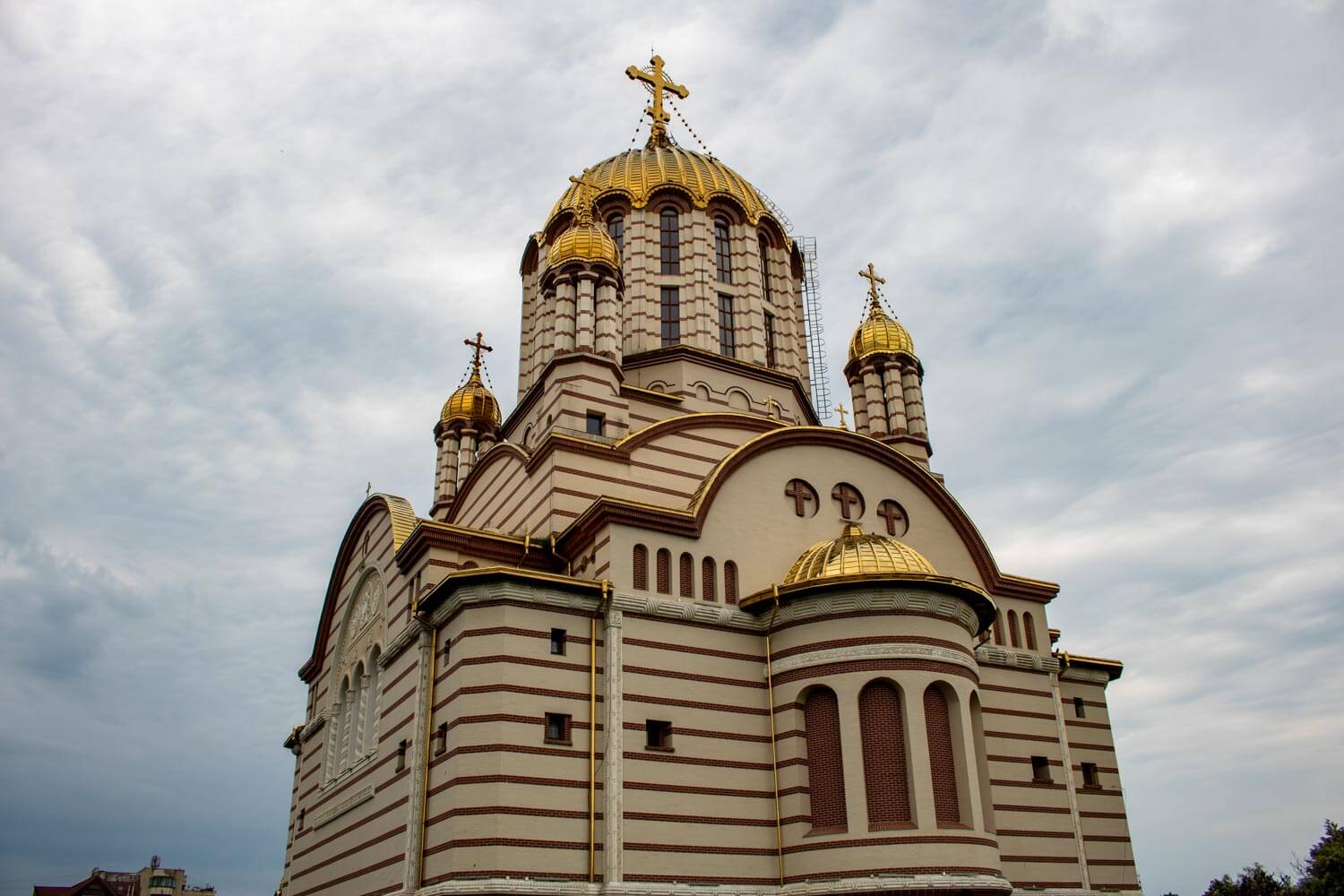
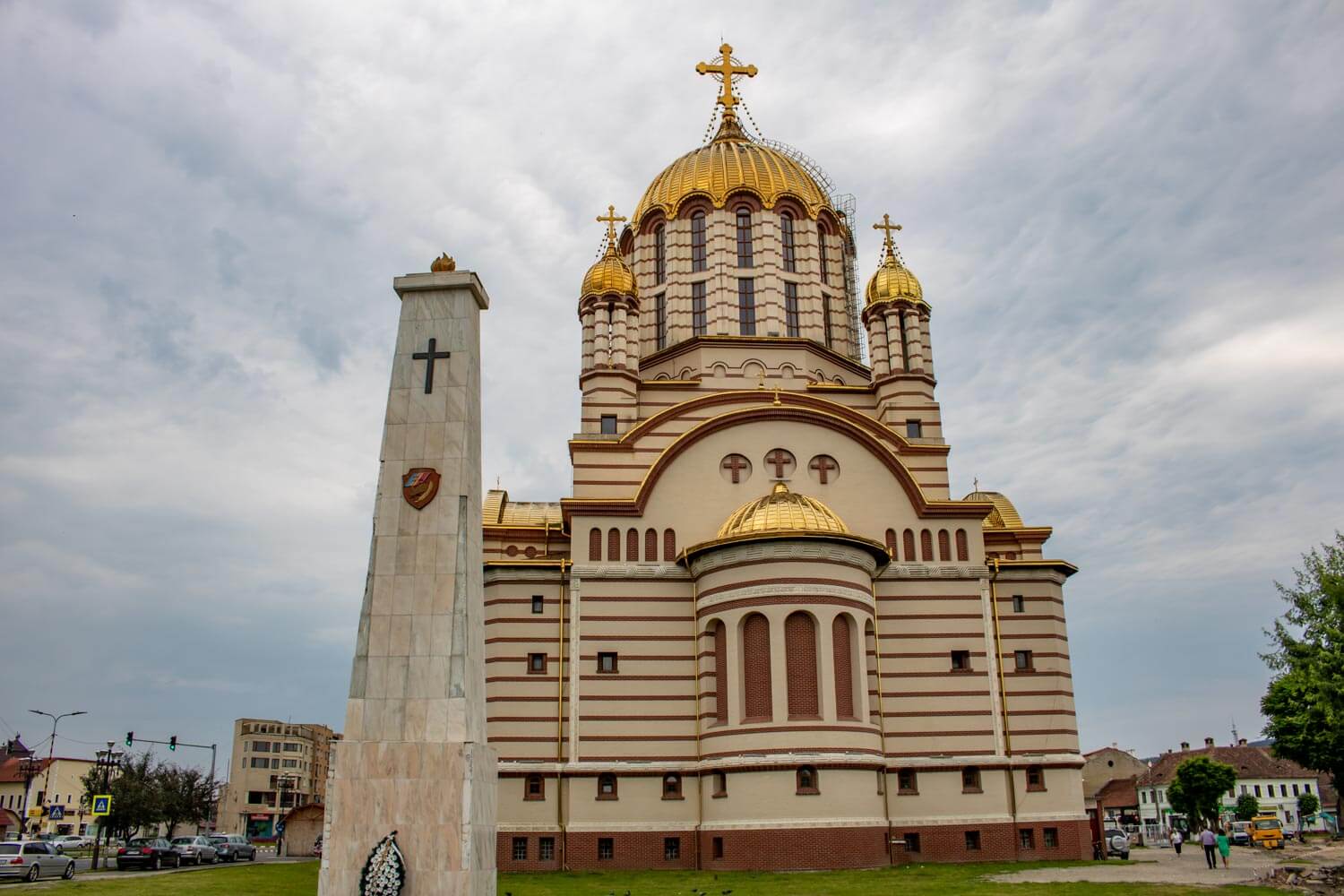
The Cathedral of Saint John the Baptist (Catedrala Sfântul Ioan Botezătorul) is a large Romanian Orthodox cathedral in central Făgăraș, standing immediately south of Făgăraș Fortress. Its Neo-Byzantine design is dominated by a large central dome and four smaller corner towers, making it one of the most prominent modern buildings in the city center.
Plans for a monumental Orthodox cathedral in central Făgăraș already existed between the two world wars, but the project was never realized as the Second World War and the subsequent communist period brought those plans to an end. The idea was revived after the Romanian Revolution of 1989, when local Orthodox clergy and the municipality began preparing a new cathedral for the city. The chosen site also had an older religious history, as a wooden church founded by Michael the Brave once stood close to the fortress.
The site of the future altar was consecrated in October 1991, and a small wooden church dedicated to Saint George was erected nearby in 1994 so services could be held while preparations continued. Construction of the present cathedral began in autumn 1995, using a design based on the Resurrection Cathedral of Oradea. The building follows a Neo-Byzantine plan and measures approximately 30 meters wide and 33 meters long, dimensions chosen for their Christian symbolism.
Building beside the fortress moat created particular difficulties because of the high groundwater level, requiring especially deep foundations. Construction therefore progressed gradually over many years. The temporary wooden church remained in use during the first phase but was destroyed by fire in 1998, after which worship continued in a temporary chapel until the basement level of the new cathedral became usable in 2002.
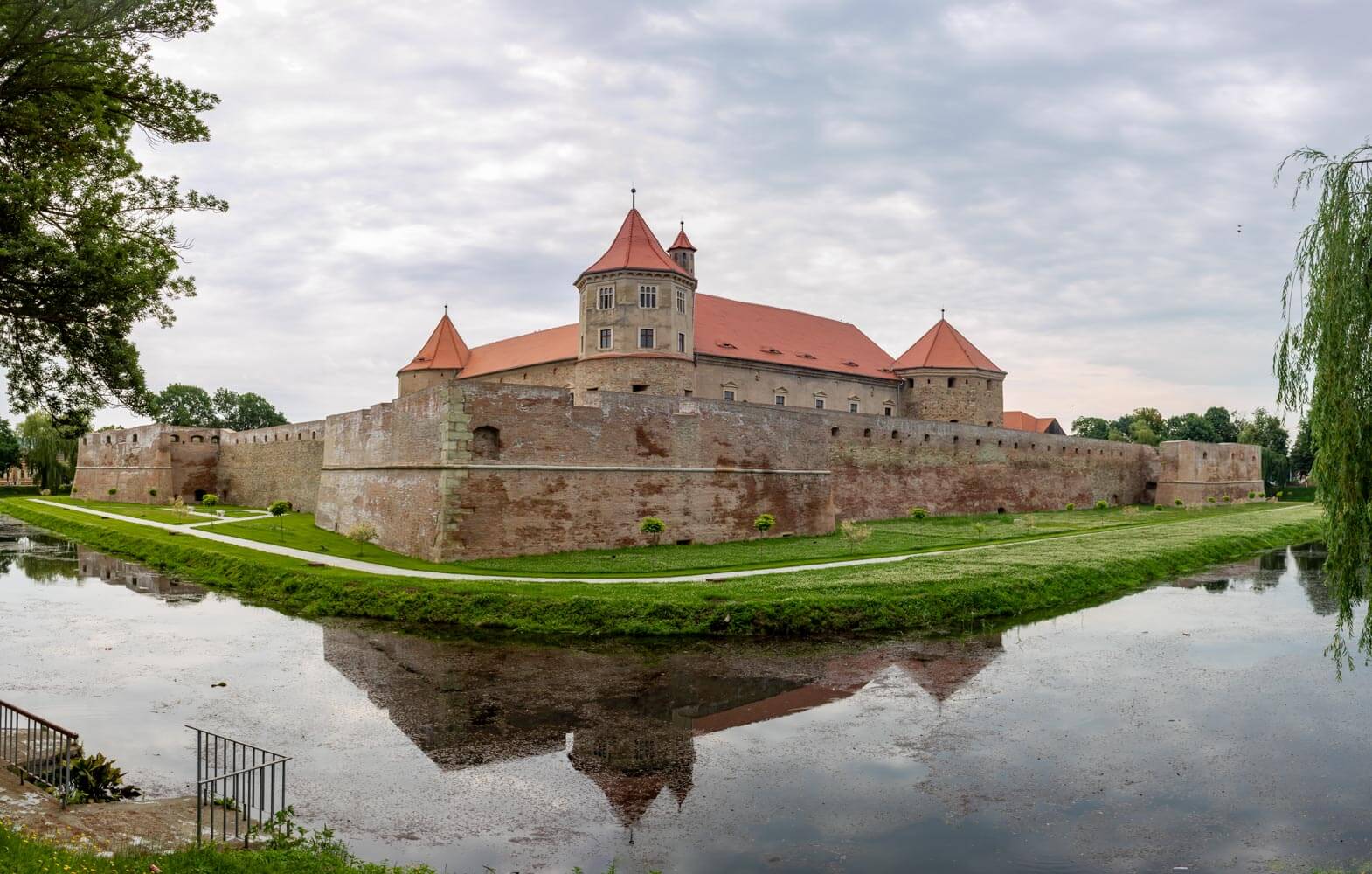
As work continued above, the cathedral gradually took on its present appearance, with the large central dome and four corner towers defining the skyline beside the fortress. The contrast is especially striking from around the moat, where the modern Orthodox cathedral rises immediately beside the medieval fortifications.
Inside, the high central space is arranged beneath the main dome around an Orthodox iconostasis, with extensive religious painting and gilded decoration continuing the Byzantine character of the architecture. The cathedral remains an active place of worship and is particularly important during major Orthodox feast days, including celebrations dedicated to Saint John the Baptist.