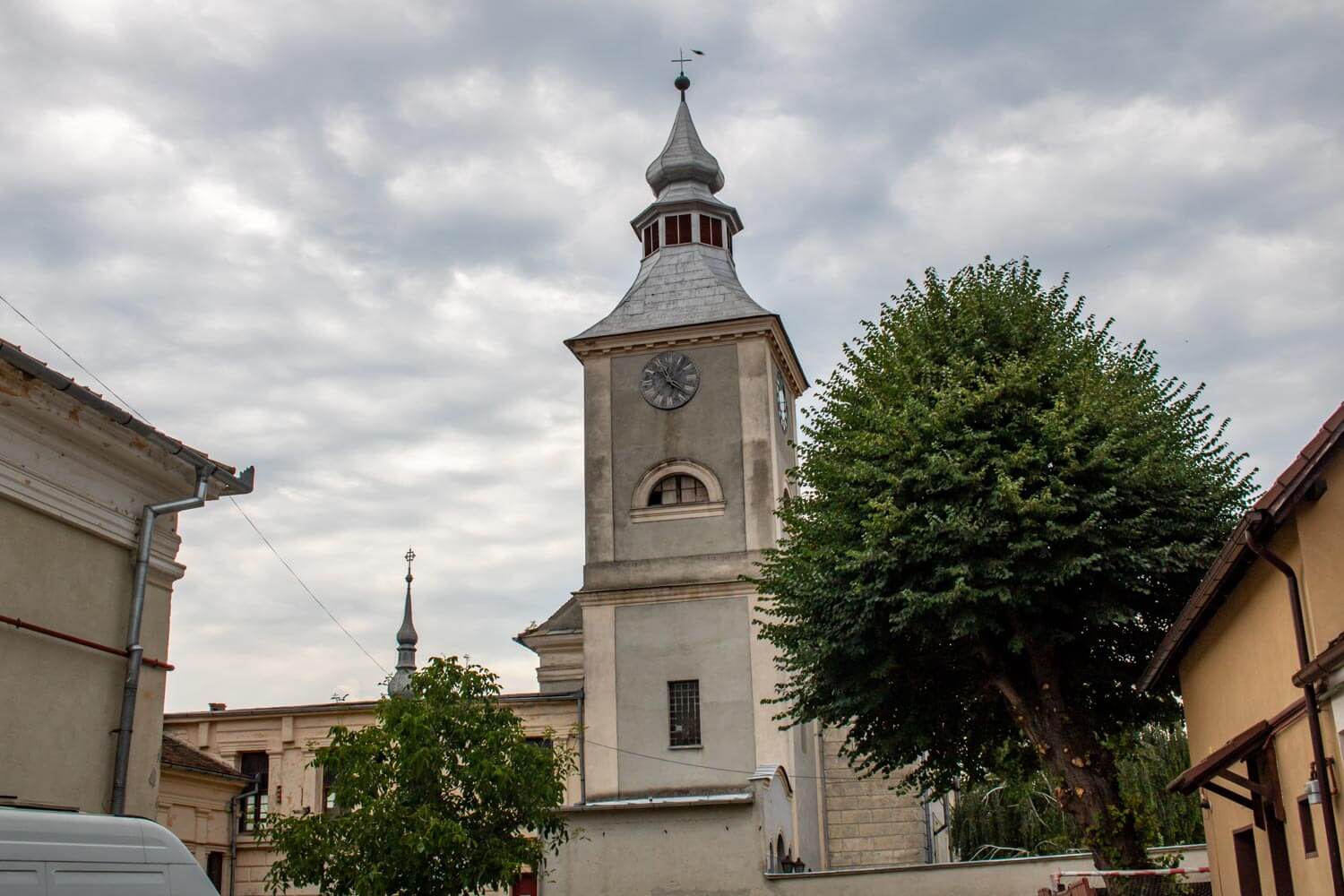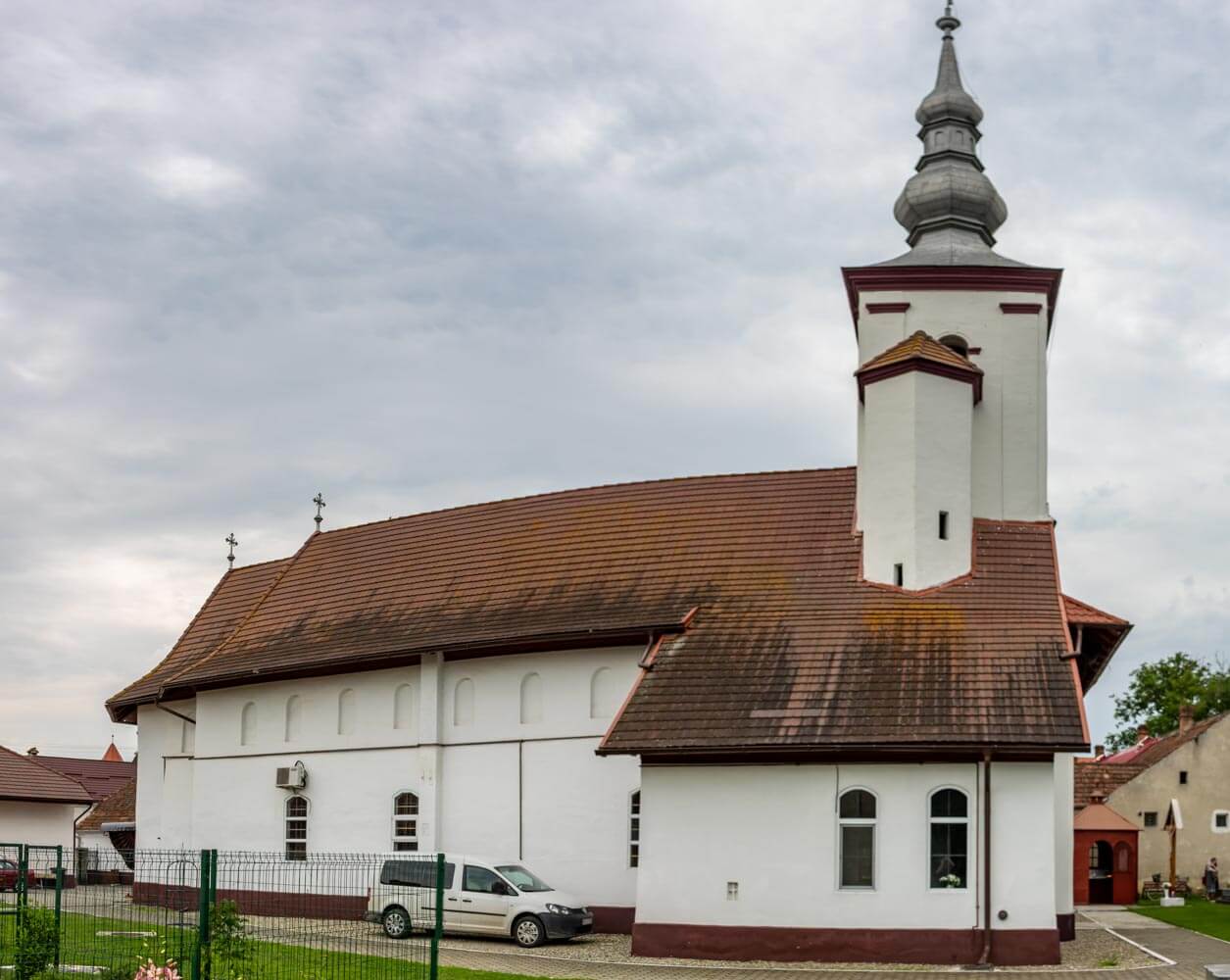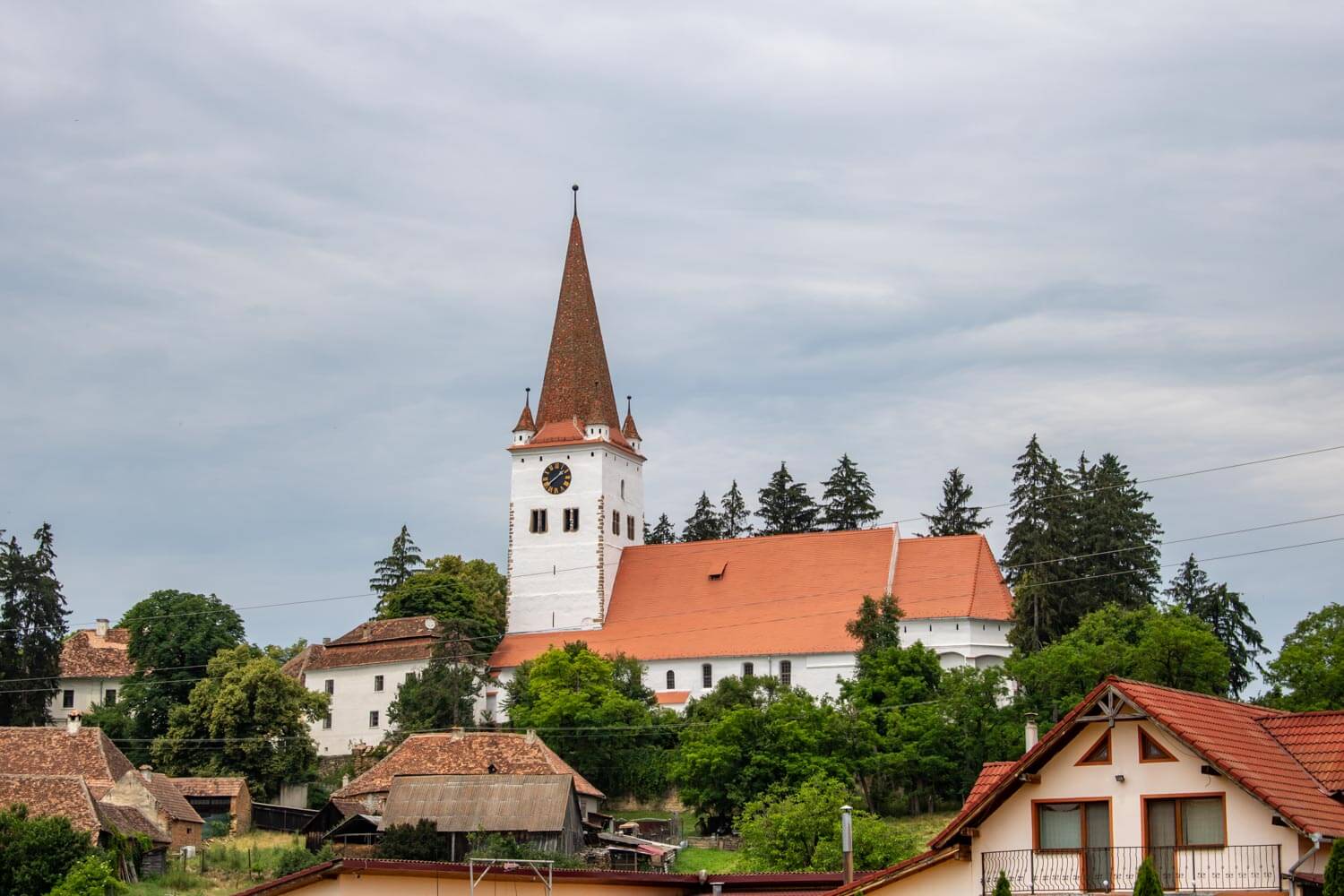
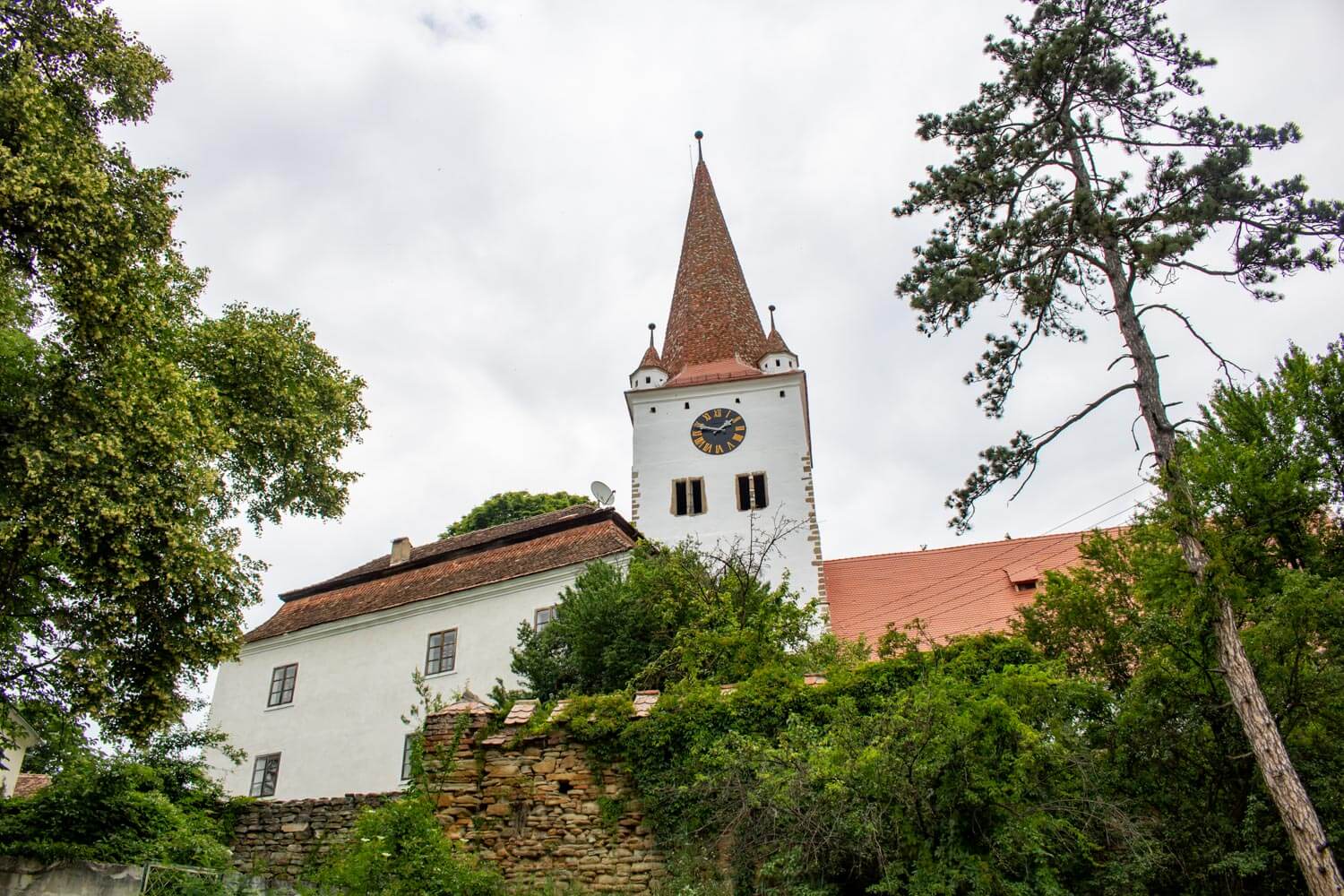
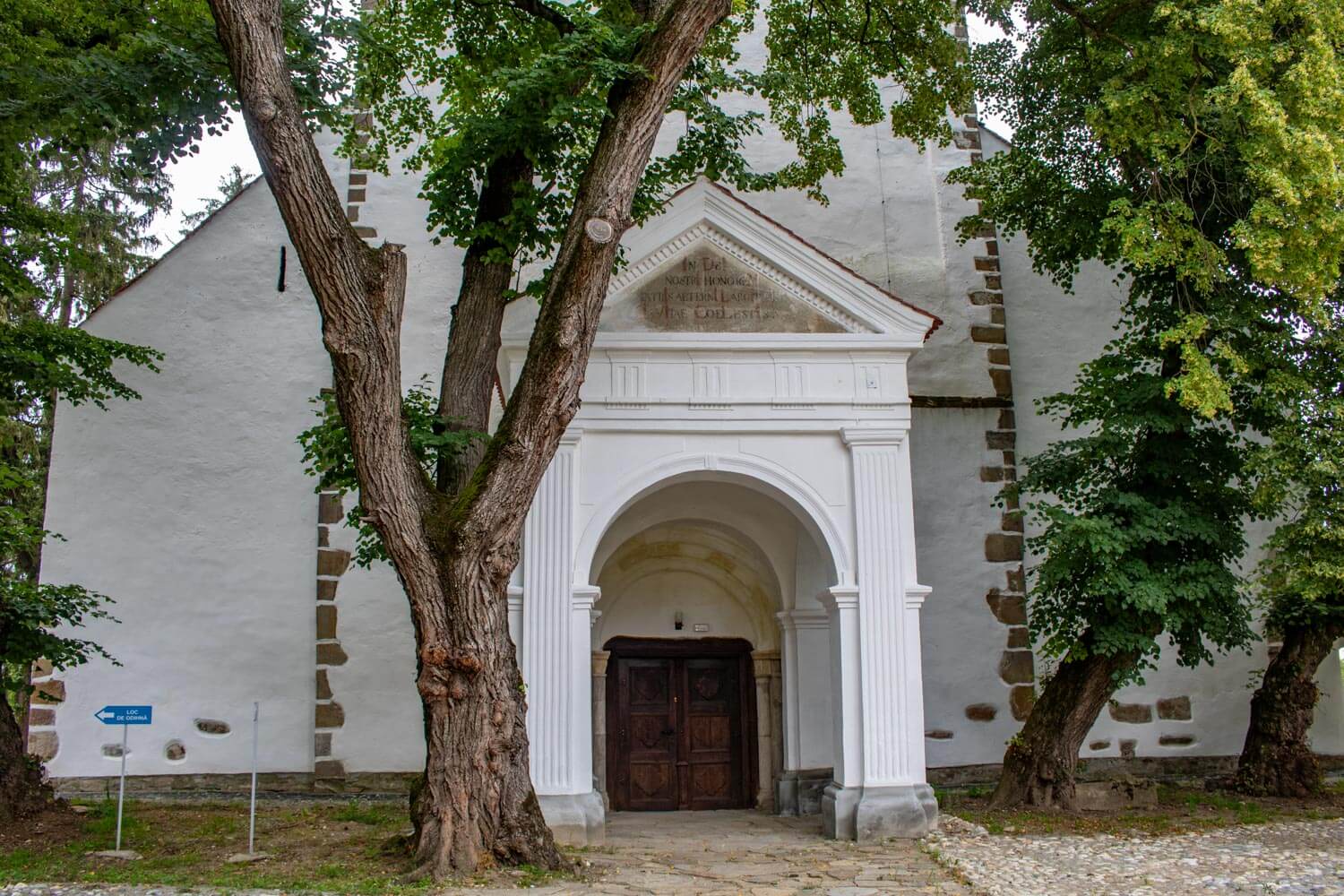
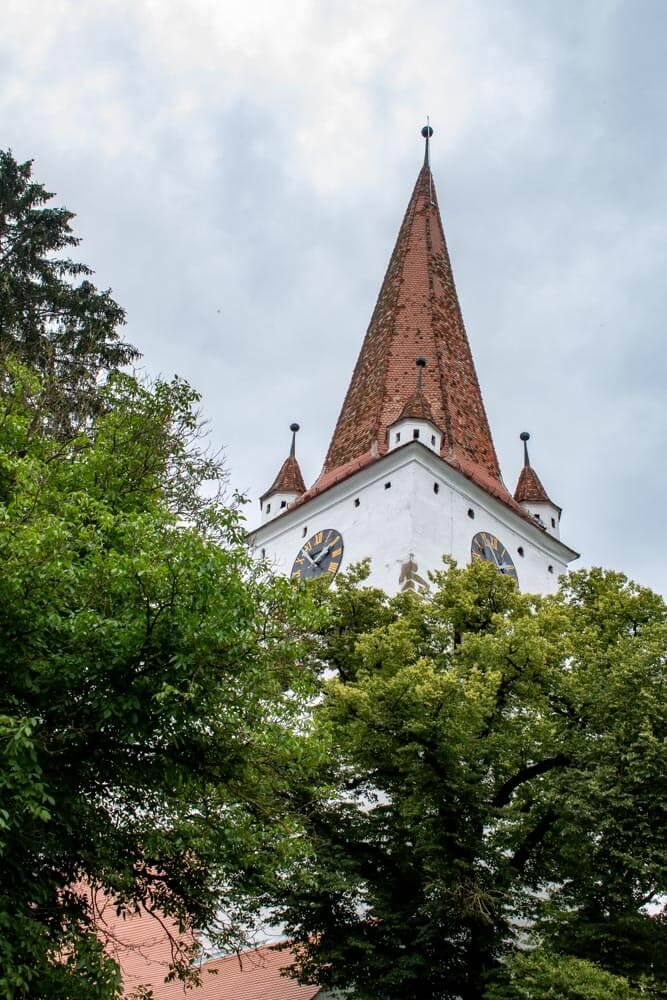
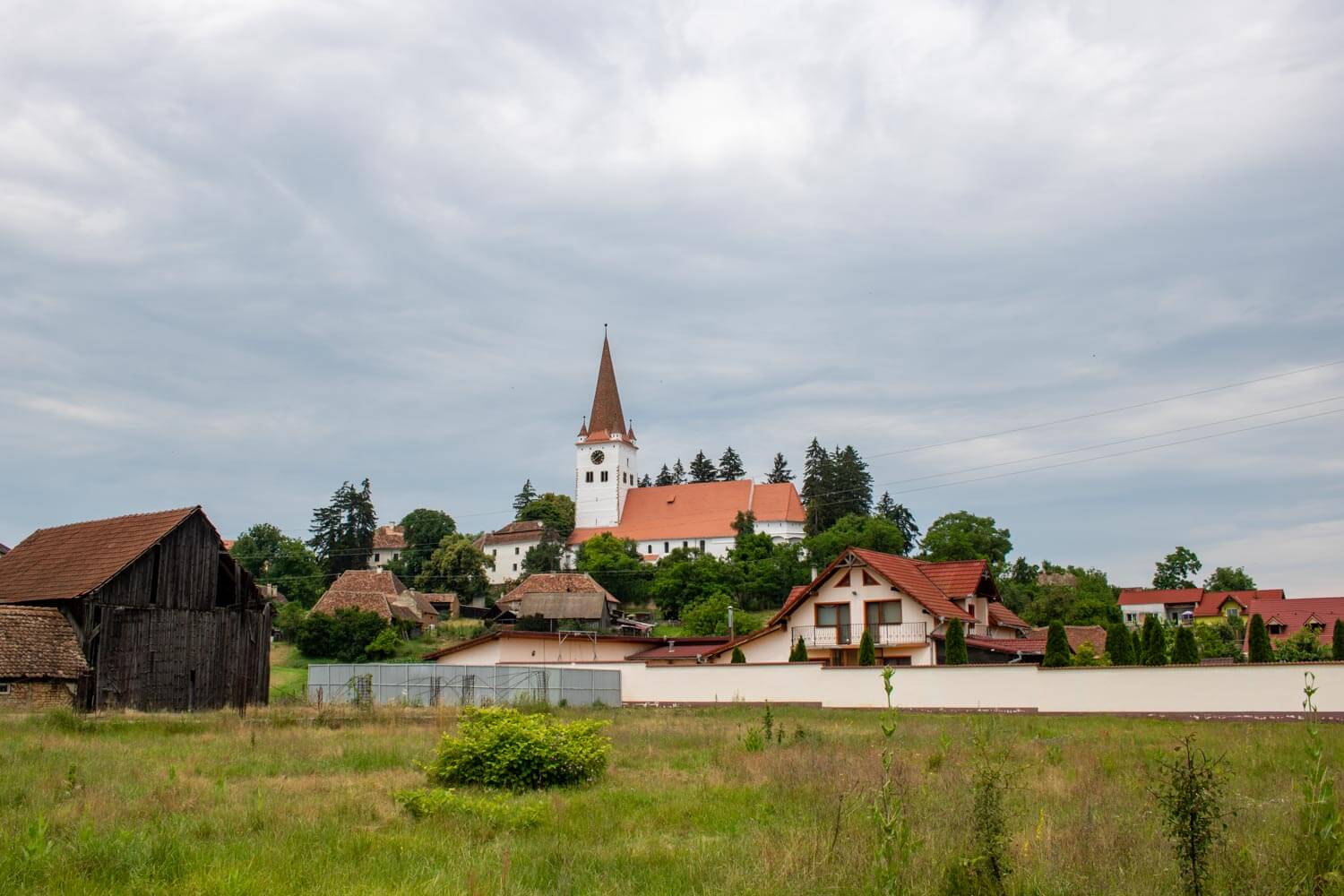
The Fortified Church of Cincu (Biserica Fortificată din Cincu) is a large historic Lutheran church standing on a hill above the village of Cincu in Brașov County. Built in the 13th century by the local Transylvanian Saxon community, it is one of the largest surviving Romanesque basilicas in a Saxon settlement in Romania and remains the dominant landmark of the village.
Cincu itself developed as an important Saxon market settlement between the Olt and Hârtibaciu rivers, and the scale of the church reflects that wider regional role. The original building was a three-aisled Romanesque basilica with a substantial western tower, while later medieval rebuilding introduced Gothic elements and strengthened the structure for defense. Because the church occupies a hill with steep slopes on three sides, the strongest fortifications were concentrated toward the more accessible western approach.
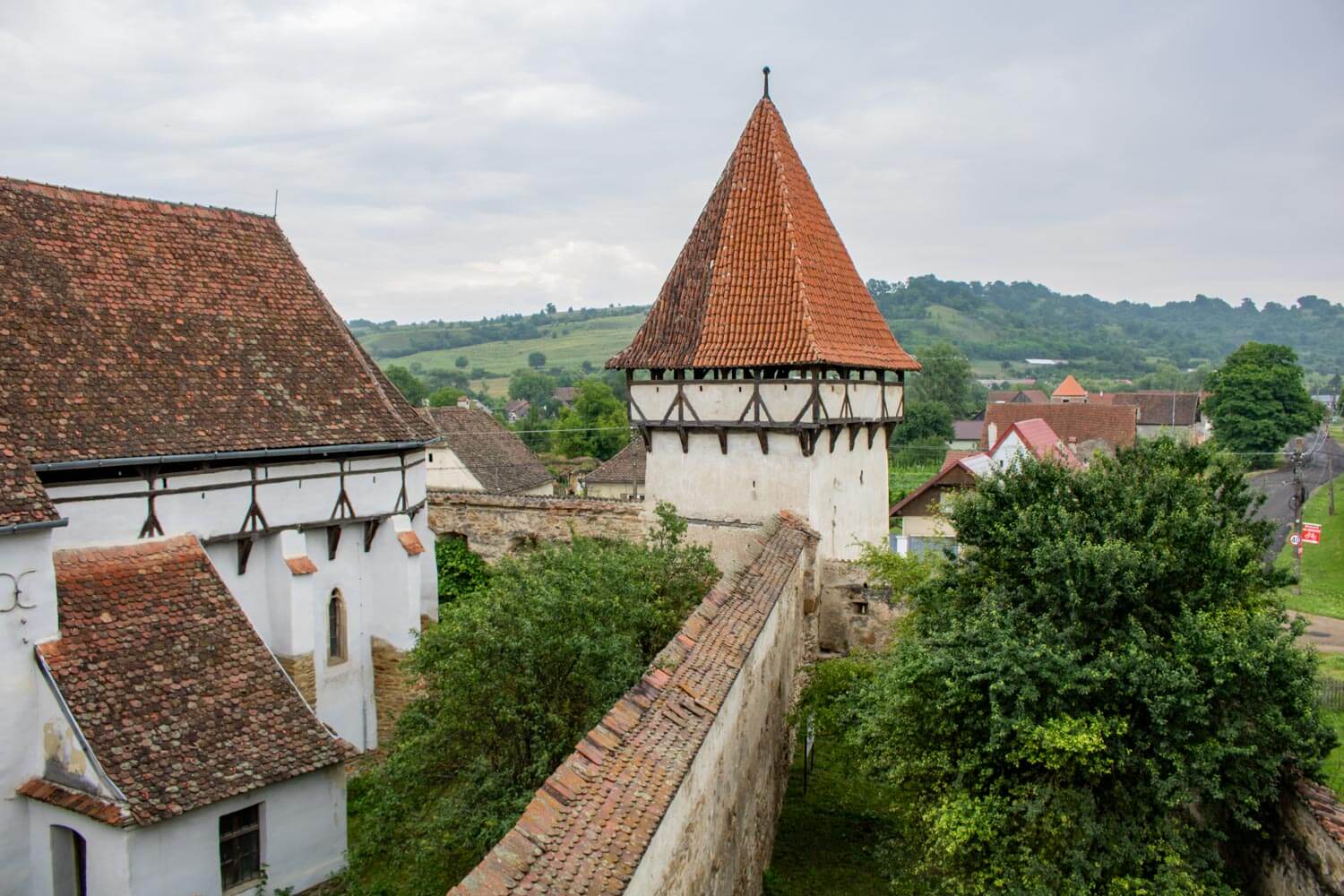
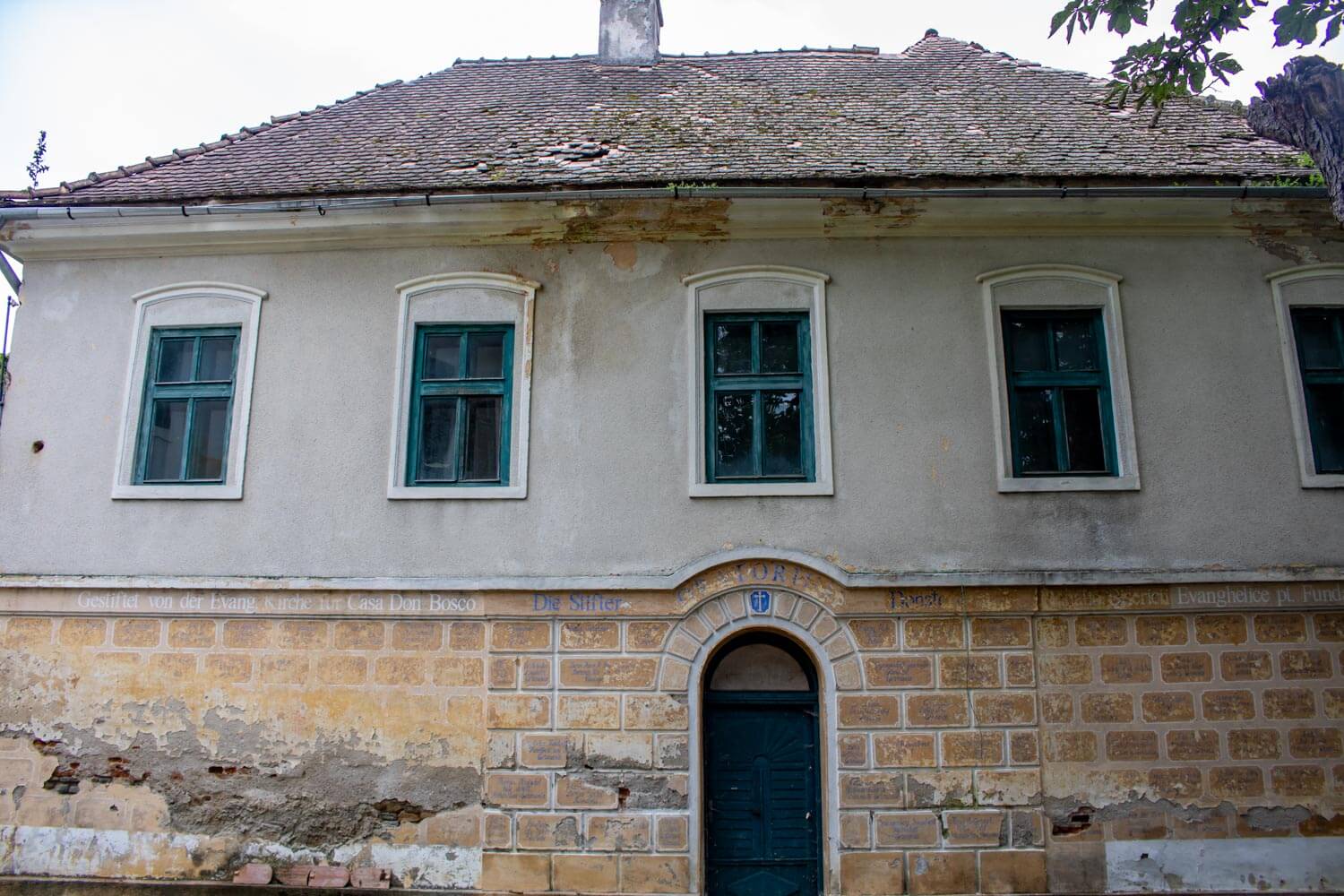
Much of that defensive system was created in the early 16th century. The church was strengthened between 1522 and 1526, while two rings of walls with towers and bastions protected the hilltop enclosure. Large parts of those fortifications were later demolished once their military role had disappeared, so Cincu no longer presents the complete walled appearance seen at some other fortified churches. Surviving defensive structures include sections of the enclosure, an old fortified storage building and the building known as the Old Town Hall.
The interior has changed considerably over the centuries and today resembles a hall church after the side aisles were raised to accommodate galleries. Its furnishings form an unusually varied collection from different periods: late Gothic choir stalls stand alongside a Renaissance pulpit, while Baroque guild pews, epitaphs and baptismal furnishings are joined by a later Classical-style organ. A late Gothic sacrament niche also survives in the choir.
One of the most distinctive works inside is the altar depicting the Doubting of Saint Thomas, with Christ showing his wounds to the apostle. Together with the layered furnishings and the massive Romanesque-Gothic structure, it gives the interior a richer and more varied character than the relatively austere exterior might suggest.
The church has undergone major conservation work in recent years, helping preserve both the building and its remaining defensive structures. Its position high above the village is still one of its defining features, with the church tower visible from much of Cincu and the surrounding countryside.