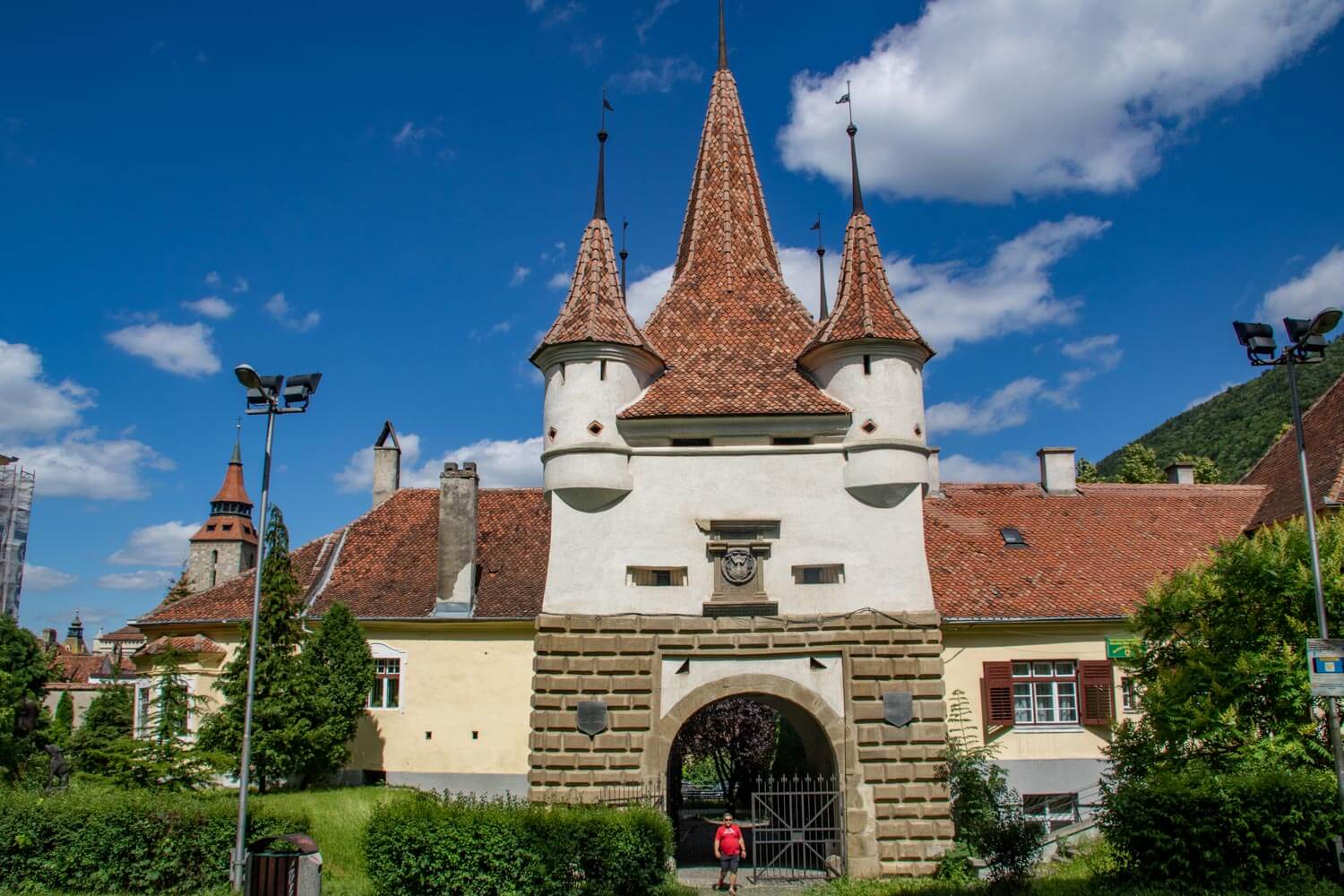
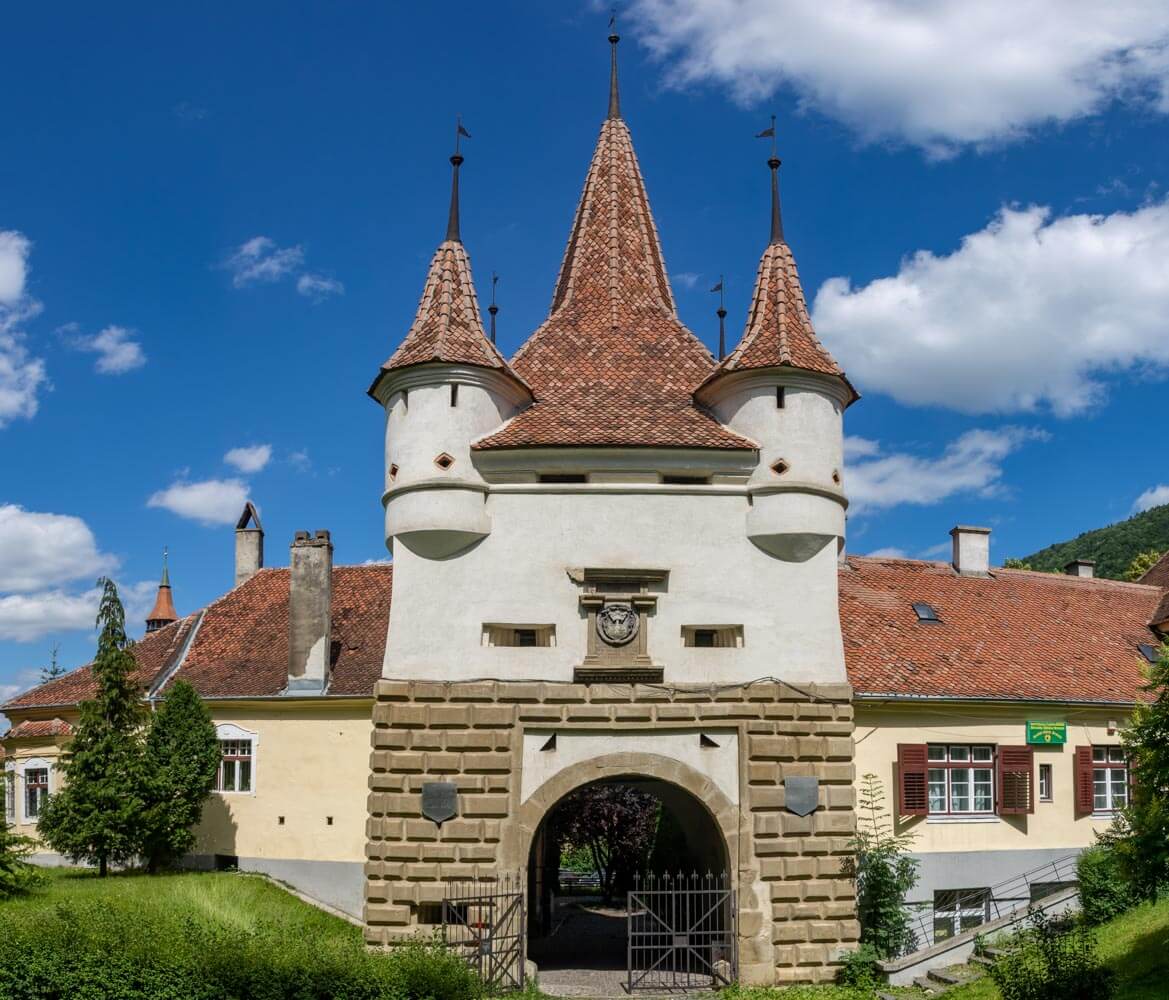
Catherine’s Gate (Poarta Ecaterinei) was an entrance gate and part of the fortifications of the historic citadel of Brașov. Nowadays it has a small museum inside.
The gate was built by the tailors’ guild in 1559, to replace an old gate that was destroyed by a storm and flood in 1526. Catherina’s Gate was named after a former monastery that was located there. The tower of the outer gate is the only part of the original structure that still exists since medieval times. Other parts of the original gate were made of wood and were demolished in 1827. The four small turrets are typical for Transylvanian towns and symbolize the fact that the town had judicial autonomy and the right to decide on capital punishment.
During the Saxon rule between the 13th and 17th centuries, the Romanians were not allowed to own any property inside the citadel and hence started the settlement just outside the fortification walls which resulted in the Șchei district. The Romanians were only allowed to get into the citadel to sell their goods at certain times, and could only use the Catherine’s Gate.
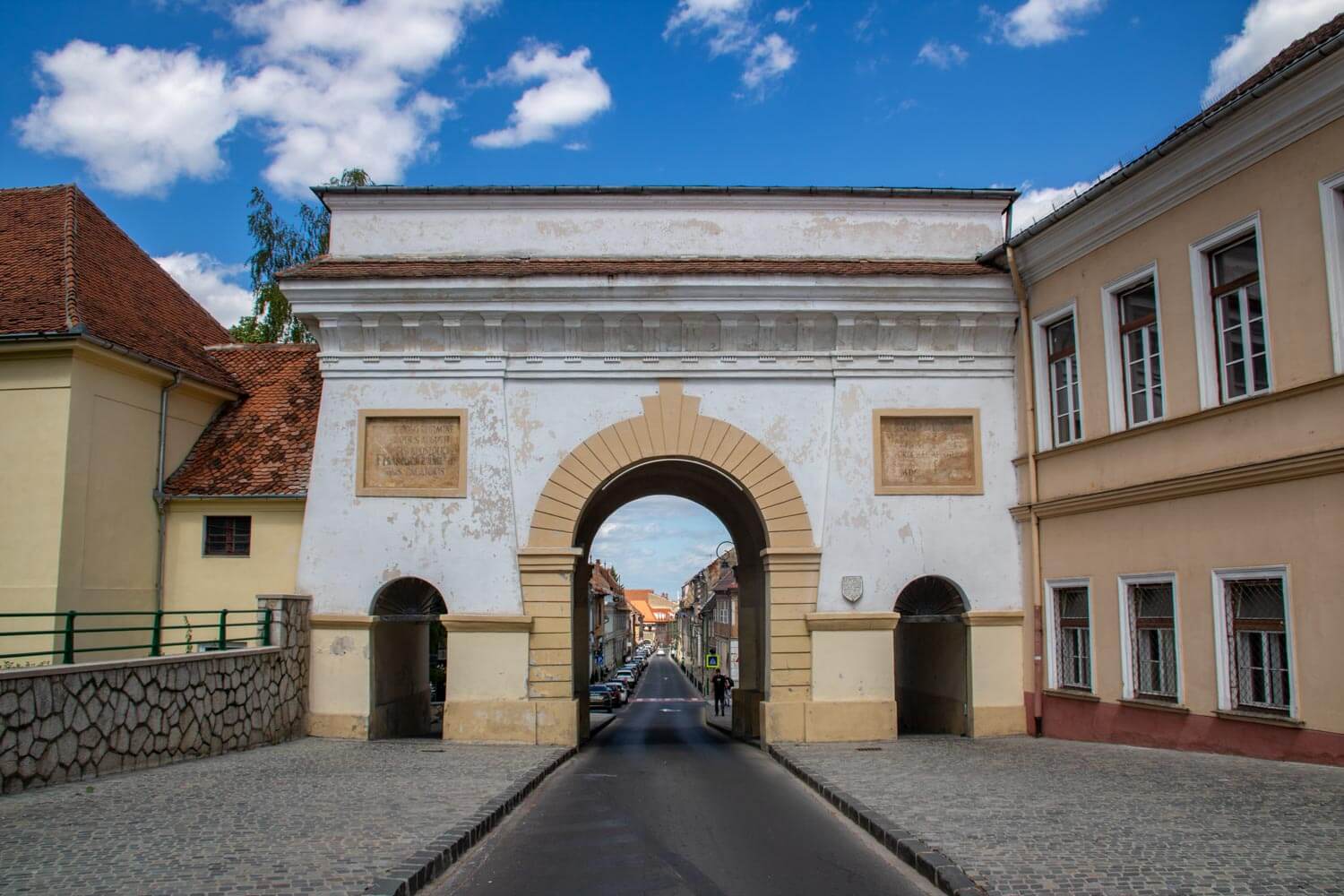
The gate was damaged by the great fire of 1689 and during the earthquake of 1738, but restorations were carried out afterwards. During the 18th century trading was booming and Catherine’s Gate became to small to cope with the increased traffic, hence two new gates were built: a small gate near the Blacksmith’s Bastion, that was later demolished again, and the Șchei Gate.
As part of the systemization plans to expand the city into the suburbs of the 19th century, part of the medieval fortifications on the northeast and southwest of the citadel were demolished, but the outer tower of the Catherine’s Gate was kept in place and used as a warehouse.
Over the years several renovations took place and Catherine’s Gate now houses a small museum exhibiting old graphics, photographs and paintings.