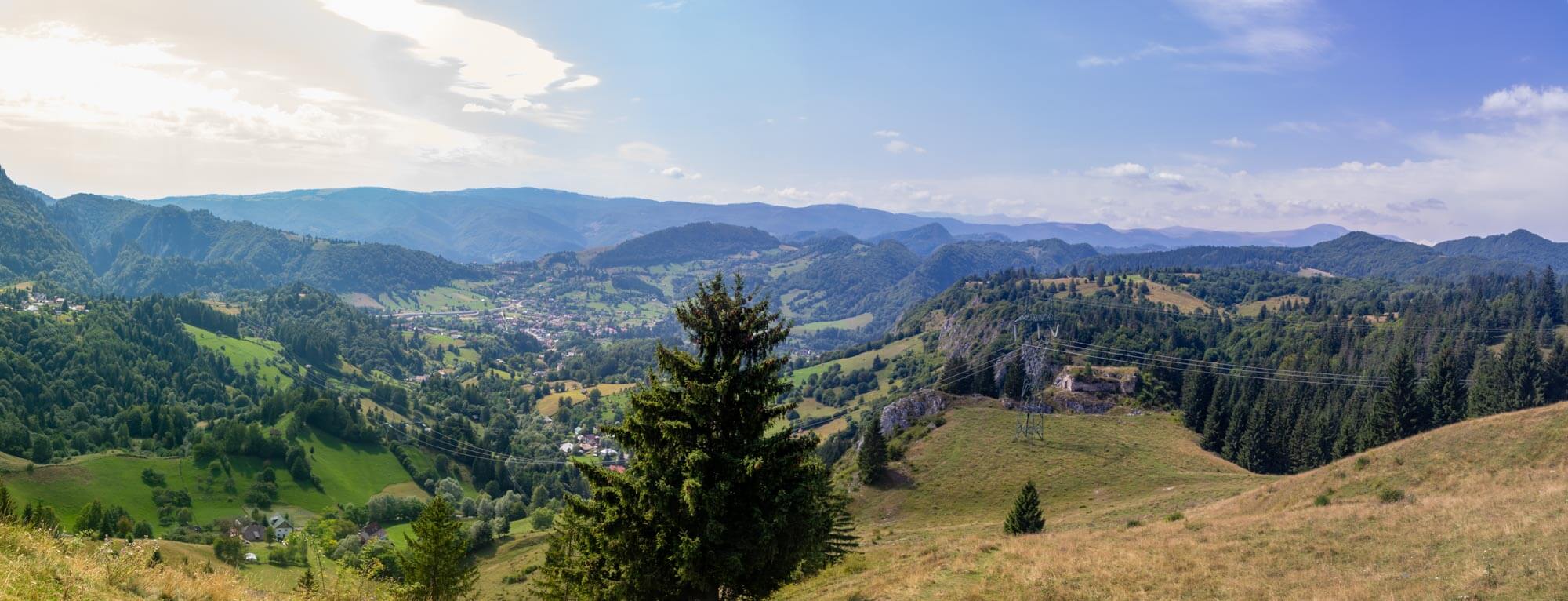
Oratea Fortress (Cetatea Oratea) is a ruined medieval fortress on a rocky hill above the Dâmbovița River near Podu Dâmboviței, dating from the 14th century. Built to guard the mountain route between Wallachia and Transylvania, it overlooks a narrow passage through the Rucăr-Bran corridor where merchants and travelers once crossed the Carpathians.
The fortress was probably constructed during the second half of the 14th century, when control of the mountain passes and customs duties was an important source of revenue for the neighboring rulers. Its exact origins are uncertain, although archaeological findings suggest that it was built under the rulers of Wallachia. By the late 15th century, the crossing was known as the Bridges of Orația, while documents from the following century indicate that the fortress was under the jurisdiction of Brașov. Excavations have uncovered arrowheads, crossbow bolts, sword fragments, horseshoes, and other objects that provide evidence of military activity at the site.
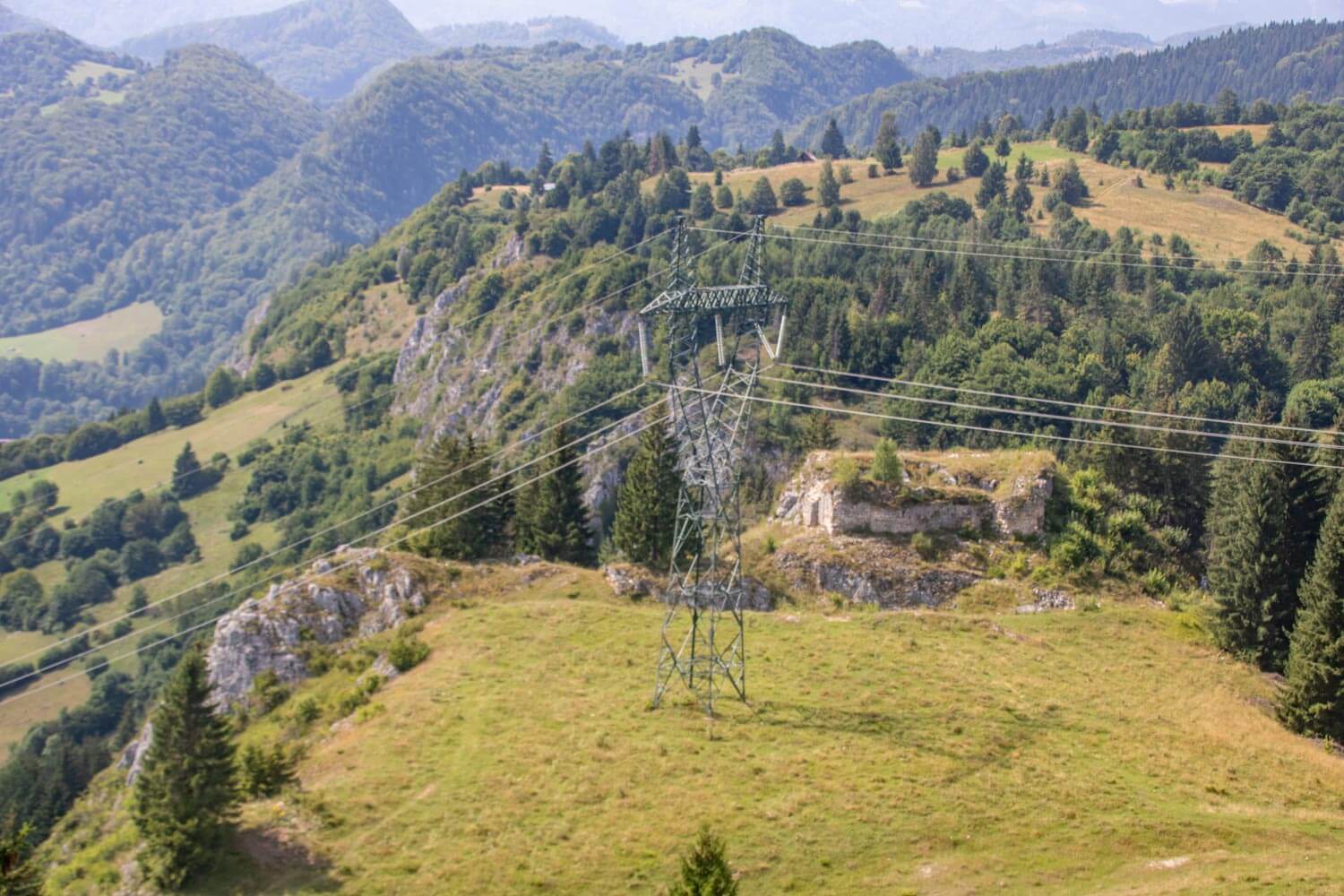
The castle was relatively small, measuring approximately 19 by 22 meters, but its position made it difficult to attack. Steep cliffs protected the western side, while massive stone walls enclosed the more accessible parts of the hilltop. A defensive ditch cut into the rock, approximately 10 meters wide and 4 meters deep, separated the fortress from the surrounding terrain. The interior contained a circular tower and wooden structures, traces of which were identified during archaeological excavations. The old road passed beneath the fortress, with sections cut directly into the rock to negotiate the narrow valley.
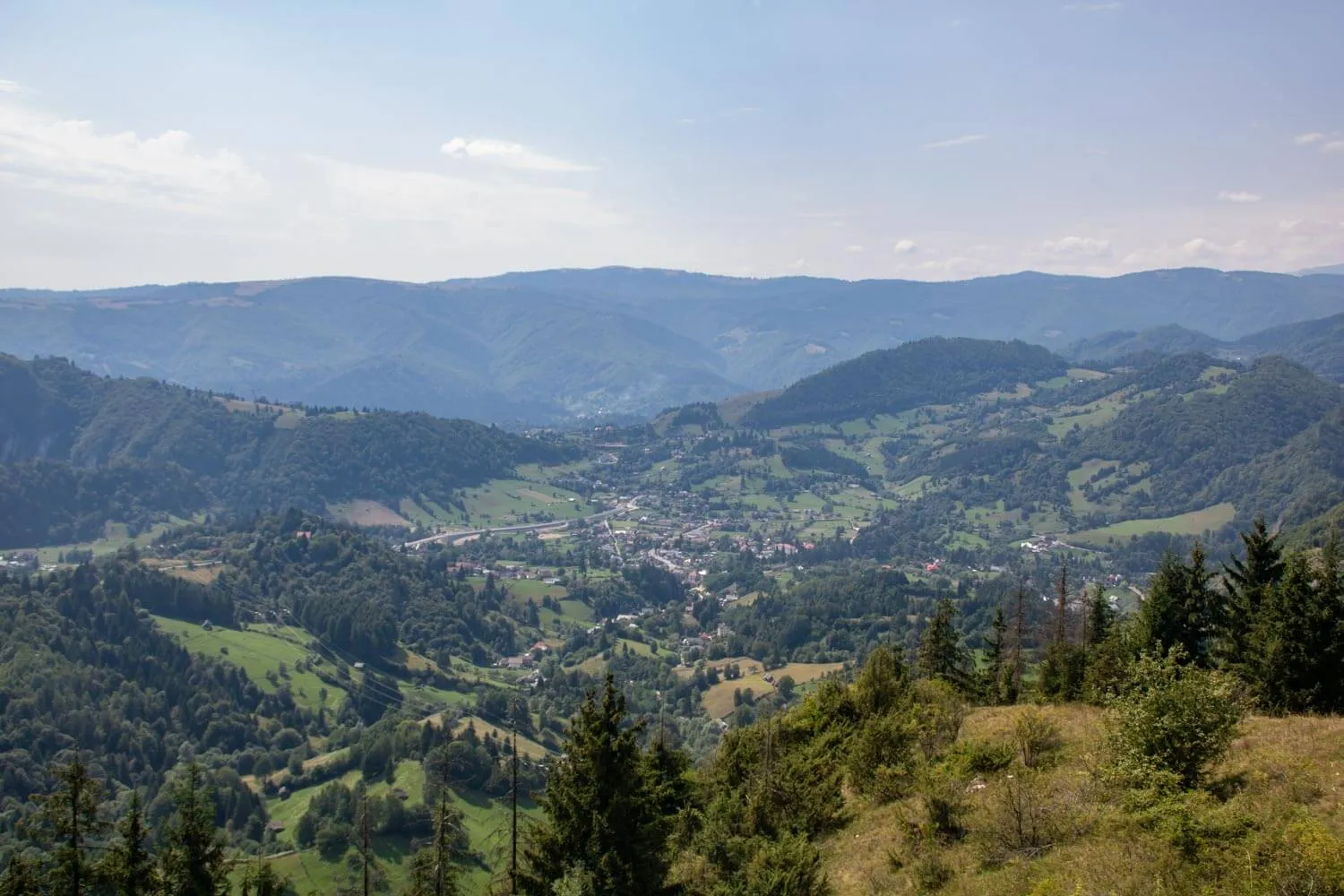
Today, sections of the thick stone walls and the defensive ditch can still be seen among the ruins. The site can be reached by a short walk from the Podu Dâmboviței Viewpoint along the DN73, following a rough path across the hillside. The exposed rocky setting also provides views over the Dâmbovița valley and the surrounding mountains, making the fortress interesting both for its medieval history and its landscape.