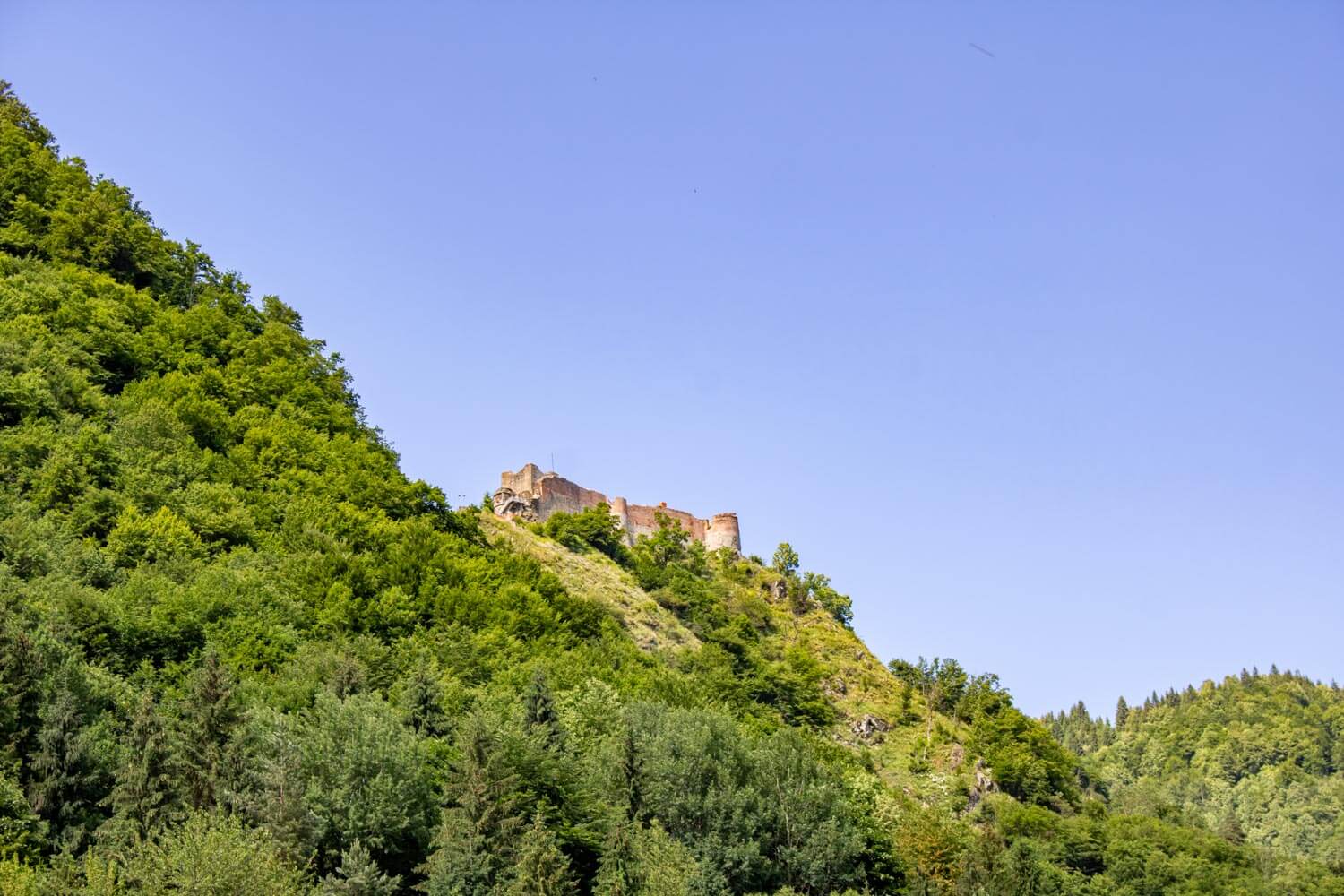
Poenari Castle (Cetatea Poenari) is a medieval hilltop fortress above the Argeș Valley in Argeș County, standing on a steep rocky ridge beside the Transfăgărășan. Best known for its direct connection with Vlad III, commonly known as Vlad the Impaler, the ruined stronghold occupies a dramatic defensive position around 850 meters above sea level.
The earliest part of the fortress was a square stone tower, probably built in the 13th or 14th century to watch over the upper Argeș Valley and the route through the mountains. During the 15th century, Vlad III greatly expanded the site, surrounding the original tower with a long curtain wall and adding several semicircular towers, internal buildings and a water cistern. These works transformed Poenari into a much stronger mountain fortress that could serve as a refuge and defensive base during his conflicts with the Ottomans.
A later Wallachian chronicle connects the rebuilding with Vlad’s punishment of inhabitants of Târgoviște, who were reportedly forced to work on the fortress after being seized on Easter Day. Although later legend embellished the story, archaeological research confirms the major 15th-century expansion attributed to Vlad.
Poenari gradually lost its military importance in the following centuries and fell into ruin. Parts of the northern side eventually collapsed down the steep slope, while the surviving walls and towers remained perched along the narrow ridge. Archaeological excavations in the 20th century uncovered internal structures and the plastered cistern that supplied water within the fortress.
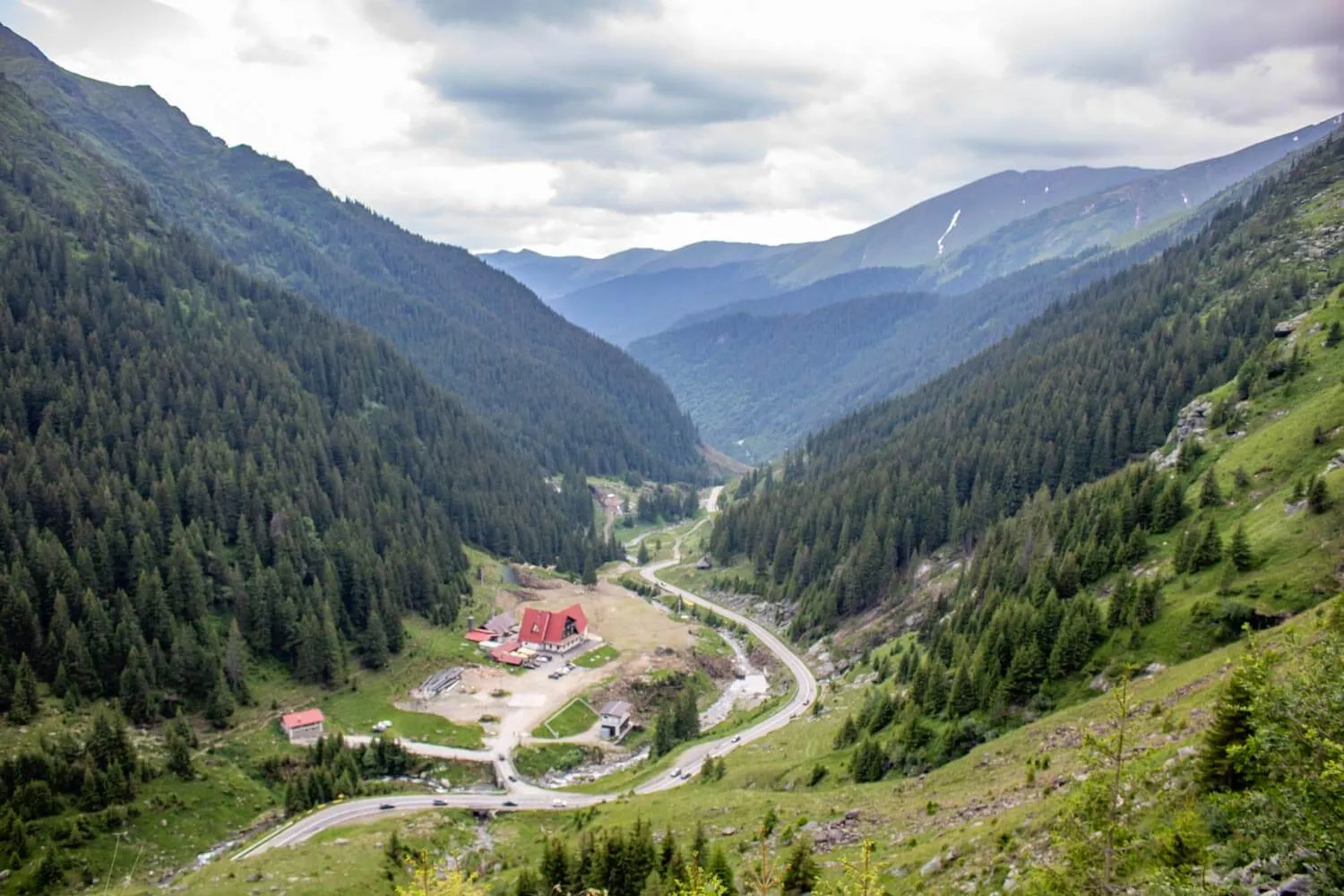
The climb to Poenari Castle follows around 1,480 concrete steps through the forest before reaching the ridge on which the fortress stands. From the ruins, the view opens across the narrow Argeș Valley, the surrounding mountains and sections of the Transfăgărășan far below, making the defensive advantage of the location easy to understand.
The fortress underwent major conservation and consolidation work before reopening to visitors in 2025, improving the stairway and stabilizing the surviving structures while retaining the character of the medieval ruins.