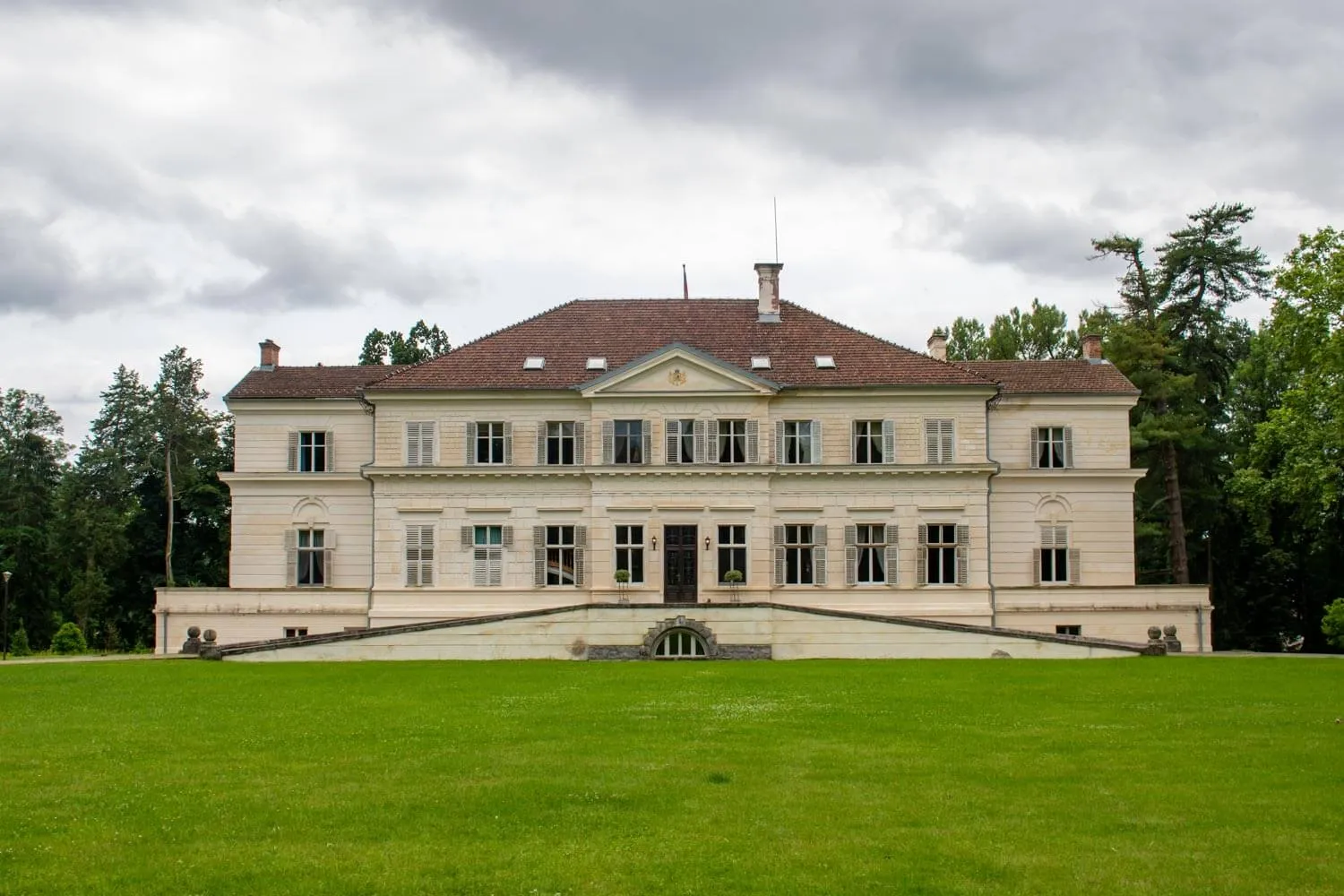
The Lipova Town Museum (Muzeul Orașului Lipova) is an art and history museum in Lipova, Arad County, housed in the historic Mișici-Bocu House (Casa Mișici-Bocu). The former noble residence was extensively remodeled in the 1920s by Romanian politician Sever Bocu, whose elegant interiors have been preserved alongside collections of Romanian and European paintings, decorative arts, and historic religious objects. The museum forms part of the Arad Museum Complex.
History Of The Building
The residence was constructed in the first half of the 19th century and later belonged to the Mișici family. In 1922, it was purchased by Sever Bocu (1874-1951), a prominent Romanian politician, journalist, and supporter of the union of Transylvania and Banat with Romania in 1918. Bocu subsequently served as a member of parliament and government minister, playing an important role in the political and cultural development of the Banat region.
In 1926, Bocu undertook an extensive renovation of the residence, transforming it into an elegant mansion inspired by French palace architecture. Although the original layout was largely preserved, the rooms received elaborate decorative finishes and furnishings, including inlaid parquet floors, Viennese tiled stoves, crystal chandeliers, silk wallpaper, and a Carrara marble fireplace. The property was both a family home and a center of cultural activity. Bocu’s wife, Marilina, established an ethnographic collection and weaving workshops, providing opportunities for local women while preserving regional textile traditions.
Following the establishment of communist rule, Sever Bocu was arrested in 1950 and imprisoned at Sighet, where he died the following year. His family’s property was confiscated, and the mansion subsequently became a public museum. Established in its present form in 1958, the Lipova Town Museum underwent a major renovation before reopening in 2001, preserving the buildings historic character.
Collections And Exhibitions
The museum’s permanent exhibition occupies five rooms that retain the decorative interiors created for the Bocu family. Original furniture, mirrors, chandeliers, tiled stoves, and ornamental woodwork provide an impression of an affluent Romanian household during the interwar period. One of the most distinctive spaces is the Viennese salon, while the marble fireplace and carefully preserved parquet floors are notable features of the residence.
The principal art collection was donated in 1980 by Eleonora Costescu and Vasile Varga. It includes modern Romanian paintings by artists such as Ion Andreescu, Ștefan Luchian, Theodor Pallady, and Nicolae Tonitza, alongside works representing Italian, Flemish, French, English, Hungarian, and other European artistic traditions. Decorative objects, including porcelain, silverware, glassware, and historic furniture, complement the paintings.
The museum also preserves the Ștefan Crișan Collection of Old Books and Religious Art (Colecția de Carte Veche și Icoane Ștefan Crișan), assembled by an Orthodox clergyman and opened to the public in 1986. Its holdings include wooden icons, manuscripts, early printed religious books, and ecclesiastical textiles and objects dating largely from the 17th to the 19th centuries. Among the historically significant works are the 1648 New Testament printed at Alba Iulia and the 1652 Îndreptarea legii printed at Târgoviște.