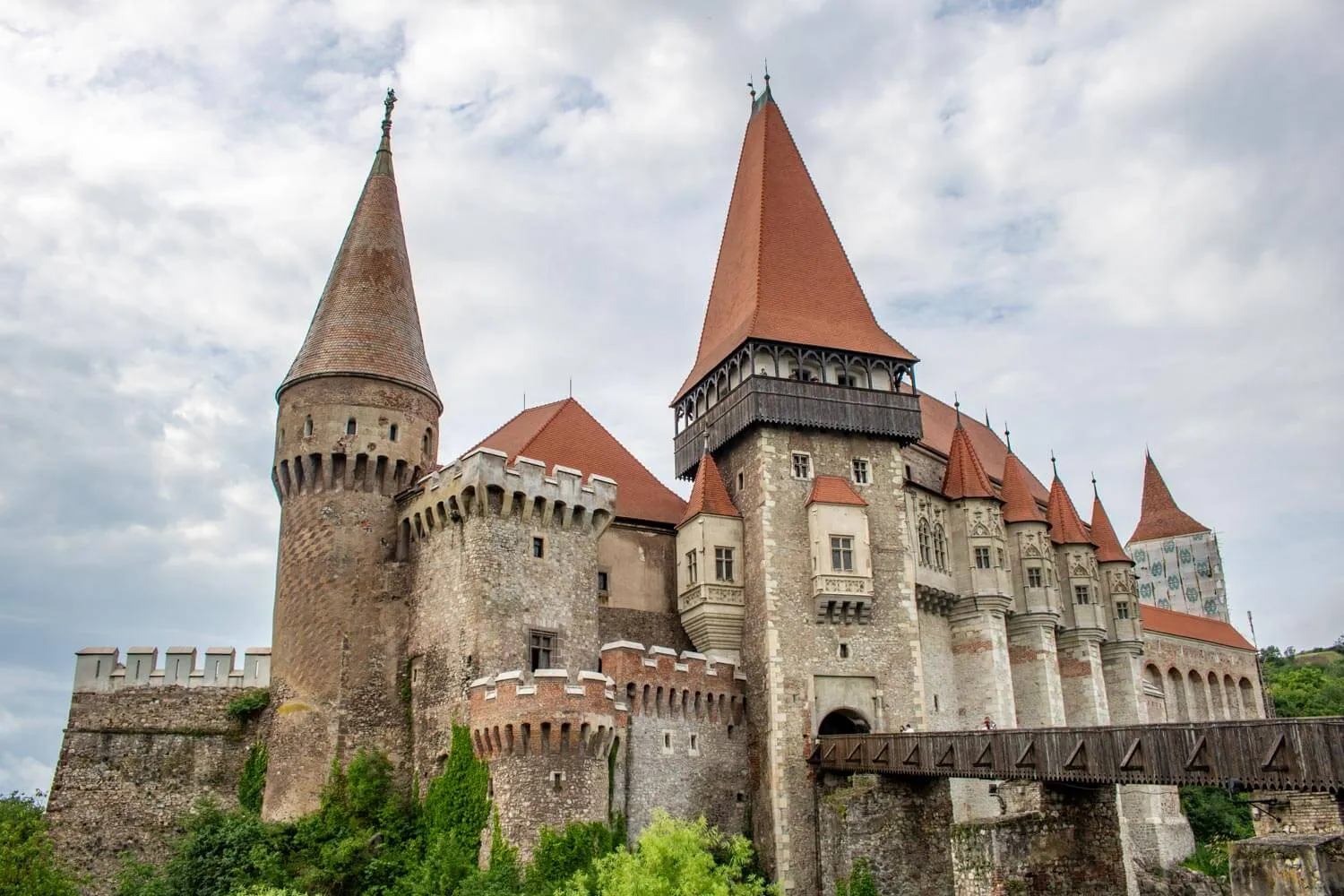
Saint Michael’s Cathedral (Catedrala Sfântul Mihail) is a Roman Catholic cathedral in the Alba Carolina Citadel in Alba Iulia and one of the most important medieval religious monuments in Transylvania. Originating in the 11th century and largely rebuilt during the 13th century, it combines Romanesque, Gothic, Renaissance, and Baroque architectural elements. It is considered the oldest cathedral in Romania and serves as the seat of the Roman Catholic Archdiocese of Alba Iulia.
History
The cathedral’s origins date to the establishment of the Roman Catholic Diocese of Transylvania by King Stephen I of Hungary around 1009. A basilica with three naves and a semicircular eastern apse was constructed on the site during the late 11th century, with an adjoining baptistery on its southern side. Archaeological excavations have revealed foundations of this early church, whose outline is marked by differently colored stones in the floor of the present cathedral.
Reconstruction began around the end of the 12th century, and the building underwent substantial development during the 13th century, particularly following the Mongol invasion of 1241. The cathedral acquired its monumental Romanesque form, with three naves, a transept, a central crossing tower, and two towers on the western façade. Gothic elements were subsequently introduced, including the reconstruction of the sanctuary and the addition of chapels and sacristies.
During the 16th century, when Alba Iulia became the capital of the Principality of Transylvania, the cathedral passed into Protestant use, first by Unitarians and later by the Reformed Church. After the building suffered damage during the conflicts of the early 17th century, Prince Gabriel Bethlen commissioned repairs to its western towers, including the addition of Renaissance architectural details to the southern tower. The cathedral was returned to the Roman Catholic Church in 1716, following the establishment of Habsburg rule. Further alterations during the 18th century included Baroque decoration and renovations to the western entrance and sanctuary.
Architecture And Interior
The cathedral is an imposing stone basilica with a mixture of Romanesque massing and Gothic architectural details. Its western façade is dominated by the tall southern bell tower, developed over several centuries, while the northern tower remains unfinished. The western entrance retains an elaborate early Gothic portal from the late 13th century, beneath a Baroque pediment decorated with statues of Saints Stephen, Ladislaus, Adalbert, and Gerard. The southern tower also contains exhibitions about the cathedral’s history and restoration, with a panoramic viewing level overlooking the Alba Carolina Citadel and the surrounding city. Entry to the cathedral is free, while access to the tower is ticketed.
The southern side features a richly sculpted Romanesque portal with a representation of Christ in Majesty, while the transept has a large rose window decorated with figures of the twelve apostles. Inside, the three naves are separated by massive pillars with carved capitals, and the sanctuary contains Gothic vaulting, Baroque furnishings, and Romanesque reliefs depicting Saint Michael the Archangel.
Among the cathedral’s most important architectural additions is the Lászai Chapel, built in 1512 on the northern side. It is one of the earliest examples of Renaissance architecture in Transylvania, with elaborate carved decoration featuring biblical figures, classical motifs, heraldic symbols, and portraits of Hungarian rulers. The adjoining Várday Chapel was added during the 16th century.
The interior also preserves Gothic and Renaissance fresco fragments, historic altars, elaborately carved choir stalls, and numerous funerary monuments. Among the most significant tombs is that of John Hunyadi (Iancu de Hunedoara), the 15th-century military commander and governor of Hungary, whose sarcophagus stands in the southern aisle. The cathedral also contains the tombs of Queen Isabella Jagiellon and her son John Sigismund Zápolya, the first Prince of Transylvania. Prince Gabriel Bethlen was buried here alongside his first wife, Susanna Károlyi, in 1629, although their funerary monuments were destroyed during the Ottoman and Tatar invasion of 1658. A modern commemorative plaque dedicated to Bethlen can be seen in the Várday Chapel.