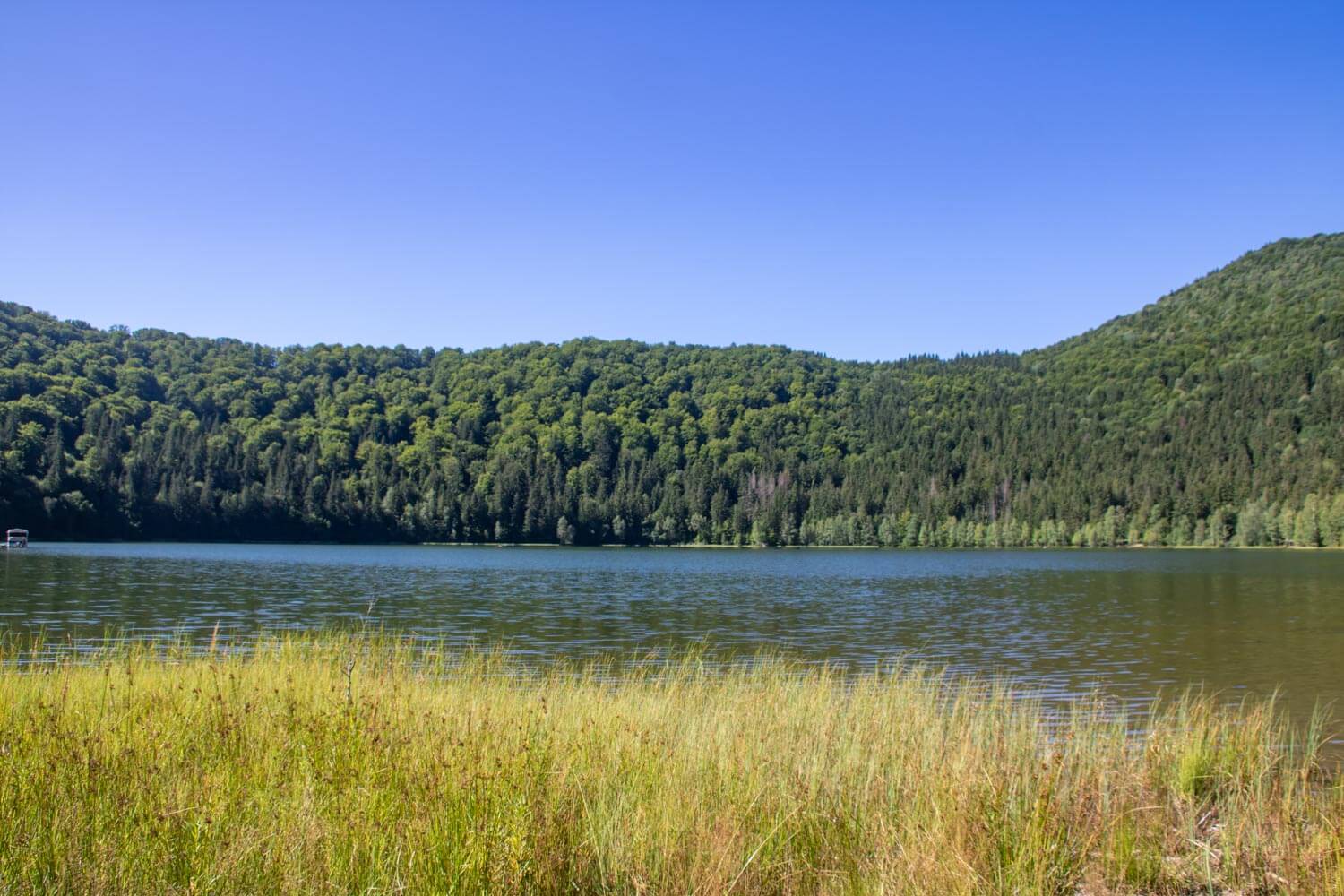
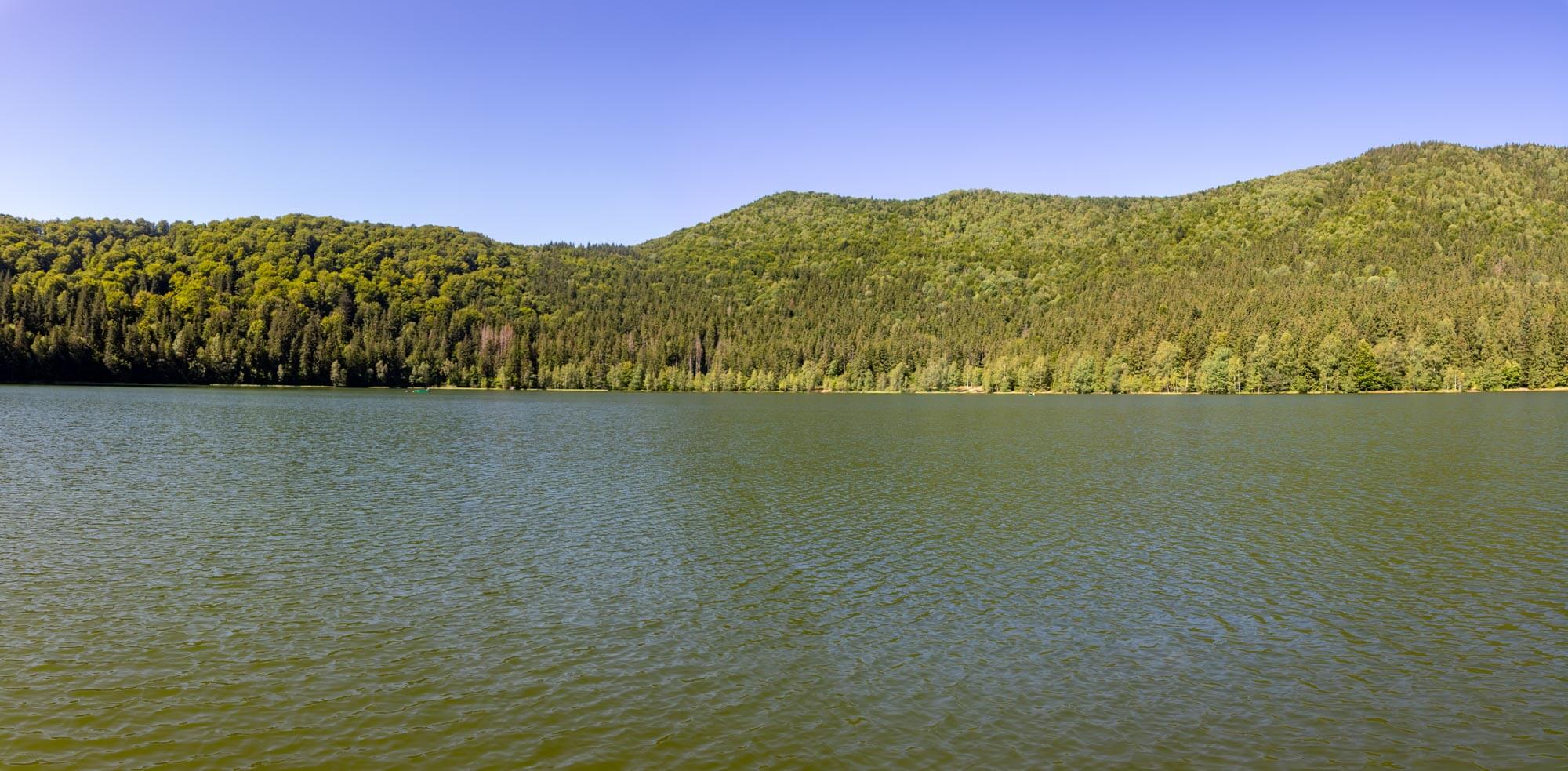
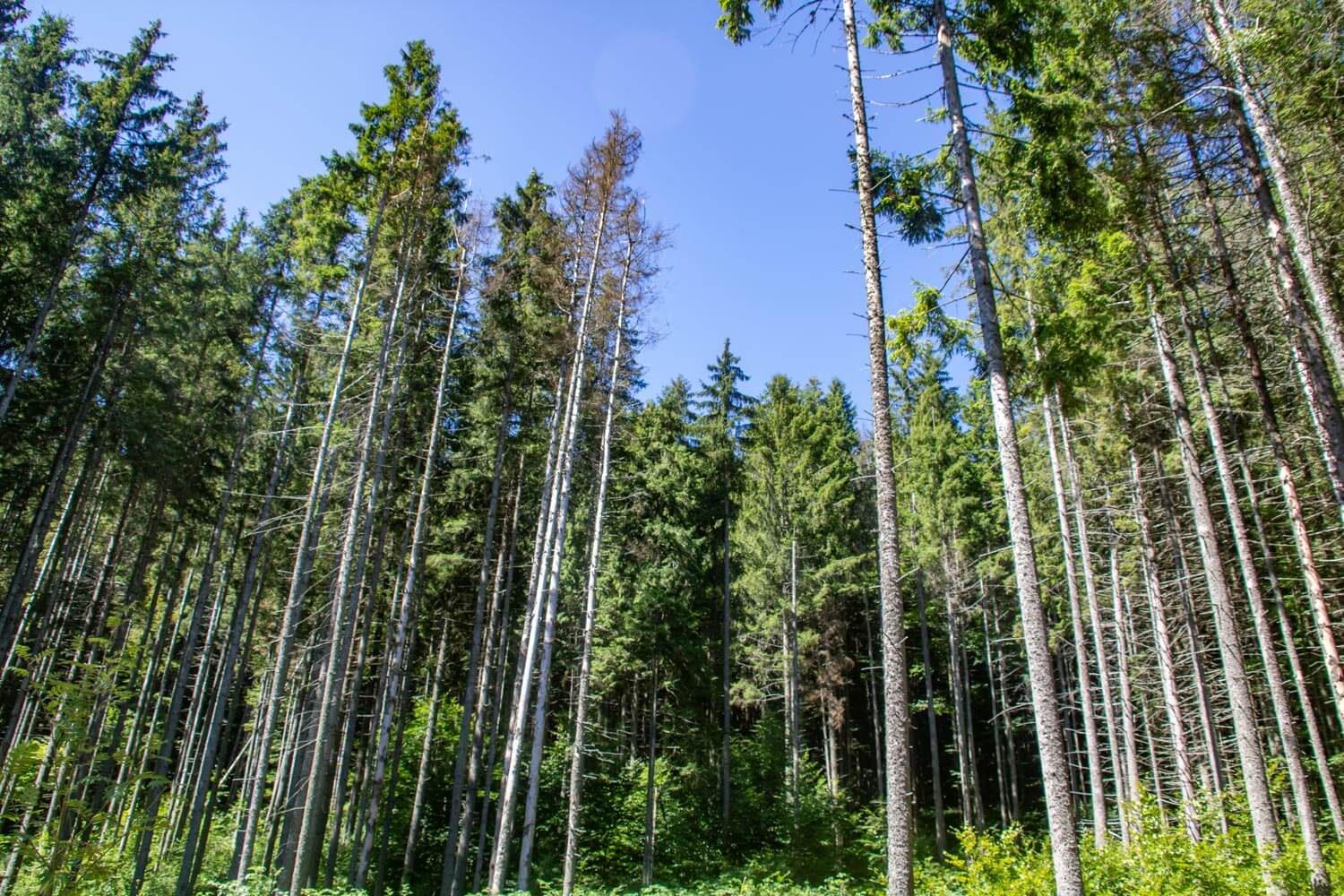
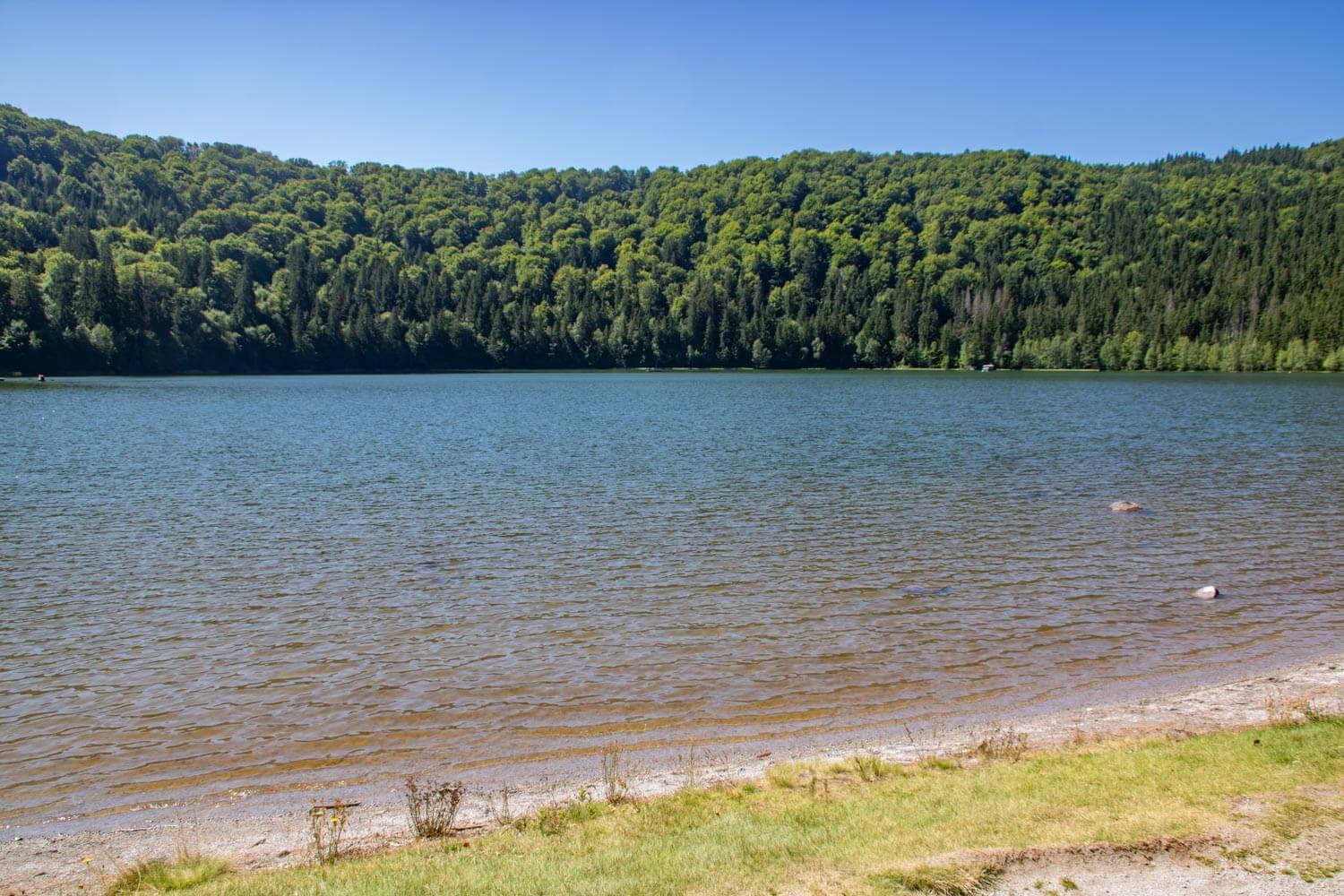
Lake Saint Anne (Lacul Sfânta Ana, Hungarian: Szent Anna-tó) is a volcanic crater lake in Harghita County, near Băile Tușnad in the Eastern Carpathians. Surrounded by forested slopes at an altitude of approximately 946 meters, it is the only volcanic crater lake in Romania and forms part of a protected natural area together with the neighboring Mohoș Peat Bog.
Geology And Landscape
Lake Saint Anne lies in the younger of two craters formed by the Ciomadul volcano, whose last explosive eruption occurred approximately 30,000 years ago. After volcanic activity ended, water accumulated within the crater, gradually creating a lake whose depth and vegetation changed over thousands of years. The older neighboring crater also once contained a lake, but eventually filled with peat to form Mohoș Peat Bog.
The lake has an oval shape, measuring approximately 620 by 460 meters and covering about 20 hectares. Its maximum depth is around 7 meters, while its shoreline measures approximately 1.6 kilometers. With no permanent streams flowing into or out of the crater, the lake depends on rainfall, snowmelt, and runoff from the surrounding slopes. The resulting water has very low mineral content and is particularly sensitive to pollution. In winter, the lake can freeze over, while the mixed forests surrounding the crater change from deep green in summer to shades of yellow and red in autumn.
Things To Do At Lake Saint Anne
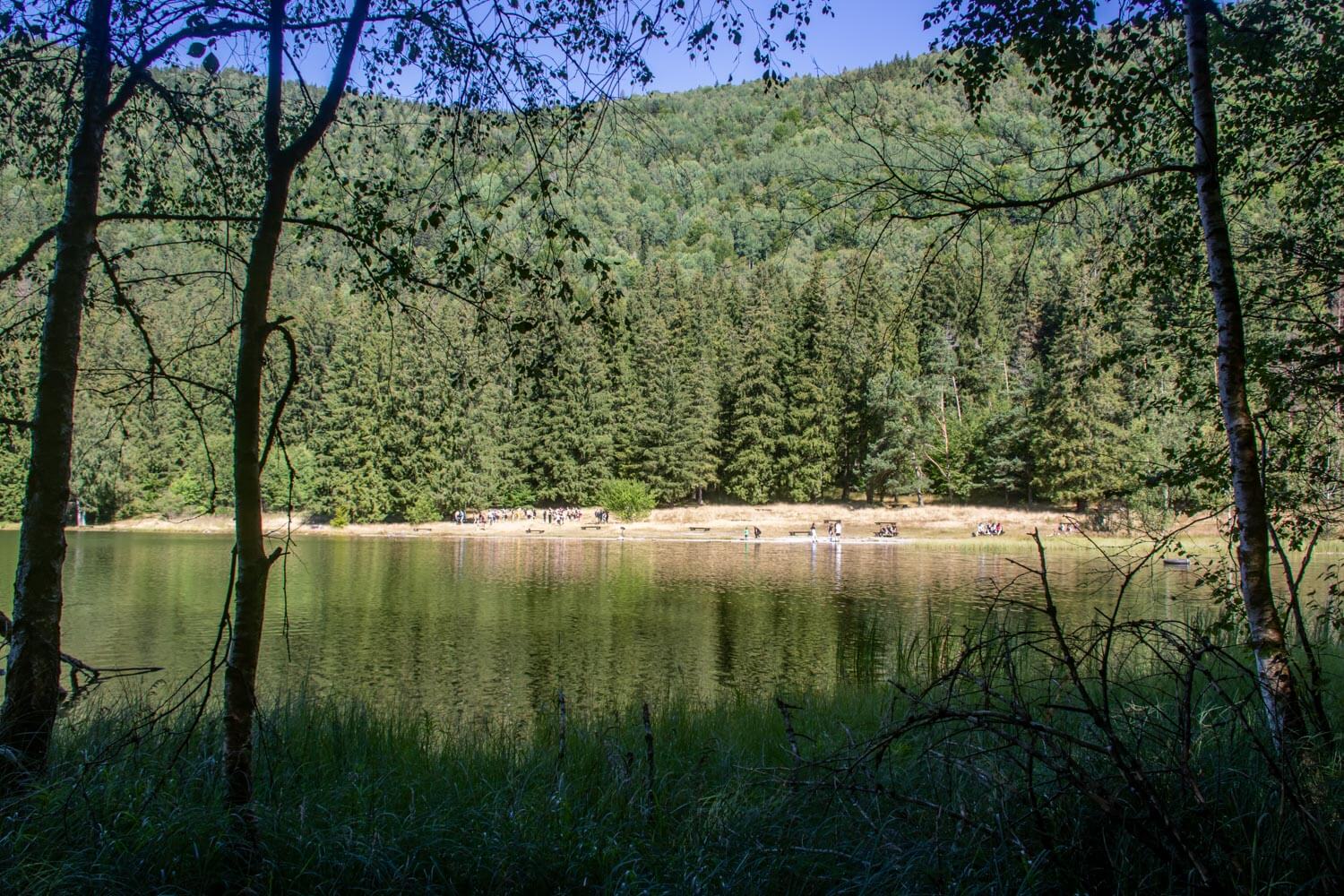
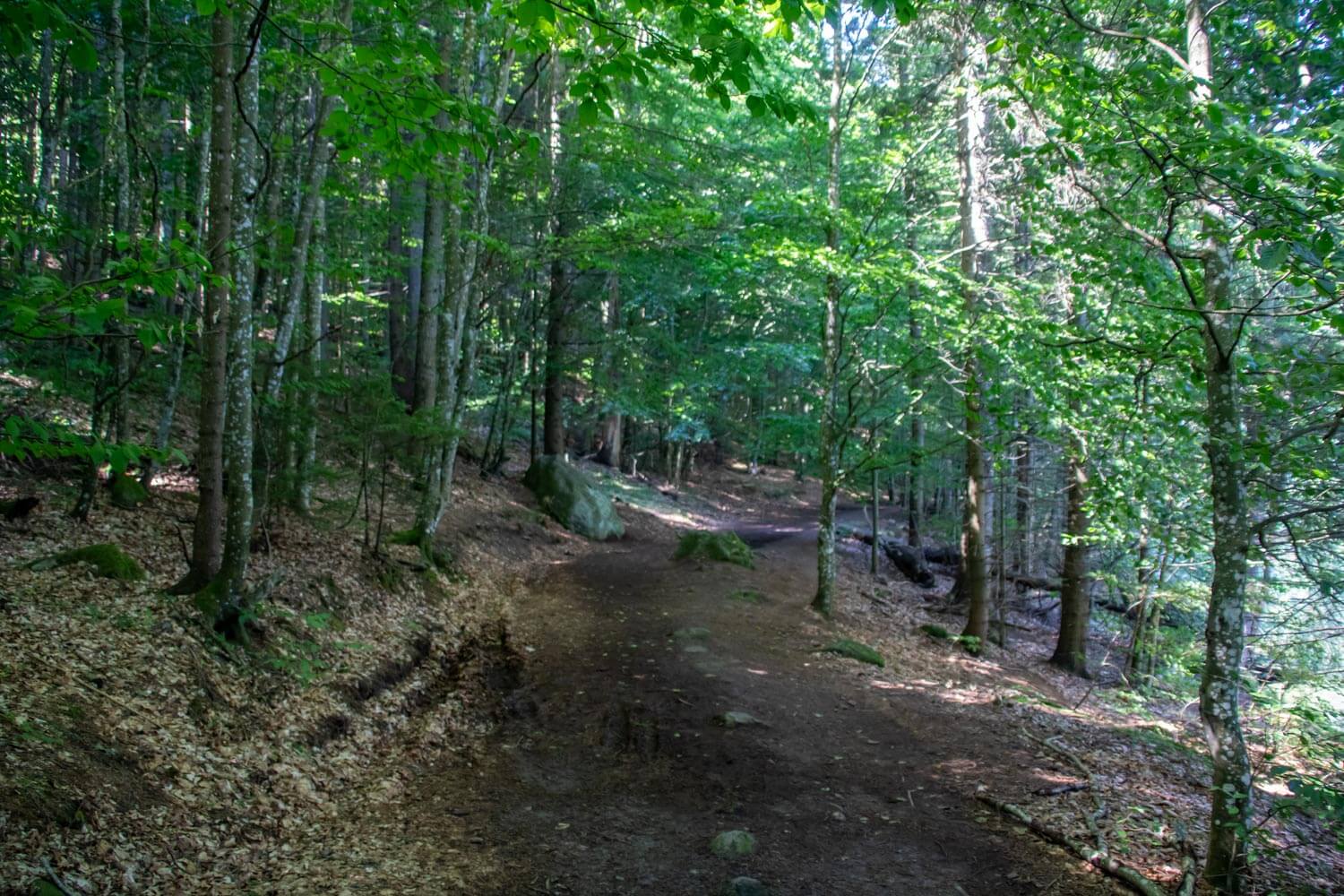
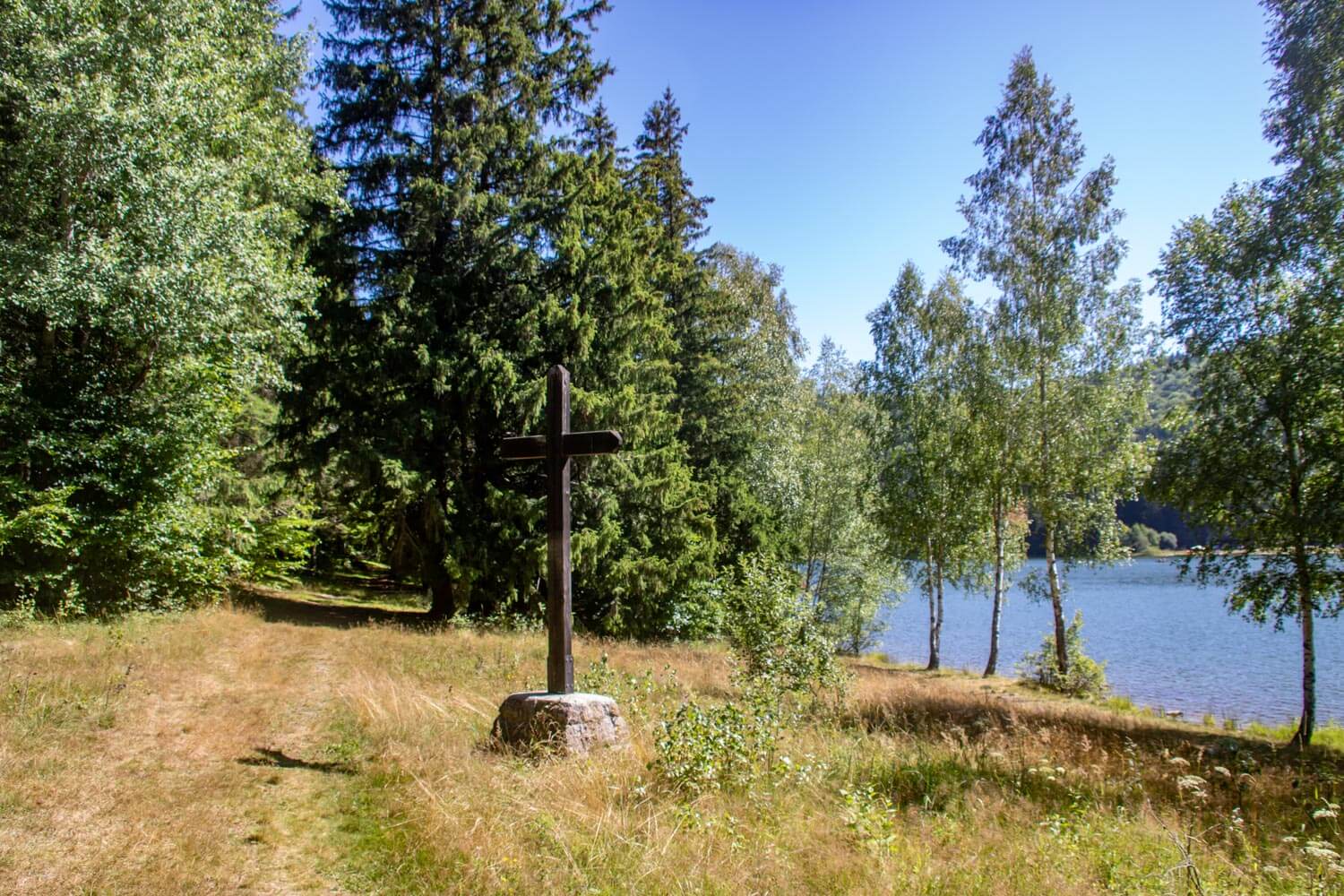
A walking path follows the entire shoreline, allowing visitors to circle the lake through open grassy areas and shaded stretches beneath the trees. The approximately 1.6-kilometer circuit offers views across the water and up toward the surrounding crater slopes. Near the shore stands Saint Anne’s Chapel, a small Roman Catholic chapel that has been a place of pilgrimage for centuries. Religious celebrations are held here around Saint Anne’s feast day on July 26.
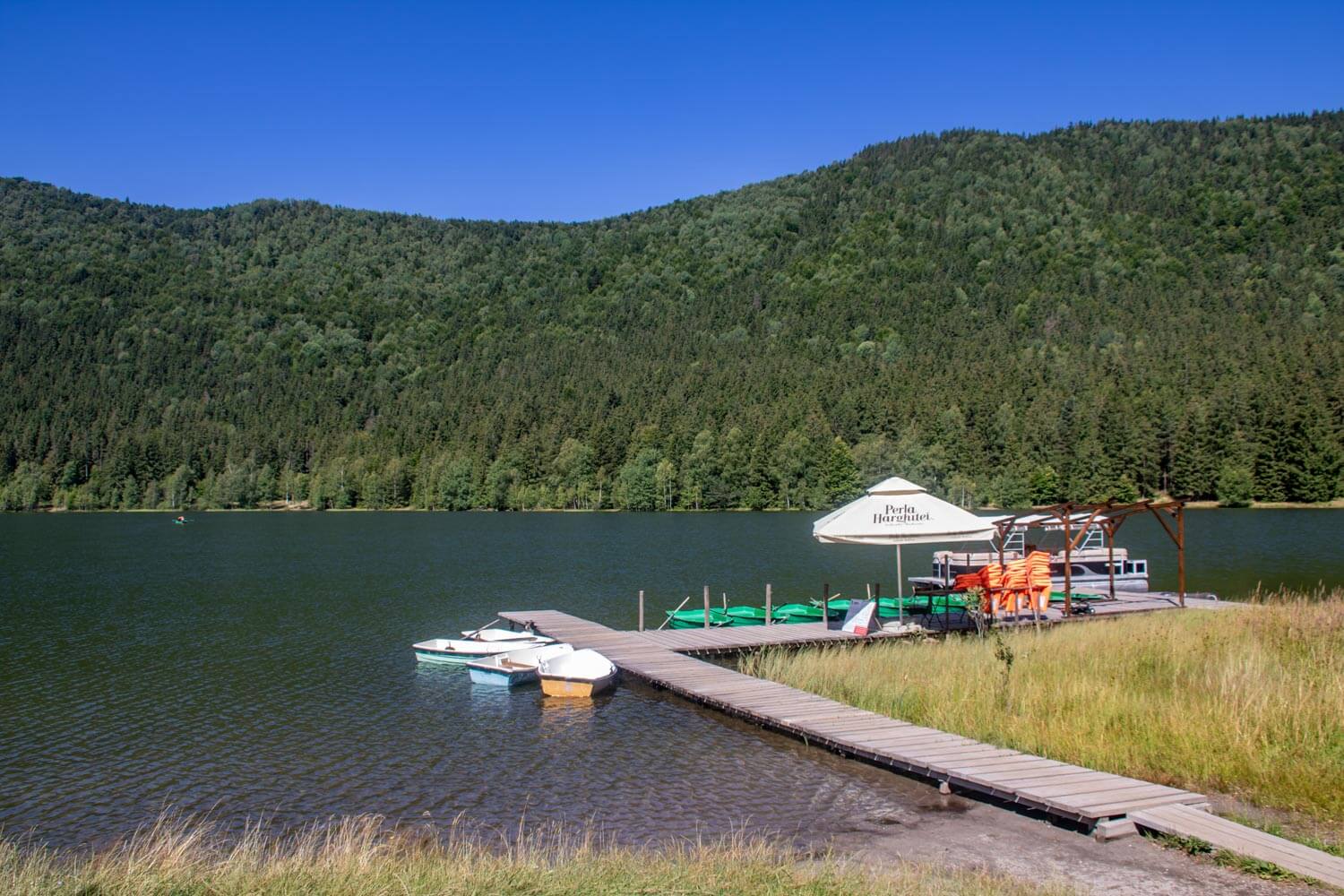
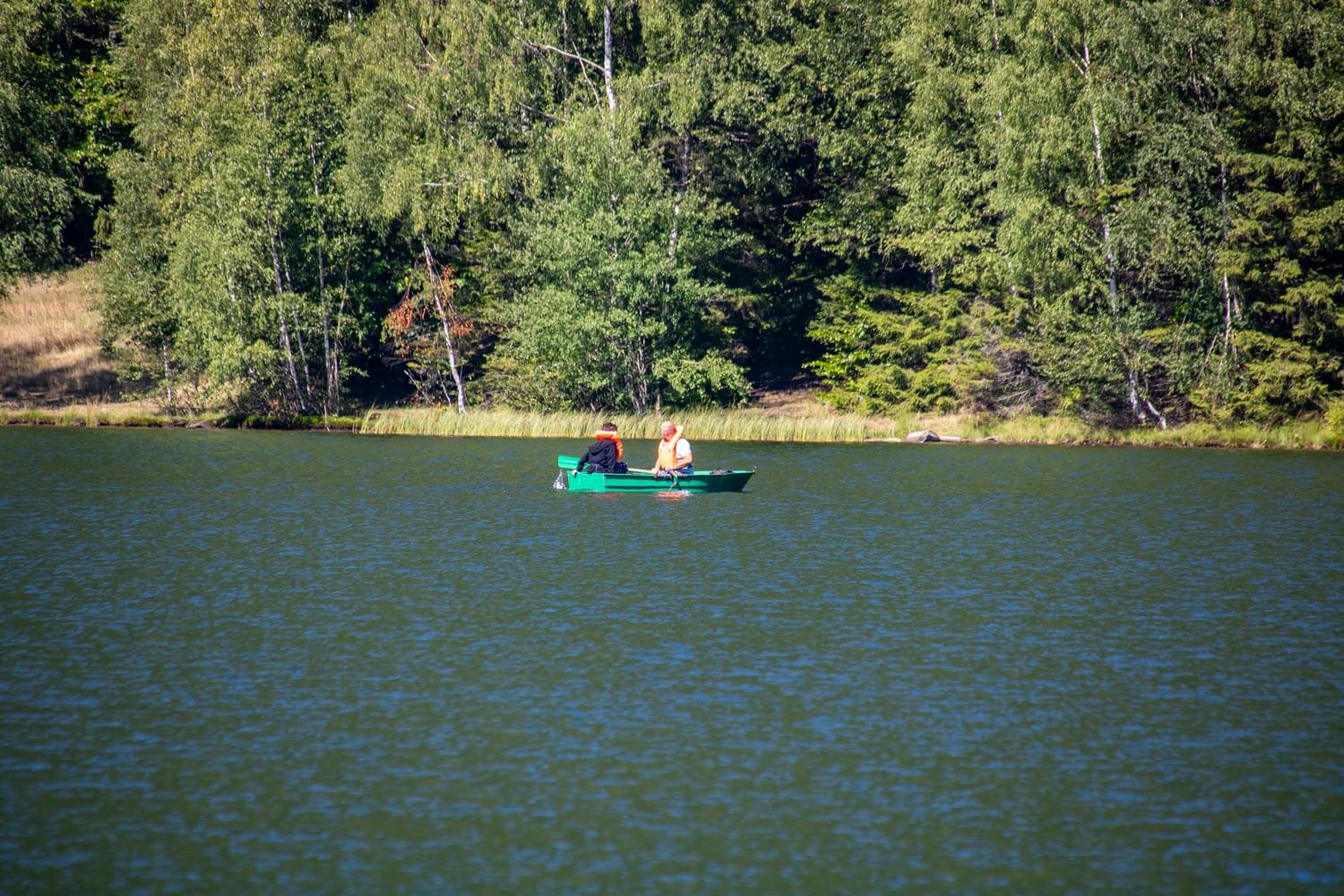
Visitors can also explore the lake by renting a rowboat or joining a seasonal organized raft ride. Swimming is prohibited to protect the lake’s sensitive ecosystem. The open lakeside areas provide space for relaxing and enjoying the scenery, while marked hiking trails offer opportunities to explore the surrounding volcanic mountains.
The Mohoș Peat Bog is another attraction accessible from the same upper visitor area. Its wooden boardwalk passes through the former crater lake, now covered by peat moss, pine vegetation, and small dark pools.
Facilities And Visitor Information
Near the parking area above the crater, the Ecotourism and Knowledge Center introduces visitors to the Ciomadul volcano and the surrounding nature reserve through interactive exhibitions, a three-dimensional model of the volcano, and an introductory film. The area also has toilets, a terrace, a souvenir shop, and places to buy food and drinks. Down by the lake, seasonal stalls sell snacks, ice cream, and traditional Szekler chimney cake, while rowboats and organized raft rides are available from the shore.
A single admission ticket covers Lake Saint Anne, Mohoș Peat Bog, and the Knowledge Center, with tickets available online or at the entrance. Parking is included for a limited period, and visitors planning to camp can use the designated area near the upper parking lot. Hotels and guesthouses are available in Băile Tușnad, Bixad, Lăzărești, and Băile Balvanyos.
Brown bears inhabit the surrounding forests, so visitors should keep food secure, stay on marked paths, and avoid approaching or feeding wildlife. Any additional safety instructions issued by reserve staff should also be followed.
Getting To Lake Saint Anne
To reach Lake Saint Anne by car, take DN11C between Bixad and Băile Balvanyos, then turn onto DJ113A, which leads through the forest to the visitor parking area above the crater. From there, a paved road and a marked woodland path descend to the lakeshore in approximately 20–30 minutes.
Several marked hiking trails also lead to the lake. From Băile Tușnad, the red-cross trail covers approximately 6.7 kilometers in 2.5–3 hours, while the yellow-triangle route via Mohoș Meadow covers 8.5 kilometers in 3.5–4 hours. Other marked trails approach from Bixad and Băile Balvanyos.